Six collaborations, one shared ambition.

Ruyat Supriazi
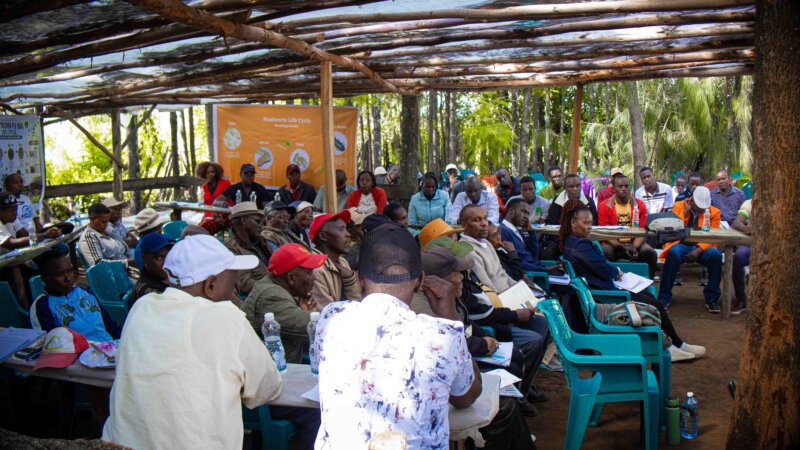
What do a genebank, a shellfish fishery, a rice field, gender-inclusive agricultural research, legumes in Tanzania and seed systems in fragile settings have in common? At first sight, very little. Yet together, these six stories show what international research collaboration can look like in practice. Through the NWO Netherlands–CGIAR Senior Expert Programme, experienced researchers from Dutch knowledge institutions work within CGIAR’s international research programmes, connecting Dutch expertise with CGIAR’s global networks and locally-embedded research. The value of these collaborations goes both ways. Researchers learn from each other, assumptions are challenged, and knowledge developed through international research finds its way into new contexts, including back into the Dutch research community. Our six-part blog series brings that collaboration to life. Across six different challenges and contexts, we answered one shared question: how can working across institutions, countries and disciplines make research more relevant and useful? Meet the researchers and discover what they are learning together. Read all six stories on NFPConnects
Blog 1 - The world eats from a freezer most people will never see
Genebank specialists Theo van Hintum and Vania Azevedo are working to strengthen the systems that safeguard the crop diversity the world may need in times of disease, climate shocks or conflict. Their collaboration focuses on making genebank collections not only secure, but also reliable, accessible and ready to be used when needed.
Blog 2 - Forgotten fisheries: shells, women and the fisheries no one was counting
Jan van der Ploeg and Janet Saeni-Oeta are bringing attention to an often-overlooked part of fisheries in the Solomon Islands: the shellfish gathered largely by women. Their research shows how these resources contribute to nutrition, income, coastal ecosystems and cultural traditions, while making the case for their greater recognition in research and policy.
Blog 3 - Decoding plant language through light
Researchers Roshanak Darvishzadeh and Alice Laborte are exploring how hyperspectral remote sensing can detect early signs of stress and disease in rice through the light plants reflect. Their work could eventually support drone- and satellite-based early warning systems, helping farmers respond before damage becomes visible.
Blog 4 - Designed for someone else, better interventions start with one question: who is the farmer?
Gender researchers Julie Newton and Rashida Chantima Ziblila are asking a fundamental question of agricultural programmes: who is the farmer they are actually designed for? Their work shows why factors such as gender, age, wealth, land access and geography need to be built into programme design if agricultural innovations are to create meaningful and equitable benefits.
Blog 5 - Learning to read the field, two legume fanatics on science that listens
Farming systems scientist Jens Andersson and agronomist Frederick Baijukya are working together to make agronomic advice more locally relevant and responsive to farmers’ realities. By combining digital tools, farmer feedback and research on crops such as legumes, their work promotes a more two-way approach to agricultural science — one that learns from farmers as much as it advises them.
Blog 6 - The seeds that come home
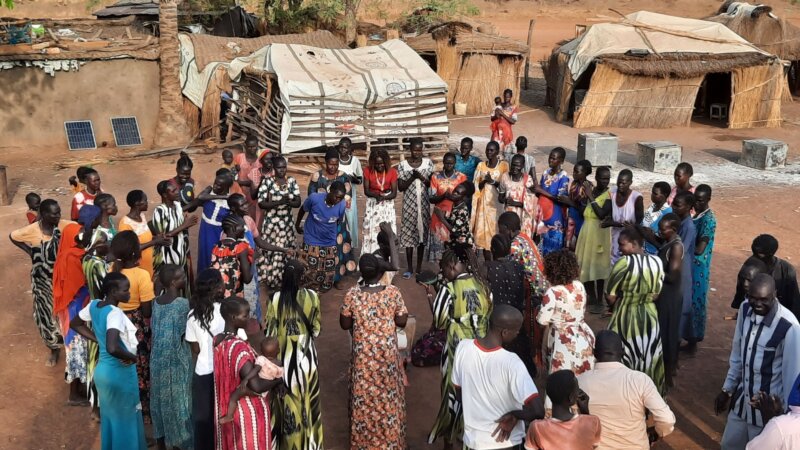
Gerrit-Jan van Uffelen and Sandra Ruckstuhl study how food systems and water security function in fragile and conflict-affected settings, particularly Sudan and South Sudan. Their work highlights the importance of building on local seed systems, knowledge and networks that continue to support communities through crisis, rather than overlooking the resilience already in place.
We would like to extend our sincere thanks to everyone who contributed to bringing the six stories in this SEP blog series to life.
Especially the researchers who give us the opportunity to learn from the incredible research that they are doing and the collaboration journeys that strengthen their impact.
Our special thanks go to journalist Jasmijn Snoijink for capturing the different collaborations with depth and care, and to all the researchers and experts featured across the series for generously sharing their time, expertise and reflections.
We also gratefully acknowledge the collaborative efforts of CGIAR and NWO, whose partnership and commitment have helped make this series possible. In addition, we would like to thank all colleagues and partners who supported the development, coordination and review of the individual stories, including Nienke Beintema (WUR), Timmo Gaasbeek (BZ) and Vera Musch (LVVN), as well as everyone else who contributed along the way.
Together, these contributions have helped showcase the diversity, value and shared ambition of the Senior Expert Programme collaborations.
Interested in learning more about the NWO Research Programme?
The Netherlands (NL) - CGIAR research programme contributes to transformational change in agriculture around the world by advancing food system knowledge and joint public and private innovation. The programme is part of the strategic partnership between the Government of the Netherlands and CGIAR. A first Phase ran from 2017-2023, Phase II runs from 2024-2030. The NWO-funded Senior Expert Programme is one of its instruments.
Authors

Marjan Riepma
Partnership Builder

Mariëlle Karssenberg
Partnership Builder - Netherlands Food Partnership