From salt to solutions: New phase of the international partnership launched
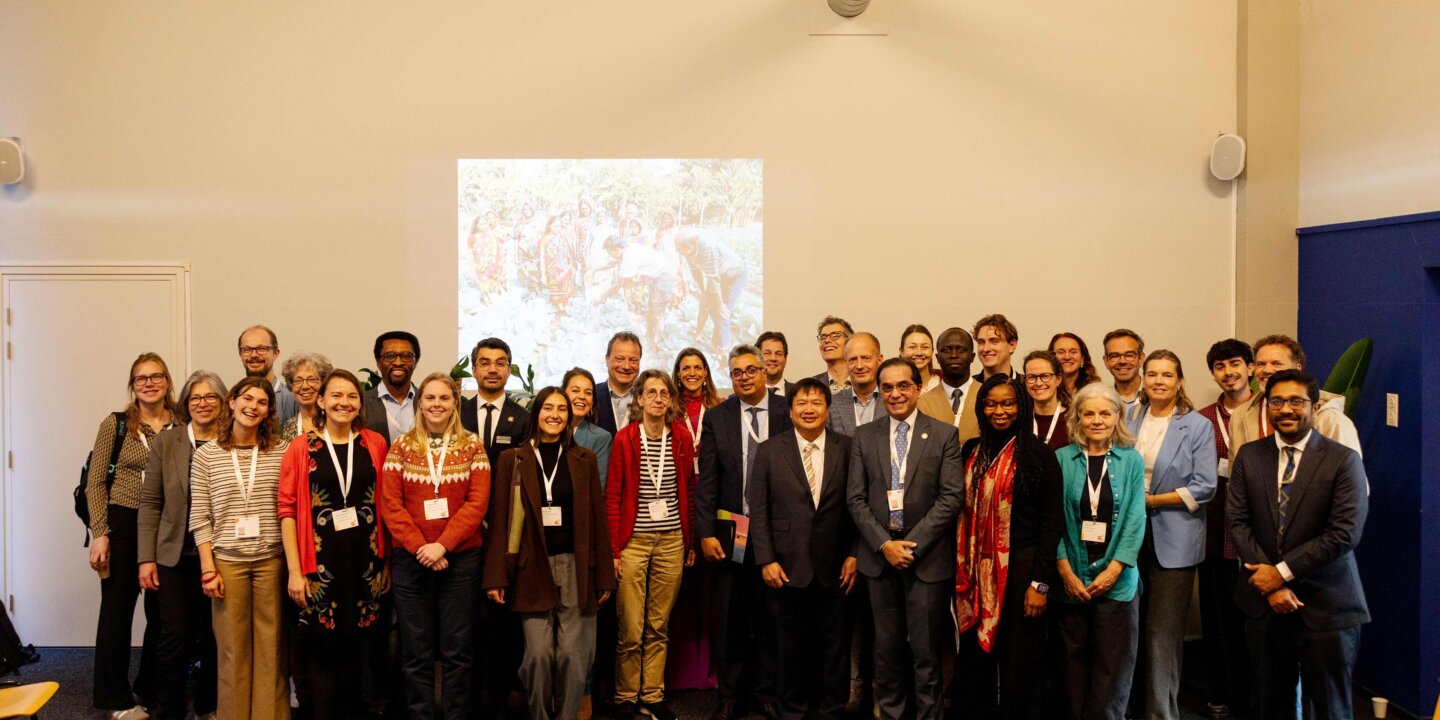
Photo Credits to NWP
Salinity is an increasing threat to food security, freshwater resources and livelihoods worldwide. At NFP World Food Day 2026 in The Hague, a new international initiative was officially launched to turn this growing challenge into opportunities for sustainable agriculture, resilient water systems and long-term cooperation. With Bangladesh, Egypt, Senegal and Vietnam as its initial focus countries, the Saline Country Partnerships Initiative aims to move beyond individual projects towards long-term, country-led solutions programmes.
On 20 October 2026, around 650 participants gathered at the Fokker Terminal in The Hague for NFP World Food Day, bringing together stakeholders from across the food and water sectors. One of the highlights was the session ‘’From Salt to Solutions: Launching the Saline Country Partnership Initiative’’, marking an important step towards more coordinated international action on salinisation.
Convened by Deltares, Netherlands Food Partnership (NFP), Netherlands Water Partnership (NWP), and Wageningen University & Research, the initiative brings together expertise from knowledge institutions, alongside governments, civil society organisations and businesses.
A global challenge requiring local solutions
The urgency of addressing salinity was highlighted by keynote speaker Dr. Kate Negacz from Vrije Universiteit Amsterdam. Globally, approximately 1.4 billion hectares of land are affected by salinity – an area almost equivalent to the size of Antarctica.
Salinisation is far more than an agricultural challenge. It affects freshwater availability, soil health, food production, ecosystems and human health. Rising sea levels, saltwater intrusion and changing water management conditions are placing additional pressure on vulnerable coastal areas and deltas.
Negacz highlighted the many initiatives already addressing salinity worldwide, including the Global Framework on Water Scarcity in Agriculture (WASAG). The challenge now is to connect existing knowledge, policies and practical solutions, and translate them into coordinated action.
Four countries, four perspectives, one shared ambition
A central part of the launch consisted of four interviews with ambassadors and country representatives from Bangladesh, Egypt, Senegal and Vietnam paired up in duos with coalition partners Deltares, WUR, NFP and NWP. While the challenges differ, all four countries emphasised the need for integrated approaches, local ownership and long-term partnerships.
Bangladesh: Connecting water, agriculture and communities
In Bangladesh, salinity poses growing challenges for agriculture, groundwater resources and local communities. Farmers are already adapting their practices, moving beyond shrimp farming to cultivate other crops, including salt-tolerant varieties. However, scaling up these efforts requires better infrastructure, locally adapted solutions and stronger connections between national policies and farmers’ needs.
Groundwater salinisation and land subsidence are additional concerns, calling for solutions such as sand filtration and improved groundwater management. The Bangladesh ambassador Mr. Kazi also highlighted the serious impact of salinity on community health, particularly women's health, underlining the importance of involving local communities in developing solutions.
Another priority is helping farmers turn adaptation measures into viable business opportunities. Developing solid business cases and attracting investment will be essential to scaling up solutions and integrating them into national approaches.
Rick Elmendorp, Director and Chair of NWP, emphasised the importance of moving beyond standalone projects towards long-term partnerships. With Bangladesh and the Netherlands both facing challenges as delta countries, there are opportunities to deepen cooperation, including through upcoming missions focused on groundwater and water management in the textile industry. He stressed that governments, businesses, knowledge institutions and local communities must work together, aligning efforts at every level to achieve lasting change.
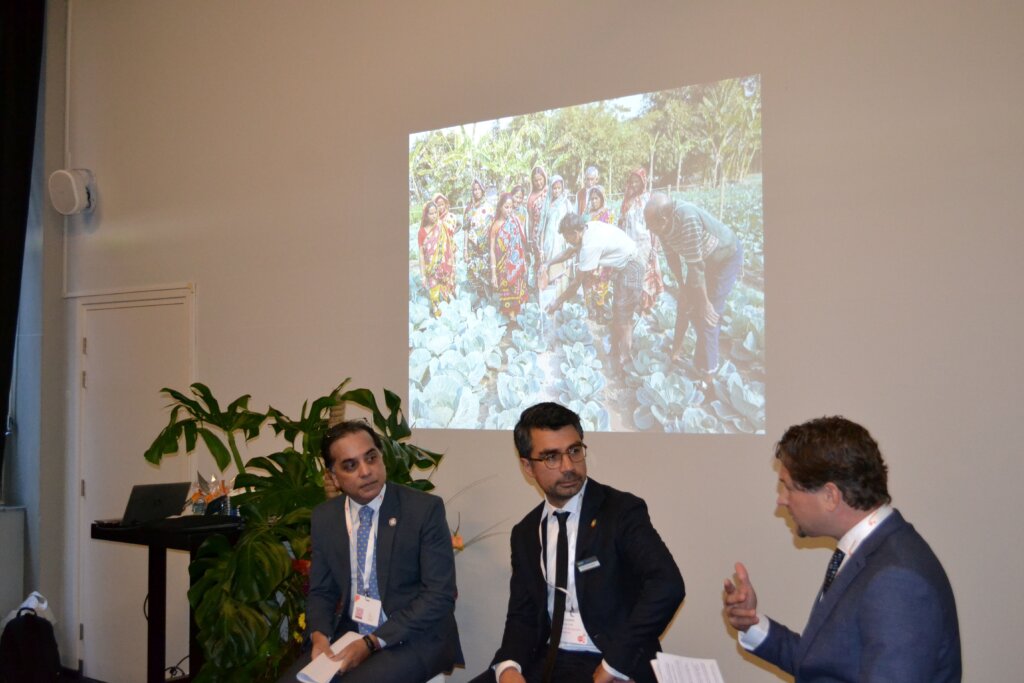
The duo interview with Ambassador Kazi from Bangladesh and Mr. Rick Elmendorp, Director of NWP
Egypt: Combining innovation with investment
In Egypt, where agriculture relies heavily on water from the Nile, increasing salinity is a growing challenge for farmers. During a panel discussion, Mr Mohamed Abouyoussef, Head of the Commercial Office at the Egyptian Embassy, joined the conversation on how to address this issue. The discussion emphasised the need to better understand and monitor groundwater salinity, while highlighting three key priorities: developing salt-tolerant crops, improving irrigation efficiency and soil health, and attracting business investment and finance.
Dutch expertise in salinity management, smart irrigation and agricultural innovation can help address these challenges. Access to the right financing and knowledge exchange will be essential to developing locally adapted solutions and strengthening Egypt's capacity to manage salinity in the long term.
The importance of research partnerships was also highlighted. In May 2026, Wageningen University & Research and Egypt's Agricultural Research Centre signed a Memorandum of Understanding to strengthen cooperation on climate-resilient agriculture, water management and food security. Building on 50 years of Dutch Egyptian collaboration, the partnership aims to turn knowledge into practical solutions to challenges including water scarcity and soil salinisation.
Senegal: Turning knowledge into lasting results
For Senegal, the priority is to turn existing knowledge and policies into practical, lasting results. Mr Henri Pierre Sarr, First Secretary at the Embassy of Senegal, highlighted the need for reliable water management, long-term investment in maintenance, locally adapted solutions and access to salt-tolerant seeds. A shared roadmap setting out when, where and how to act would help translate these priorities into concrete action.
Dr. Kate Negacz highlighted that research on coastal countries in sub-Saharan Africa, including Senegal, shows that considerable knowledge and policy frameworks already exist. The challenge is to build on these foundations and ensure effective local implementation.
With Senegal preparing to co-host the UN Water Conference, there is an opportunity to bring salinity, water quality and food security higher on the international agenda. Developing focused proposals ahead of the conference, exchanging experiences with other countries and ensuring follow-up afterwards will be important steps towards lasting impact.
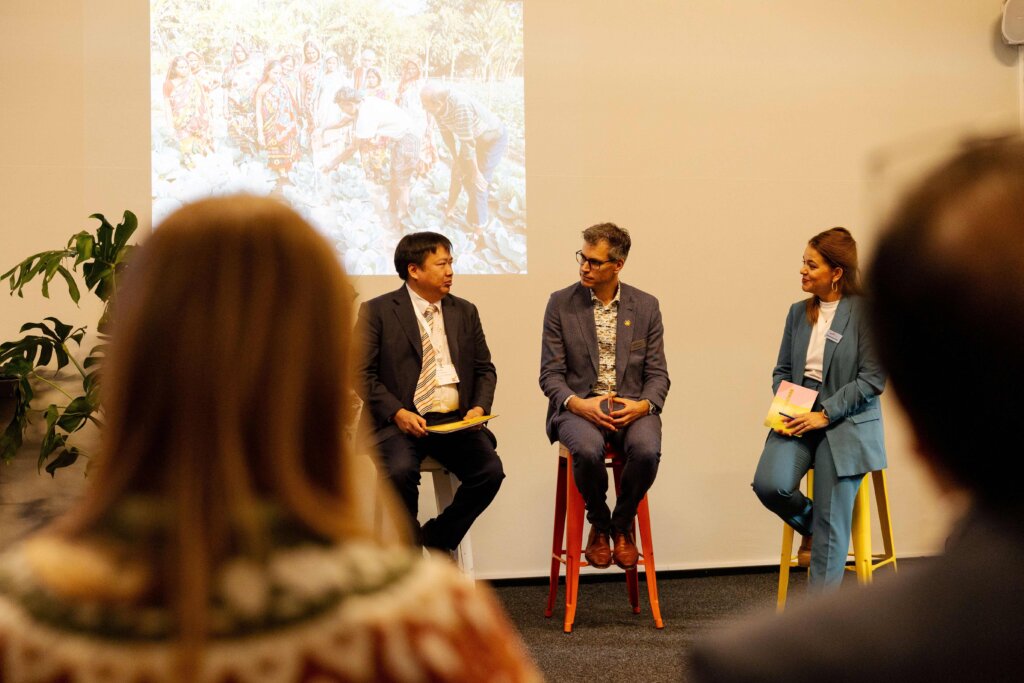
The duo interview with Mr. Le Gia Thin, Chargé D'Affaires of the Vietnamese Embassy and Mr. Ivo Demmers, CEO of NFP
Vietnam: Building on a longstanding delta partnership
Vietnam and the Netherlands have a longstanding partnership in managing the Mekong Delta, where saltwater intrusion poses a growing threat to food security, agricultural production and freshwater resources.
Mr Le Gia Thinh, Chargé d’Affaires at the Embassy of Vietnam, highlighted Vietnam’s priorities, including integrated water management, the transition to more climate-resilient agriculture and the restoration of natural ecosystems, particularly mangroves. The aim is not only to address the risks of salinity but also to turn these challenges into opportunities for more sustainable water use and resilient food systems.
With many climate adaptation initiatives already underway, the Saline Country Partnerships Initiative offers an opportunity to connect existing efforts, share experiences and scale up successful approaches.
To advance cooperation, further workshops with Vietnamese stakeholders, organised by NFP and the Netherlands Enterprise Agency (RVO), are planned in the Mekong Delta and in Hanoi, in November.
From individual projects to lasting partnerships
A recurring message throughout the session was clear: tackling salinity requires more than technological solutions. It demands cooperation across sectors, alignment between national policies and local needs, and sustainable financing.
Ivo Demmers, Executive Director of Netherlands Food Partnership, emphasised the importance of looking at the bigger picture. Sharing experiences, developing scalable approaches and securing long-term investment will be crucial to the initiative's success.
He also called for greater attention to the health implications of salinity, underlining that its impact extends well beyond agriculture and water management.
The launch of the Saline Country Partnerships Initiative marks an important step towards more coordinated, long-term action on salinity. By connecting international expertise with local knowledge, country priorities and opportunities for investment, the initiative aims to turn shared challenges into practical solutions.
The message from The Hague was clear: tackling salinity is not just about managing salt. It is about safeguarding food security and building more resilient livelihoods.
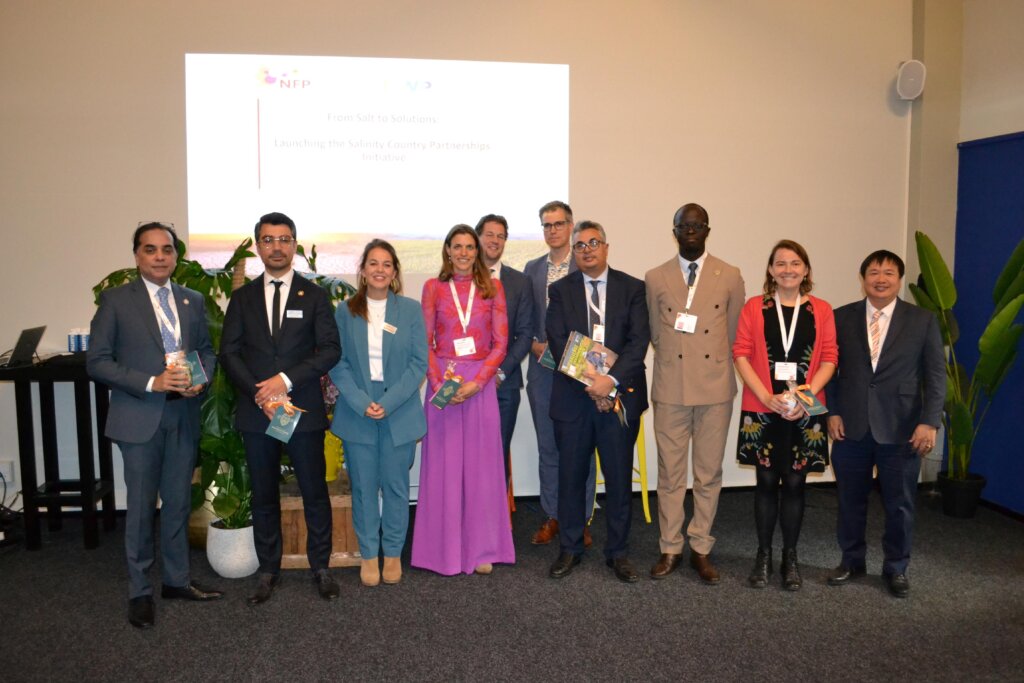
Group picture with all country representatives and coalition members
Author

Babette Bodlaender
Partnership Builder