From farmers' fields to strategic discussion: strengthening cooperation on salinity adaptation in Vietnam
How can we connect the practical needs of farmers in the Mekong Delta with national policies, international expertise and investment opportunities? This question was at the heart of a three-day programme in Vietnam, bringing together farmers, government representatives, researchers, businesses and development partners to explore opportunities for cooperation on salinity adaptation.
Salinity intrusion is an increasing challenge in Vietnam's Mekong Delta, affecting freshwater availability, agricultural production and farmers' livelihoods. While many initiatives and solutions already exist, stronger collaboration is needed to connect local priorities with policies, expertise and investments, and to support farmers in adapting to changing conditions.
From 2–5 November 2026, Vietnamese, Dutch and international partners came together for a series of workshops, field visits and strategic discussions in Can Tho and Hanoi. The programme was organised by the Vietnam Organic Agriculture Association (VOAA) and Vietnam Farmers' Union (VNFU), in collaboration with Netherlands Food Partnership (NFP) and SALTA, with support from the Embassy of the Kingdom of the Netherlands in Vietnam and the Netherlands Enterprise Agency (RVO).
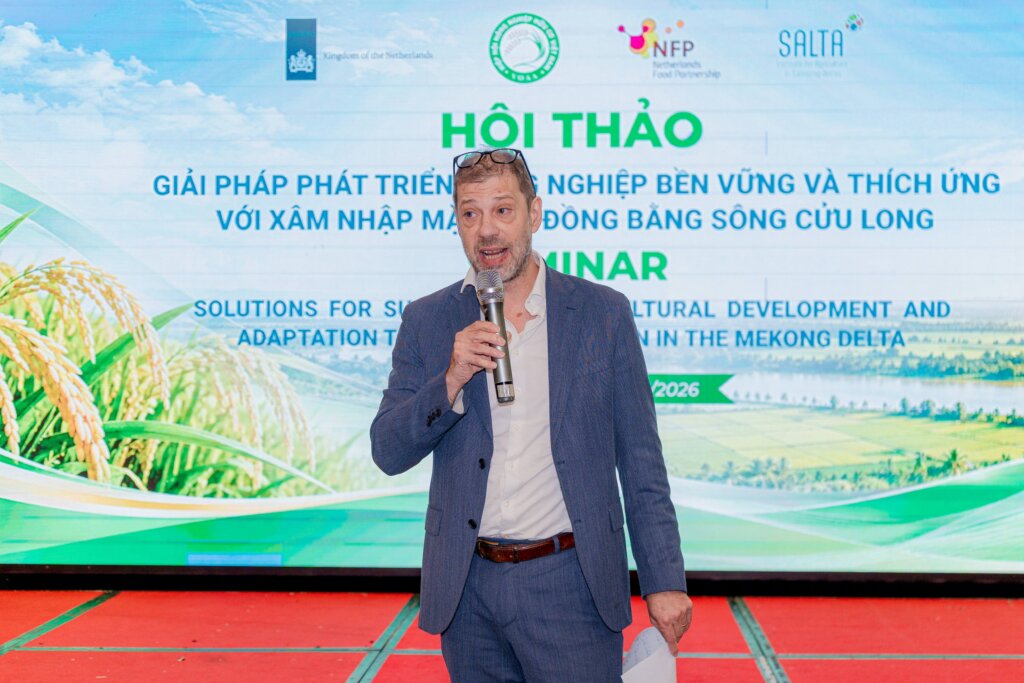
Opening words by Joost van Uum, Agricultural counsellor of the Embassy of the Kingdom of the Netherlands
Starting with farmers' needs in the Mekong Delta
The programme started in Can Tho, where farmers, cooperatives, local authorities, researchers and businesses discussed how salinity, drought and changing water availability are affecting agricultural production. Rather than starting from existing projects or technologies, the workshop focused on the challenges farmers experience and the practical solutions they need.
Discussions highlighted the importance of reliable salinity and soil data, freshwater storage, suitable crops and cultivation practices, and access to knowledge and finance. Farmers also face increasing production costs, uncertain market conditions and challenges in adopting new technologies. The discussions were complemented by field visits to organic rice farmers and fruit orchards in the Mekong Delta, providing an opportunity to learn directly from farmers about their experiences, adaptation practices and the challenges they face in managing water and soil conditions.
These exchanges reinforced the importance of developing solutions together with farmers, building on their existing knowledge and ensuring that innovations are practical, accessible and economically viable.
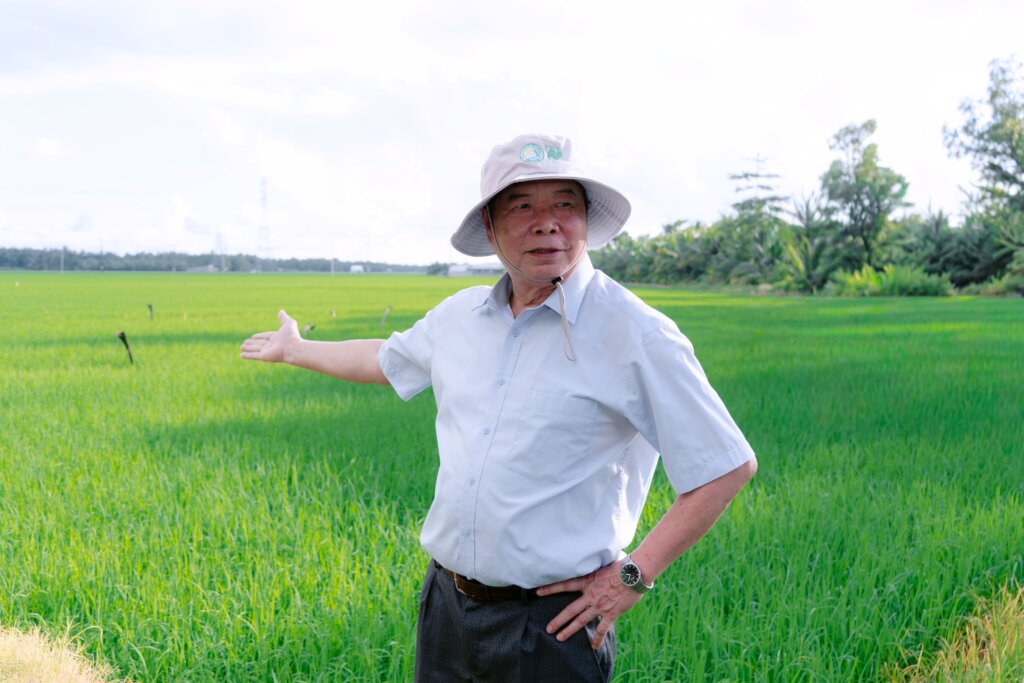
Dr. Dao Thanh Van, Vice President of VOAA
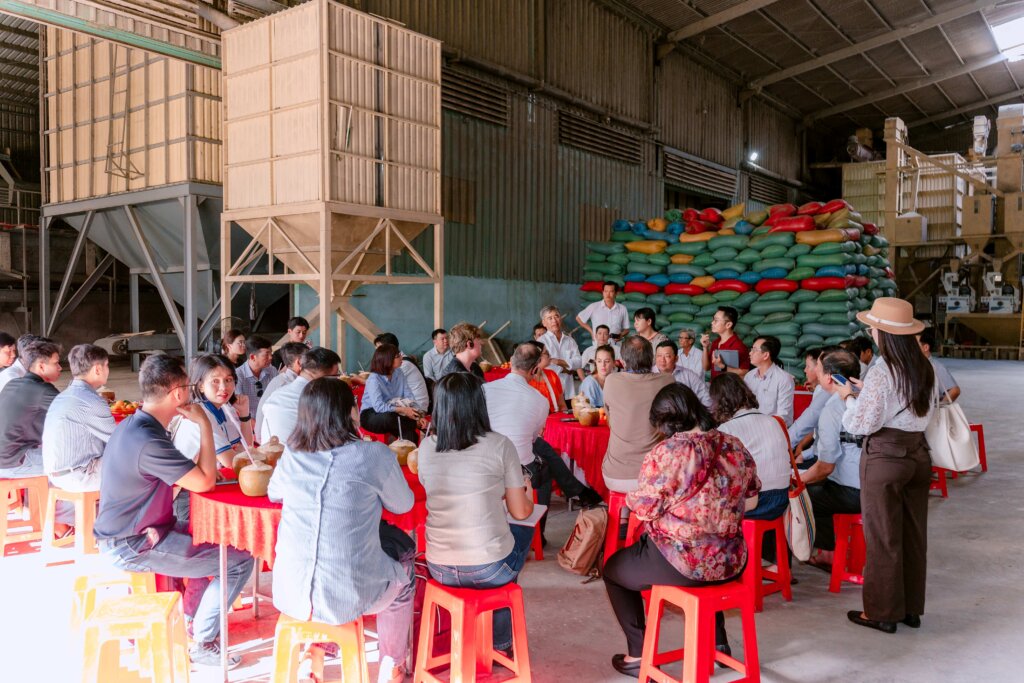
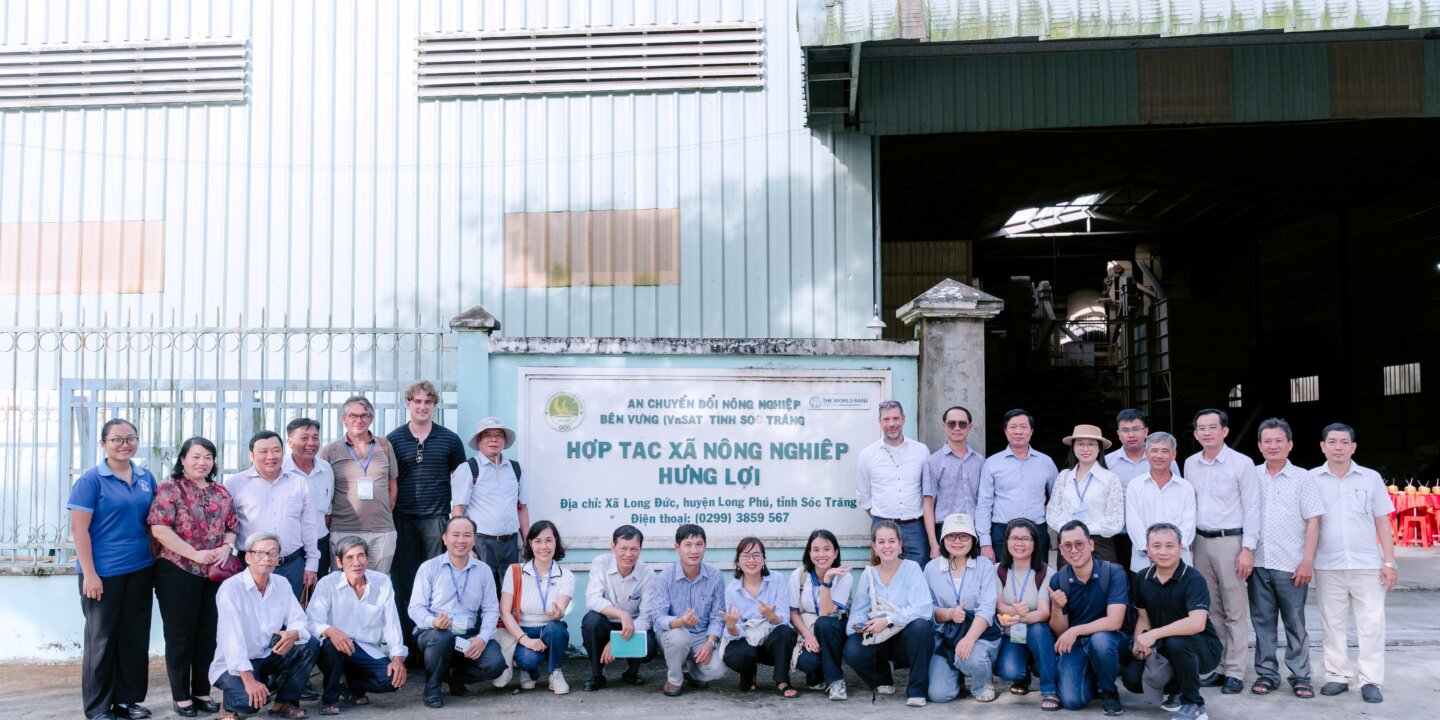
Field visit to a rice cooperation
From Can Tho to Hanoi: connecting local priorities with national and international cooperation
On 5 November, the programme continued in Hanoi with a Strategic Discussion on Sustainable Agriculture Adapting to Salinity in Vietnam.
While the Can Tho workshop centred on farmers' practical needs, the Hanoi dialogue brought these priorities to the national and international level. Representatives from Vietnamese government institutions, international organisations, research institutes and businesses explored how to connect them with existing policies, programmes and investments. Four priorities emerging from the Can Tho workshop guided the discussion:
Strengthening salinity and soil monitoring, including early warning systems and access to reliable information.
Connecting knowledge between research, government and farmers, through advisory services and stronger institutional coordination.
Improving freshwater availability and climate-adaptive water management, including storage and irrigation solutions.
Improving access to finance and markets, enabling farmers to invest in salinity adaptation and develop viable business models.
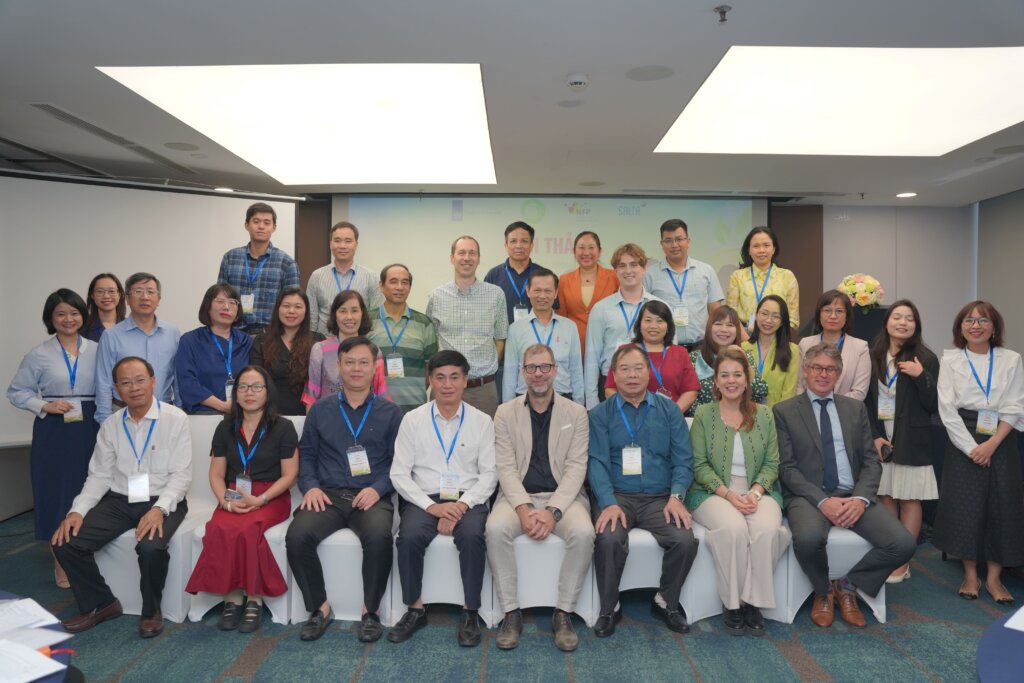
Group picture during the Strategic Discussion
Contributions from organisations including the Ministry of Agriculture and Environment, FAO, CIAT, SNV, Rijk Zwaan and Control Union highlighted how these priorities connect to ongoing activities and where further collaboration could add value.
A lot of work on salinity is already done in Vietnam - considerable knowledge, expertise and investment are already available, but initiatives are often fragmented. Better coordination between government, research, businesses and development partners could help make existing efforts more effective and support the wider adoption of solutions.
Participants also stressed the importance of connecting technical innovations with the enabling environment, including policies, financing mechanisms, functioning value chains and agricultural advisory services.
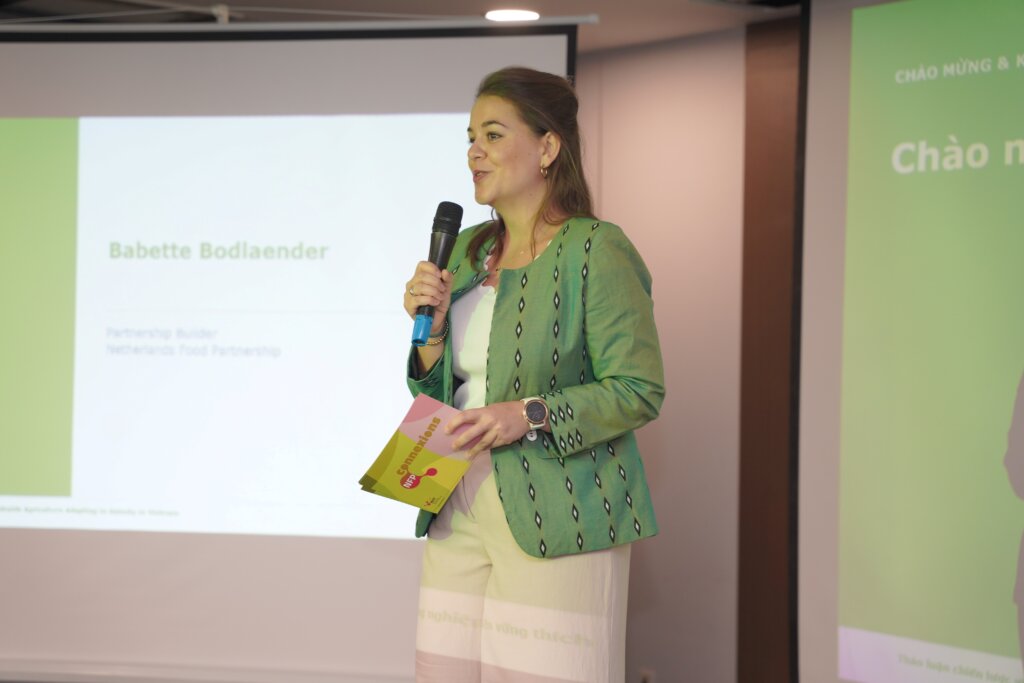
Babette Bodlaender of NFP facilitating the Strategic Discussion
From dialogue to joint action
The discussions in Can Tho and Hanoi demonstrated the value of connecting different perspectives and levels of action. Farmers bring practical experience and an understanding of local needs, while government institutions, researchers, businesses and development partners can help create the conditions for solutions to be developed, financed and scaled.
For the Salinity Country Partnerships Initiative, this is the core of the partnership - bringing together actors who may approach the same challenge from different perspectives, identifying common priorities and exploring where collaboration can create additional value.
The next step is to build on the priorities and opportunities identified during the programme, connect interested organisations and explore pathways for longer-term cooperation.
The recently established NL–Vietnam Salinity Working Group, part of the broader Salinity Country Partnerships Initiative facilitated by NFP and Netherlands Water Partnership (NWP), can play a role in this process. It aims to connect Vietnamese and Dutch partners, align with existing initiatives and contribute to a shared agenda for salinity resilience.
As the discussions in Vietnam showed, adapting to salinity requires more than individual technical solutions. It calls for an integrated approach connecting water management, agricultural practices, knowledge, policies and investment. By connecting farmers' realities with national and international cooperation, we can move from shared challenges towards practical, coordinated action.
Authors

Babette Bodlaender
Partnership Builder