The Return of Hope for a Proper Chicken Soup
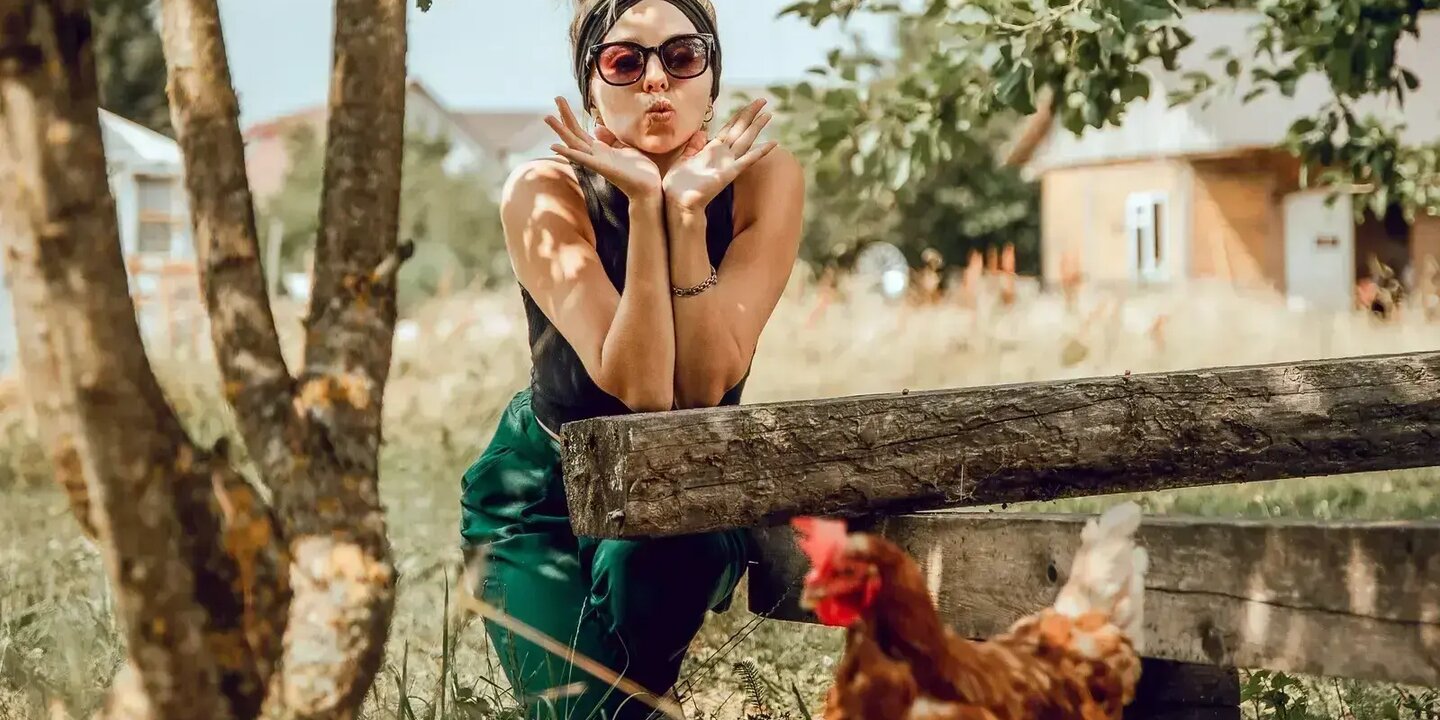
Resilient food systems require more than committed farmers; they also need an enabling ecosystem. Illustrative image of free-range poultry farming near Lake Peipsi, southern Estonia. Photo: Näljane Nelik (2023), public photo bank.
Kadri Tillemann is an international development expert with over 20 years of experience in rural development, local governance, and sustainable food systems. She is currently supporting the design of IFAD’s DOBRO programme in Ukraine. A participant in the 2026 Food Systems Finance e-course from Estonia, Kadri reflects on how finance can strengthen resilient food systems for present and future communities.
One of my favourite childhood memories is coming home after a long winter day of sledging and finding a steaming bowl of homemade chicken soup waiting for me. For some time now, that experience has become surprisingly difficult to recreate for myself and my two teenage daughters. Sure, I can buy industrial broiler meat or a bouillon cube from the supermarket, but it is simply not the same. In a country like Estonia, with strong agricultural traditions, this feels strange and unnatural.
Before taking the Food Systems Finance e-course, I tended to see food systems mainly through the lens of agricultural production. The e-course helped me realise that finance shapes far more than production. It influences resilience, biodiversity, local economies, and the choices available to future generations. Through my work with IFAD in Ukraine, I have seen that resilient food systems depend not only on farmers, but also on strong rural institutions and communities.
From a purely economic perspective, importing cheap poultry products and concentrating production in large industrial farms may seem efficient. Yet many important values are not reflected in the market price. How do we value maintaining small farms, preserving local culinary traditions, creating opportunities for women and youth, strengthening local value chains, or reducing transport emissions and packaging waste?
One insight that has particularly stayed with me was that finance is not only about mobilising more capital, but about directing it towards outcomes that markets alone often fail to reward. Learning about blended finance and impact-oriented investments showed me how financing can support farmers and rural businesses that create environmental and social value. The future of local poultry farming, and perhaps even that homemade chicken soup I remember so well, also depends on financing that enables small producers to remain viable.
The e-course also challenged me to consider natural, social, and human capital alongside financial returns. This does not mean rejecting modern agriculture or global trade, but ensuring that finance supports food systems that are diverse, resilient, environmentally sustainable and socially inclusive. I also realised that food systems finance extends far beyond development institutions. It shapes decisions made every day by municipalities, businesses, farmers and consumers alike. Whether discussing local poultry farming in Estonia, agricultural modernisation in Moldova, recovery and reconstruction in Ukraine, or EU agriculture and rural development policies, food systems are closely linked to the future of communities.
Many of the solutions already exist. Public instruments such as the EU’s Common Agricultural Policy (CAP) agri-environmental measures and LEADER/CLLD grants can complement private investment by supporting biodiversity, strengthening rural livelihoods and helping small producers establish viable businesses. Municipalities can protect agricultural land through spatial planning, schools can source food locally, and consumers can shape demand through everyday choices. Yet lasting change requires a broader coalition of actors. Their decisions help shape the future of food systems.
Perhaps one day I will again find that perfect chicken soup. More importantly, I hope we can build food systems where future generations still have the opportunity to do the same. The e-course helped me see that change is possible. The tools are already available. The challenge is putting them into practice. Perhaps one of my daughters, or another young entrepreneur, will one day see small-scale poultry farming in Estonia not as an eccentric hobby, but as a viable business and a meaningful investment in resilient food systems.
Author

Kadri Tillemann
Food System Finance e-course 2nd Cohort