Celebrating the 2026 Food Systems e-course: Closing and Alumni Networking Event – Ethiopia
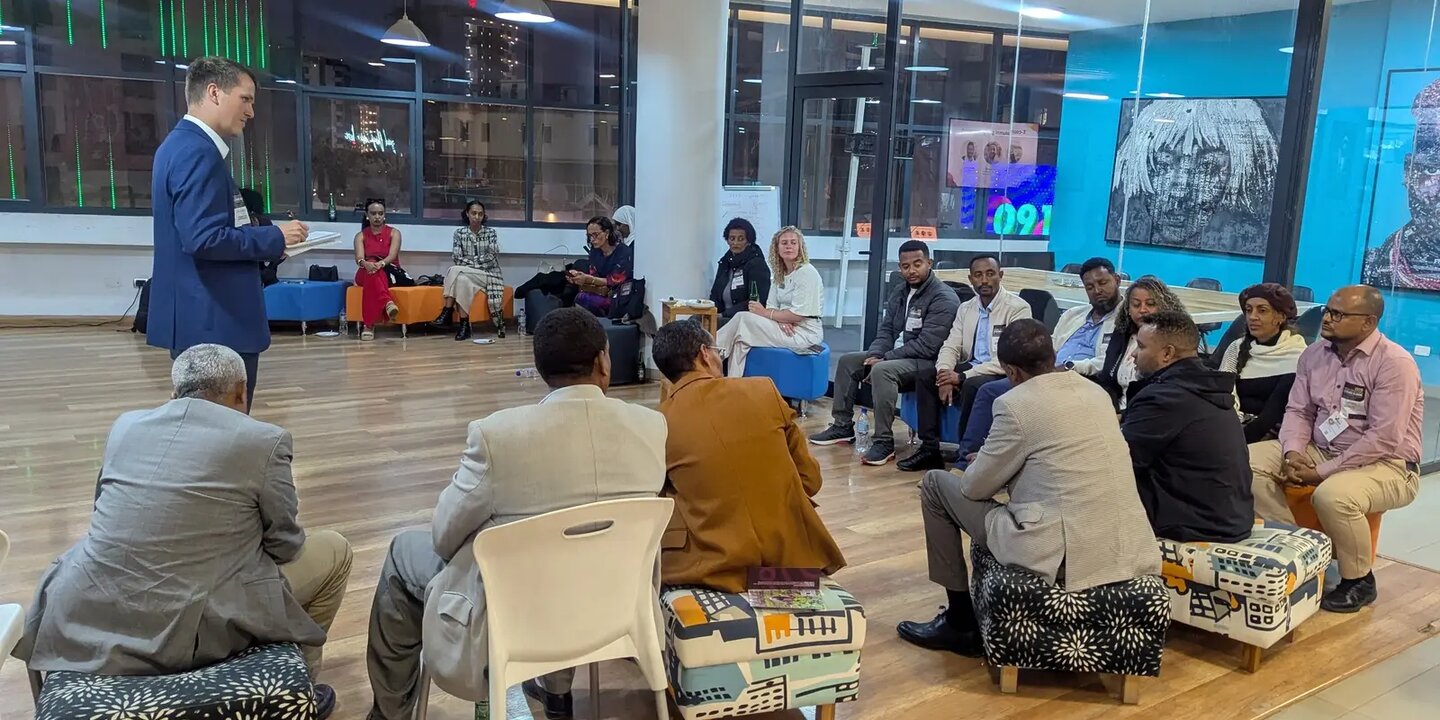
The Ethiopia Food Systems E-course Closing and Alumni Networking Event brought together alumni, practitioners and partners to celebrate the 2026 graduates, exchange practical experiences and strengthen collaboration for food systems transformation. Through expert insights, panel discussions and networking, the event highlighted the growing application of food systems thinking across Ethiopia. (Video Available Below)
The Ethiopia Food Systems e-course Closing and Alumni Networking Event was held on 9 July 2026 at BlueSpace in Addis Ababa. Organised by the Netherlands Food Partnership (NFP), the event brought together graduates of the 2026 Food Systems e-course, alumni from previous editions, food systems practitioners and representatives of research institutions, civil society organisations, development partners and private-sector organisations.
Despite heavy rainfall coinciding with the beginning of the event and preventing some registered participants from attending, more than 25 alumni and partners participated in the gathering. The event provided an opportunity to reflect on how food systems thinking is being applied in Ethiopia and strengthen connections among people working across different parts of the country’s food system.
Opening and Participant Introductions
The event opened with welcoming remarks from Floris Wouters and Marjan Riepma of the Netherlands Food Partnership (NFP). Rather than beginning with formal presentations, the facilitators engaged participants through interactive questions to introduce NFP and encourage attendees to share their own understanding of food systems partnerships.
Marjan explained that NFP is a networking organisation that brings together governments, research institutions, civil society organisations, financial actors, businesses and farmers’ organisations to support food security and food systems transformation. She emphasised that complex food systems challenges cannot be addressed by a single actor, but require collaboration across sectors and disciplines. NFP therefore focuses on connecting people, facilitating learning and strengthening partnerships that respond to locally identified needs.
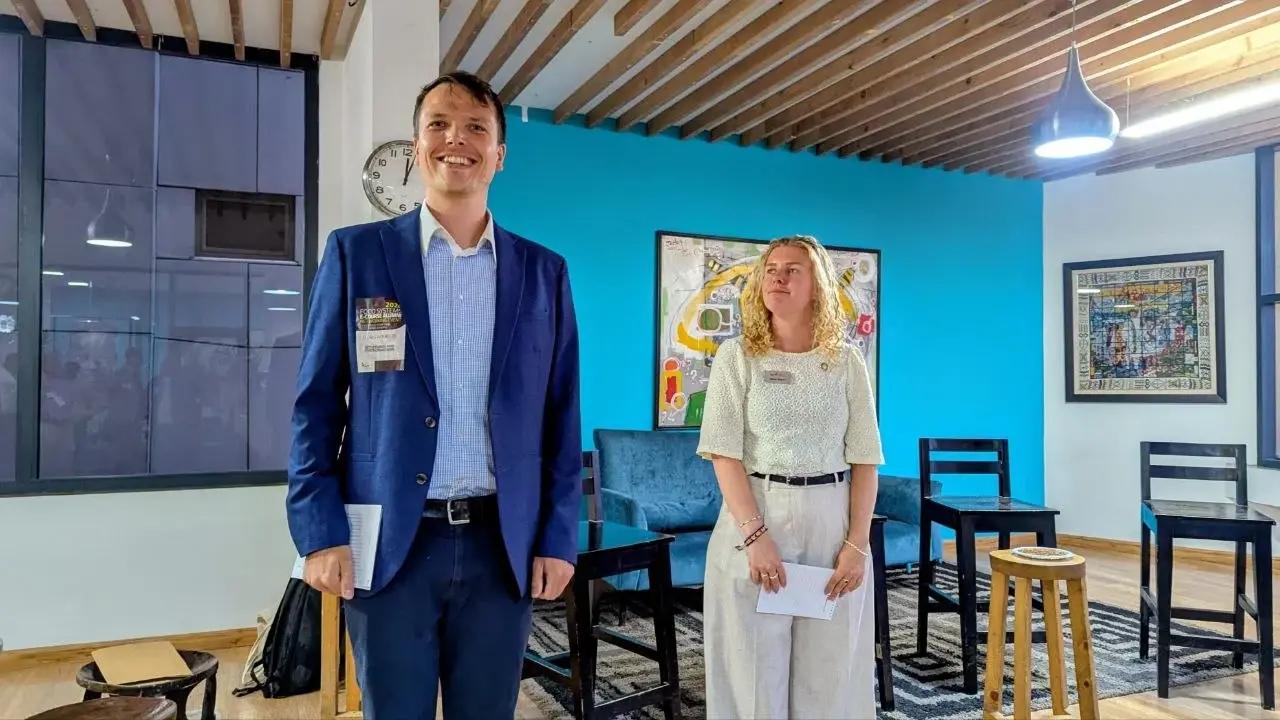
Floris Wouters and Marjan Riepma
Participants were then invited to introduce themselves by identifying where they work within the food system, revealing a diverse mix of expertise spanning agricultural production, food processing, research, policy, finance, business development and partnership building. The exercise highlighted the value of multi-stakeholder collaboration and created an engaging atmosphere for the discussions that followed.
Floris concluded the opening by introducing the Food Systems e-course and its follow-up practical training, Food Systems in Practice. He noted that the 2026 e-course brought together participants from 78 countries, including 57 graduates from Ethiopia, and encouraged more Ethiopian organisations to participate in future team-based learning programmes that apply systems thinking to real-world food systems challenges.
Expert Insight on Ethiopian Food Systems
The opening session was followed by an expert presentation by Dr. Akalu Teshome Firew, Deputy Manager of the RAISE-FS LOGIC project and Food Systems Advisor at Stichting Wageningen Research (SWR). As an alumnus of an earlier edition of the Food Systems e-course, Dr. Akalu shared practical experiences from SWR’s work in Ethiopia, highlighting how the organisation applies a food systems approach through initiatives on agricultural value chains, sustainable agriculture, seed systems, food security and nutrition.
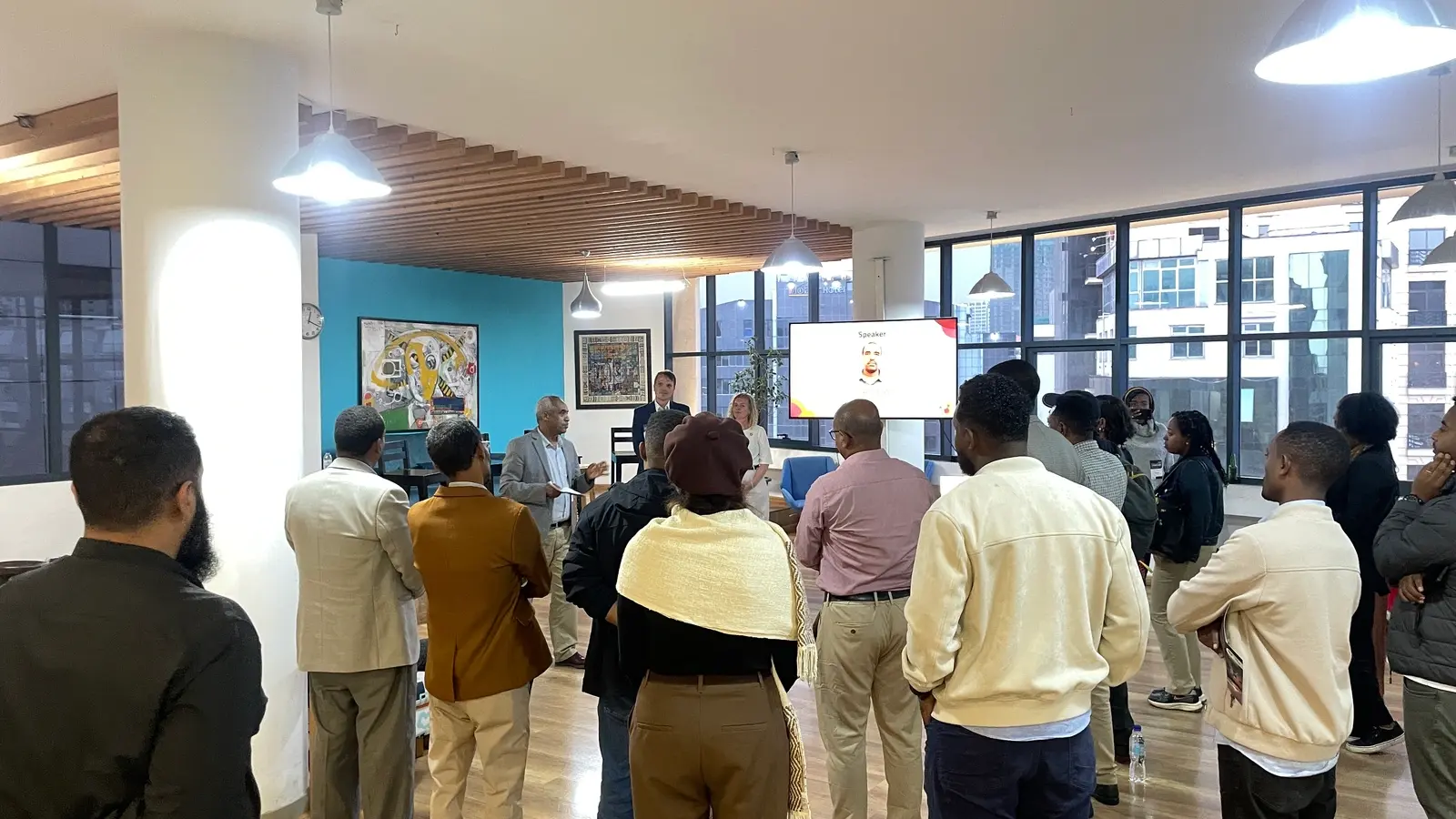
Dr. Akalu Teshome Firew, Deputy Manager of the RAISE-FS LOGIC project and Food Systems Advisor at Stichting Wageningen Research (SWR), presenting during the event.
A central message of his presentation was that food systems challenges cannot be solved through isolated technical interventions alone. While improving agricultural productivity remains important, meaningful transformation also requires considering how production is connected to markets, nutrition, gender, extension services, environmental sustainability and institutional collaboration. Drawing on examples such as crop diversification, home gardens and intercropping, he demonstrated how integrated interventions can simultaneously improve production, household nutrition and environmental outcomes when they are designed around local contexts and community needs.
Dr. Akalu also stressed that adopting a food systems approach is changing the way research and development organisations work by encouraging greater collaboration among agronomists, nutritionists, economists, extension experts and other specialists. He further highlighted the importance of using Ethiopian case studies in food systems training, enabling participants to relate systems thinking to local realities and apply it more effectively in their own work. Overall, his presentation demonstrated that food systems thinking is increasingly being translated into practical action through research, partnerships and capacity strengthening initiatives in Ethiopia.
Alumni Panel Discussion
The expert presentation was followed by a moderated panel discussion featuring three highly engaged Ethiopian alumni: Mesikerem Birihan Desalegn (GreenRoot AgriSupply), Eyakem Negussie (Sanku Ethiopia) and Addis Yohannes (Agriterra). The discussion focused on how the Food Systems e-course had influenced their professional work and how systems thinking is being translated into practice across different organisations and sectors.
Mesikerem Birihan reflected on how the e-course broadened her perspective beyond agricultural production to the wider food system. While her work had previously focused on supplying agricultural inputs to smallholder farmers, the training highlighted the importance of connecting production with markets, services and partnerships. She also stressed the need for evidence-based decision-making that reflects the realities and perspectives of farmers and local communities.
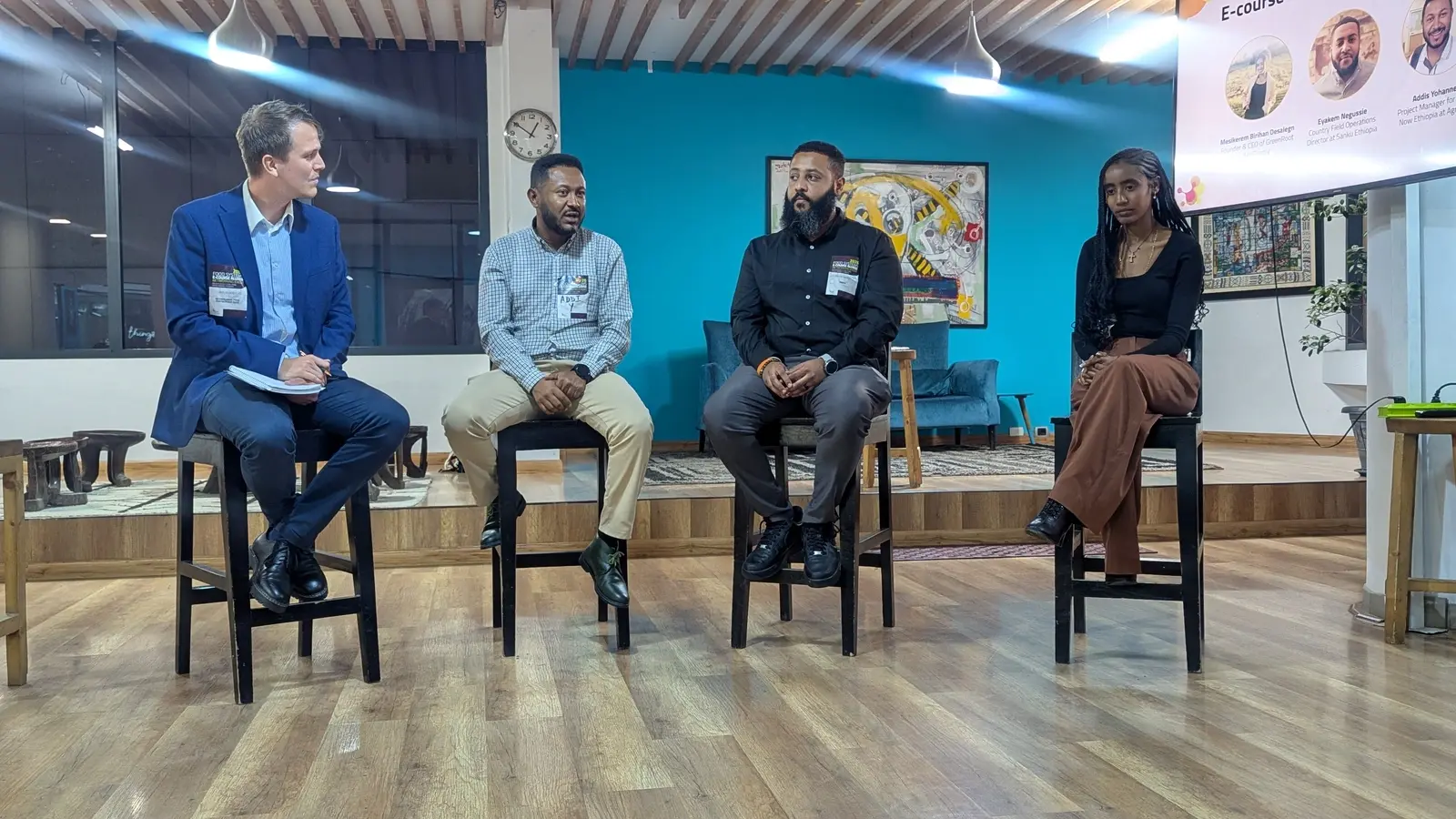
From right to left: Mesikerem Birihan Desalegn (GreenRoot AgriSupply), Eyakem Negussie (Sanku Ethiopia), Addis Yohannes (Agriterra), Floris Wouters
Eyakem Negussie explained that the e-course helped strengthen Sanku Ethiopia’s work on food fortification by providing a clearer framework for understanding the roles and interactions of the many actors involved, from government and development partners to private sector organisations. He noted that introducing food systems concepts across different teams within the organisation has fostered a shared understanding of how individual responsibilities contribute to broader nutrition and food systems objectives.
Addis Yohannes shared how the training introduced a stronger food systems perspective into Agriterra’s work with cooperatives and farmers. He emphasised that sustainable food systems transformation depends on collaboration among stakeholders across finance, markets, governance, production and food safety. Across the discussion, a common message emerged: the e-course encouraged participants to move beyond isolated interventions and recognise the value of partnerships, systems thinking and coordinated action in addressing complex food systems challenges.
Plenary Discussion and Participant Reflections
The panel discussion transitioned into an interactive plenary session where participants shared experiences from their own organisations and reflected on how the Food Systems e-course could be made even more relevant to the Ethiopian context. A recurring recommendation was to incorporate more Ethiopian case studies into the e-course, enabling participants to explore food systems concepts through locally relevant examples and practical experiences. Dr. Akalu also noted that recent editions have begun using Ethiopian project cases to strengthen contextual learning.
The discussion explored the relationship between agricultural production, nutrition and livelihoods. Participants emphasised that increasing crop diversity alone does not automatically improve dietary diversity, as production decisions are influenced by markets, household income, consumption habits and local farming systems. They also highlighted the importance of considering gender dynamics, noting that decisions on crop sales and household food consumption are often made by different family members and should therefore be reflected in the design of food systems interventions.
Participants further discussed the financing and governance of food systems transformation. Teklemariam Awoke stressed that transitioning to more sustainable food systems requires greater investment and stronger engagement of the private sector and financial institutions. Dr. Mulugeta shared how the food systems approach has informed his contributions to national guidance materials and academic research, while Dr. Bayush Tsegaye encouraged alumni to actively engage in policy processes, citing Ethiopia’s National Agroecology Strategy as an important opportunity to advance systems thinking through collaborative action.
The plenary reflected the diversity of expertise in the room, with participants representing research, government, civil society, finance and the private sector. Although they addressed different aspects of the food system, the discussion reinforced a common conclusion: meaningful food systems transformation requires context-specific solutions, cross-sector collaboration and continuous learning among diverse stakeholders.
Certificate Ceremony and Networking
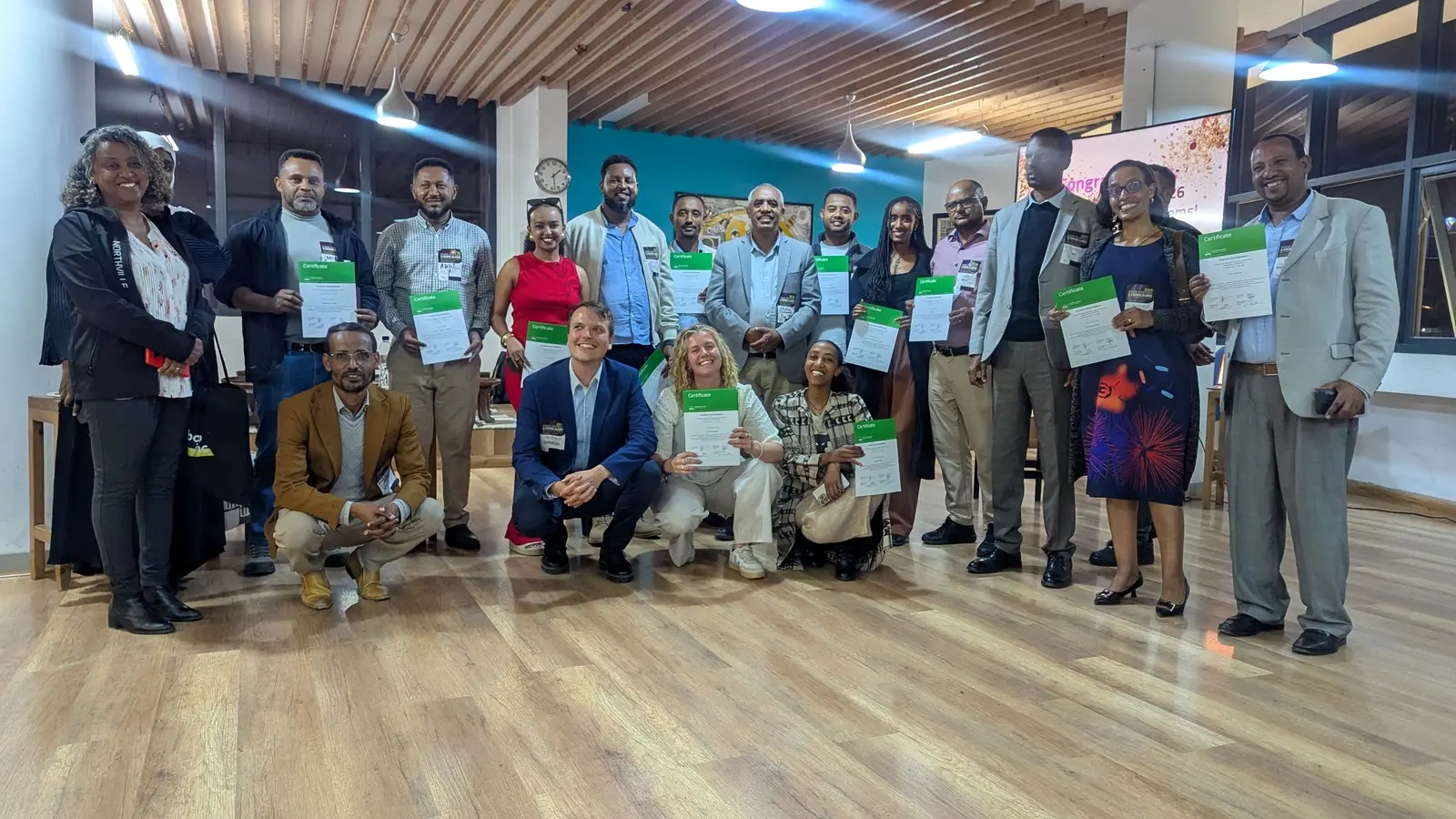
Certificates presented to participants who completed the 2026 Food Systems e-course and attending the event.
The event concluded with a certificate ceremony recognising the achievements of the 2026 Food Systems e-course alumni. A total of 57 participants from Ethiopia successfully completed the e-course, with certificates presented to graduates attending the event. The ceremony celebrated not only the successful completion of the programme but also the alumni’s commitment to applying food systems thinking within their organisations and professional work. It also encouraged participants to remain connected through the growing Food Systems alumni network and to continue their learning journey through initiatives such as the Food Systems in Practice training.
The formal programme was followed by a networking session, where participants continued discussions with speakers, panelists and fellow alumni while exploring opportunities for future collaboration. Bringing together professionals from government, research, civil society, the private sector and development organisations, the event demonstrated the value of combining learning with relationship building. Despite the heavy rain at the start of the event, the strong participation and active engagement throughout the evening reflected the growing momentum of Ethiopia’s food systems community and reinforced the importance of continued collaboration in advancing food systems transformation.
Video Highlight
Please watch below a five-minute video that captures key moments of the 2026 Food Systems e-course closing and alumni networking event in Ethiopia.
Author

Gizaw Legesse
Content Creator