Between urgency and optimism: reflections on biodiversity and food systems at COP17
Things you can apparently feel simultaneously after attending a UN Biodiversity COP: worn out and energized, encouraged and disheartened, concerned but hopeful.
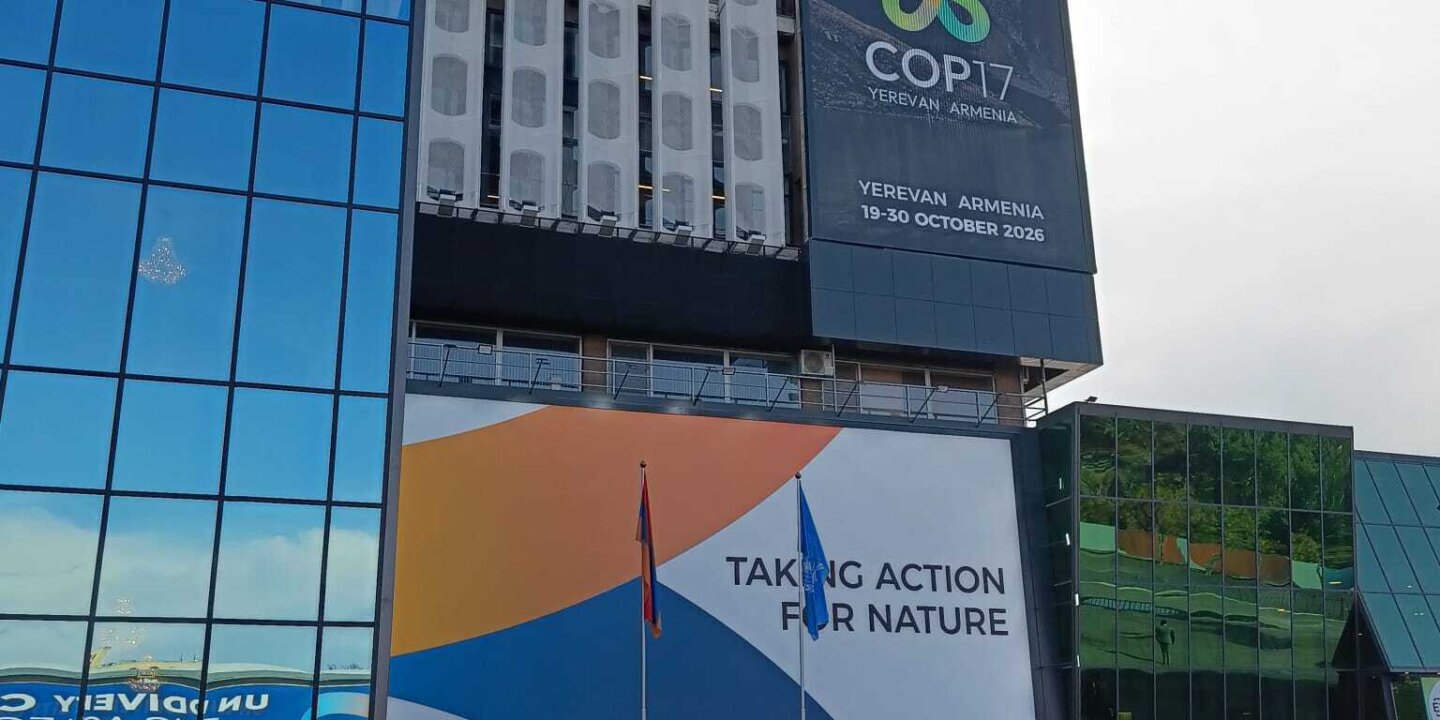
From 19 to 30 October, the 17th Conference of the Parties to the Convention on Biological Diversity (CBD COP17) brought the global biodiversity community together in Yerevan, Armenia. Under the theme Taking Action for Nature, the conference focused on accelerating implementation of the 23 targets of the Kunming-Montreal Global Biodiversity Framework.
Looking back, the mixed feelings are real. The commitments emerging from the official negotiations are disappointing when measured against the enormous challenges of biodiversity loss and the urgency of action required. At the same time, the many initiatives, practical experiences and examples of actors already making change happen. Across sectors and scales, people are not waiting for international agreements to start making change happen. They are experimenting, collaborating and working to scale their efforts. What they need is greater support and an enabling environment to accelerate that work.
For the Netherlands Food Partnership (NFP), COP17 was an opportunity to strengthen the connection between biodiversity and food systems. Together with members of our Biodiversity & Food Systems Partnership, we came to Yerevan with several ambitions: push for food systems to be higher on the biodiversity agenda, demonstrate the role of partnerships in turning ambition into action, bring practical experiences and shared resources into the conversations, and connect people working across sectors and scales.
Three reflections stand out from our engagements.
Changing mindsets: From biodiversity as a problem to biodiversity as a partner
Biodiversity provides the foundation for productive and resilient food systems, while the ways we produce and consume food are among the major drivers of biodiversity loss. Yet biodiversity and food systems are still too often addressed separately in policy, research and practice. Changing this starts with how we understand their relationship. Rather than seeing biodiversity primarily as something to protect from the negative impacts of food production, what happens when we recognize biodiversity as an essential partner in transforming our food systems?
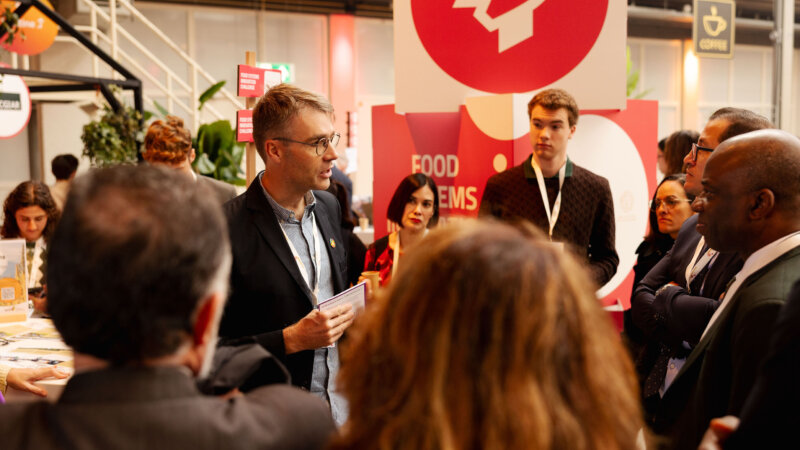
This question was at the heart of our session What if Biodiversity Became a Partner?, together with ProVeg International, the CGIAR Alliance of Bioversity International and CIAT, and NJR Biodiversity & Food Youth Representatives. Through examples involving diets, school meals, public procurement and seed systems, we explored how working with biodiversity can contribute to healthier, more resilient and sustainable food systems.
But changing mindsets is not only about how we understand the problem. It is also about how we organize ourselves to address it. In a session co-organized with PBL Netherlands Environmental Assessment Agency on Biodiversity Mainstreaming in Policy Practice, we explored what it takes to integrate biodiversity considerations into government policies and decision-making. Mainstreaming biodiversity requires more than adding environmental concerns to existing policy domains and objectives. It calls for a transformative change perspective which includes awareness of and reflecting on the views and structures that shape our daily practices. Mainstreaming biodiversity includes multiple tasks for policymakers to be able to meaningfully explore how biodiversity is understood and affected, how these impacts are prioritized and accounted for, and which structural drivers of biodiversity loss need to be addressed, through policies, rules or institutional change. What the session exposed is that countries have much to learn from each other in how governments take initiative and responsibility towards mainstreaming within and across ministries: by assigning a clear political mandate, by setting up coordinating structures and - most practically - by training civil servants on the importance of mainstreaming biodiversity, ecological transition and nexus response options.
These engagements speak directly to the first of our community-co-created Shared Messages on Biodiversity & Food Systems, which are now supported by close to 200 friends of the messages: Changing Mindsets. Recognizing the interdependence of biodiversity and food systems is an essential starting point. The challenge is to make that recognition visible in how we think, speak, organize and act.
Unlocking opportunities: Strengthening food systems while restoring biodiversity
The cost of inaction on biodiversity loss is enormous. At the same time, integrating biodiversity into food systems transformation through careful management offers opportunities to strengthen food security, restore ecosystems, build climate resilience and support livelihoods.
But realizing these opportunities is not so straightforward. Biodiversity, climate, land, water and food security challenges are deeply interconnected, while the institutions, policies and financing mechanisms addressing them often remain divided.
At the Food & Agriculture Pavilion, our session From Shared Agendas to Shared Action: Advancing Rio Convention Synergies through Nature-Positive Food Systems, organized with CGIAR, WWF, SNV, the Agroecology Coalition and Agroecology Europe, brought an important challenge into focus: while biodiversity, climate and land commitments are deeply interconnected, their implementation often remains fragmented. As Andrea Meza from UNCCD highlighted, different institutions can end up approaching the same farmers with conflicting advice, while poorly coordinated restoration efforts may benefit one environmental objective at the expense of another. The discussion reinforced that food systems offer a practical entry point for bringing these agendas together, but doing so requires more than another initiative. It requires coherent national policies, coordinated support for farmers and communities, and financing that enables integrated action at landscape level.
The potential of integrated approaches was also illustrated in Harnessing the Nexus: Biodiversity and Restoration in Saline Landscapes, led by Vrije Universiteit Amsterdam and partners, to which NFP contributed. Saline landscapes demonstrate how biodiversity restoration intersects with agricultural production, water management, climate resilience and livelihoods. They also illustrate why solutions developed within a single sector may overlook important opportunities, dependencies and trade-offs. The event brought together multiple parties highlighting the need for strengthening international collaboration, aligning policies, in particular those addressing climate change, biodiversity and desertification nexus. Learn more here.
This brings us to the second Shared Message: Unlocking Opportunities.
Integrating biodiversity into food systems can generate multiple benefits, but these do not necessarily emerge immediately or reach everyone equally. Changes in production practices, policies and business models can create short-term costs and risks, particularly for people whose livelihoods depend directly on natural resources. Unlocking opportunities therefore requires more than recognizing potential benefits. It calls for carefully managed transitions, supportive policies, appropriate financing and collaboration among actors who can help anticipate and address trade-offs.
The question is not simply how to create more biodiversity-positive opportunities, but how to make them viable, accessible and beneficial across different contexts. The inspiring examples shared throughout COP17 show that action is already underway. The challenge is to create the conditions for these efforts to thrive, connect and reach greater scale.
Altering the Power Web: Making partnerships matter
Now that COP17 was about accelerating implementation, one of the most important questions for us was what enables global ambitions to translate into meaningful change on the ground. Partnerships were central to our contribution to this conversation.
Through Setting the Table for Change at the Netherlands Pavilion, together with the CGIAR Alliance of Bioversity International and CIAT, Nexus Action, SeedNL, SNV, the Government of the Netherlands and Commonland, and Food Systems Partnerships as a Lever for Biodiversity Action at Scale, an official NFP CBD side event involving CGIAR, Commonland, IFAD, Naturalis, SNV, PBL Netherlands Environmental Assessment Agency, the Government of the Netherlands, ProVeg International and WBCSD, we brought together perspectives from governments, research institutions, civil society, development organizations and the private sector to explore how partnerships can contribute to implementing the Global Biodiversity Framework.
The idea was straightforward: transforming food systems requires changes that no single actor can deliver alone. Partnerships can connect different forms of knowledge, capabilities and resources. They can create opportunities to experiment with new approaches, align efforts and connect local experiences with national and international agendas. Partnerships themselves can be transformative, but this does not happen automatically.
To ground these conversations in practice, we shared examples from our Biodiversity & Food in Action bundle, including experiences involving resilient rangelands and companies working to scale regeneration. Alongside other examples shared during the sessions, these sparked encouraging discussions about what collaboration can make possible. Yet an important insight emerged: effective partnerships require more than shared ambitions. Building trust, finding common ground and navigating different interests takes time and sustained effort. As speakers emphasized, this often invisible work is essential to transformation, but rarely receives the attention or financing it deserves.
And even when collaboration works, bringing actors together does not automatically mean that existing power imbalances are addressed.
Our third Shared Message, Altering the Power Web, reminds us that concentrated power and unequal access to resources, opportunities and decision-making are themselves barriers to more equitable and biodiverse food systems.
The issue of corporate power featured prominently in our official side event, sparking a lively and sometimes challenging exchange. Large companies and financial institutions have significant influence over agricultural practices, supply chains, markets and investment decisions. But how do we address that influence? Some participants emphasized the importance of engaging businesses by demonstrating the economic risks of biodiversity loss, while others called for stronger rights-based approaches and alternative models of ownership. These different perspectives highlighted an important tension: partnerships can help mobilize powerful actors for change, but how do we ensure they also challenge, rather than reinforce, existing power structures?
Partnerships need to do more than connect organizations that already have influence. They should create space for different forms of knowledge, strengthen the agency of underrepresented actors and question the structures that determine whose priorities shape decisions and who benefits from change.
One of the challenges we take home is the need to better demonstrate how partnerships themselves enable transformative change. We see their potential to connect actors, mobilize resources and support collective action. But how do we make their contribution to systemic change more visible and tangible? What makes some partnerships effective in overcoming structural barriers, while others struggle to move beyond dialogue?
These questions are central to our ongoing Partnership agenda and deserve continued attention.
Beyond Yerevan: Connecting ambition, experience and collective action
So, what do we take home from COP17?
The disappointment that international commitments still fall short of what the biodiversity crisis demands. But also the energy that comes from meeting people who are already demonstrating what is possible.
Perhaps one of our strongest reflections is that we do not necessarily need more ambitions developed in isolation. We need to become better at connecting the ambitions, knowledge, resources and initiatives that already exist, while confronting the barriers that prevent them from translating into meaningful action.
An encouraging experience throughout COP17 was using our Shared Messages on Biodiversity & Food Systems as a starting point for conversations. Co-created by members of our Partnership and now supported by almost 200 individuals and organizations, they offer a common language for people approaching biodiversity and food systems from different perspectives.
That shared language matters. Biodiversity conservation and food security communities do not always use the same concepts, emphasize the same priorities or approach challenges in the same way. The Shared Messages do not erase those differences. Instead, they provide a common starting point for constructive dialogue, helping people explore connections, recognize different perspectives and identify opportunities to work together.
For us, this was a tangible reminder of the value of collective knowledge and co-creation. Sometimes an important contribution to change is creating the language and space that allows people to better understand one another and begin working across established boundaries.
For NFP and our Biodiversity & Food Systems Partnership, the work continues through our shared Partnership agenda. We will keep connecting actors, bringing practical experiences into policy and partnership discussions, and exploring how collaboration can better enable transformative change.
Our Shared Messages, Stories of Progress and Use Cases are resources for this collective effort. We invite others to use them, challenge them, adapt them to their own contexts and contribute experiences that help demonstrate what meaningful change looks like in practice.
Because ultimately, the significance of COP17 will not only lie in what was discussed or agreed in Yerevan, but in what governments, communities, businesses, researchers and civil society are able to do with those commitments and connections in the years ahead.
Let's carry the momentum beyond COP17.
Further reading
For more detailed analysis of the formal COP17 outcomes:
NFP Biodiversity & Food Systems Partnership
Explore the NFP Biodiversity & Food Systems, its Shared Messages, Use Case Bundle and other resources and join the Partnership's ongoing conversations.
Authors

Mariëlle Karssenberg
Partnership Builder - Netherlands Food Partnership

Roseline Remans
Glocolearning & Alliance Bioversity International - CIAT