Join the Journey: Applying Food Systems Thinking in Egypt - Reflections by Mayada Seoudi (Delphy Egypt)
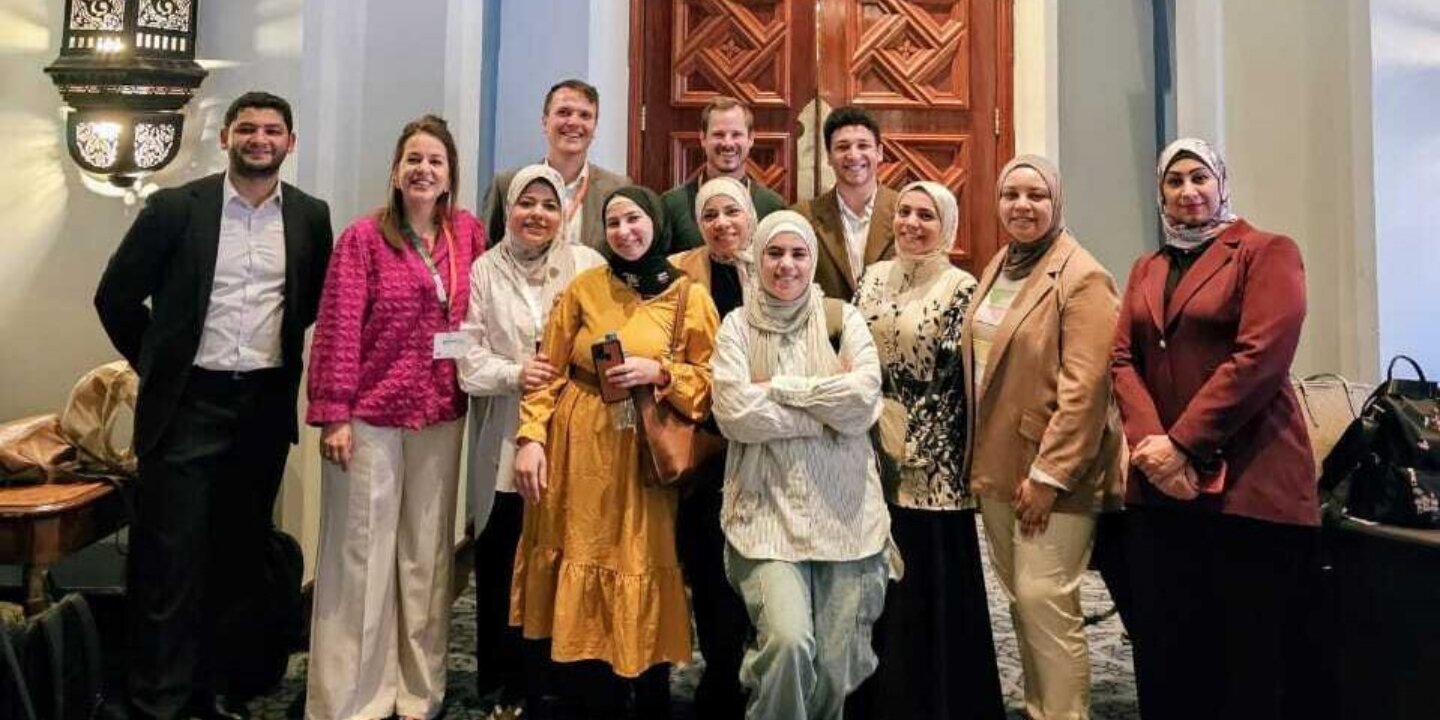
Food Systems Approach Closing Ceremony 2026
In the last few months, Netherlands Food Partnership and Delphy Egypt collaborated on various fronts to contribute to a successful E-course on Food Systems and produce a practical follow-up for (future) Egyptian participants. This article is a reflection and an invitation to, especially my colleagues in the Egyptian food system, to join the E-course in the next edition!
Facilitating for the E-course on Food Systems
The setup of this year’s e-course was slightly different, featuring more interactive elements that encouraged participants to reflect on their own work and gain practical experience. Joining as one of the facilitators on the online learning platform Curatr was a pleasant, interactive experience that connected me with professionals in food systems from all over the world.
Based on the comments I engaged with, participants came from a wide range of knowledge and work backgrounds, which aligned well with the course’s aims. The course focuses on highlighting global concepts and approaches to food systems, as well as providing tools to adapt these concepts to local needs and conditions.
E-course Closing ceremony at the Netherlands-Egypt Agricultural Partnership Summit
This year, the Netherlands and Egypt celebrate the 50th anniversary of their cooperation, which has hosted many impactful events. One of the most significant was the Dutch trade mission to Egypt under the name “Harvesting Success” as part of the mission activities, the Netherlands-Egypt Agricultural Partnership Summit took place, where many Dutch and Egyptian companies participated as exhibitors. Numerous side sessions and roundtables were organised to highlight cooperative efforts and create new networks.
Building on the success of last year’s closing ceremony, it was an excellent opportunity to hold this year’s ceremony during the Netherlands-Egypt Agricultural Partnership Summit. We began organizing for the event by following up with Egyptian participants via a WhatsApp group to clarify any outstanding points and help them overcome challenges they faced in completing the course. This year, six participants were able to finalise the course.
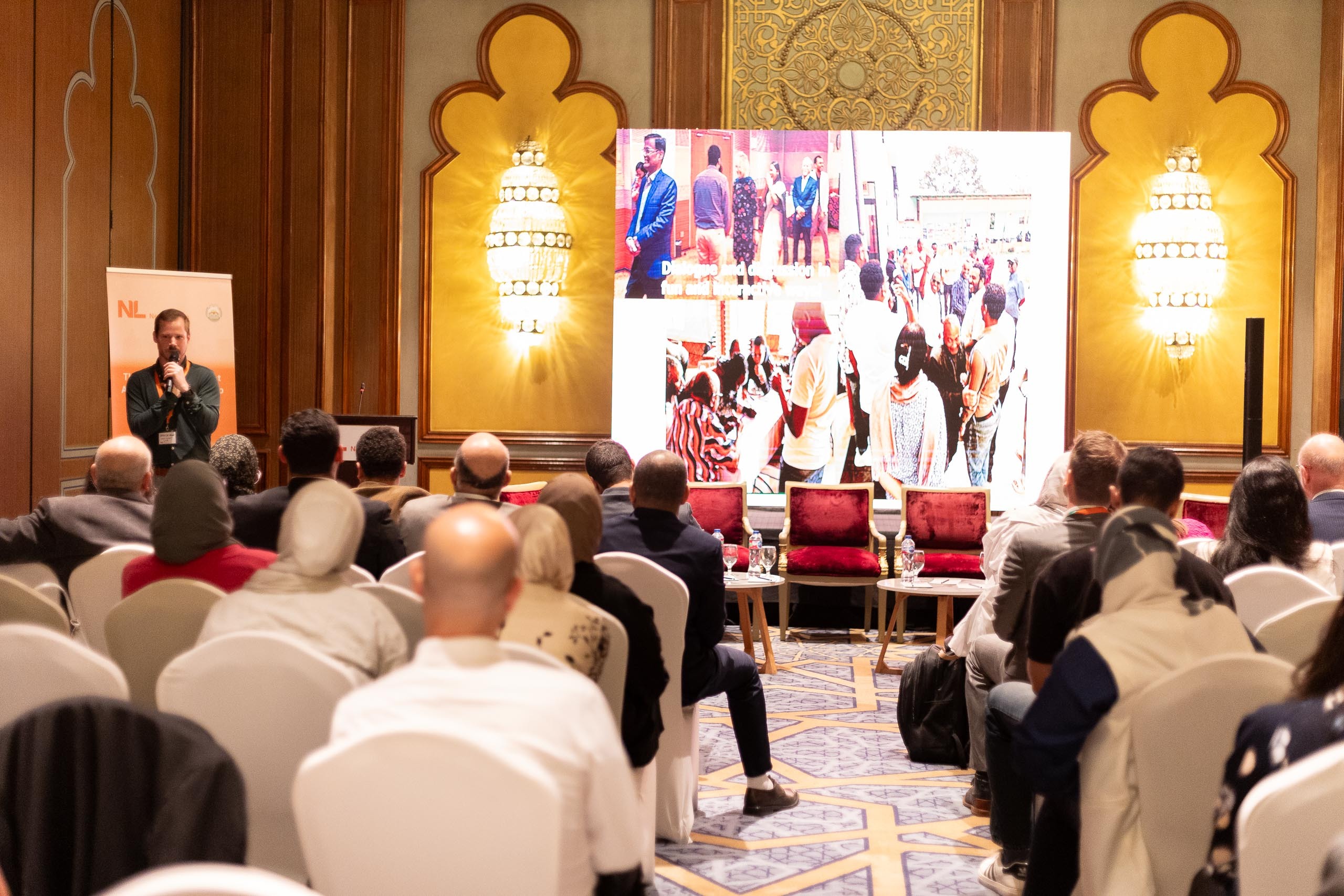
Closing ceremony at the Netherlands-Egypt Agricultural Partnership Summit - introduction on food systems
The closing ceremony opened with an introductory speech by Babette Bodlaender (Partnership Builder at Netherlands Food Partnership), who welcomed the audience and briefly outlined the session. She then gave the floor to Bram de Groote (Sustainable Food Systems Advisor at Wageningen University) to elaborate on the e-course content, its goals, and the learning journey participants undertake. Bram highlighted the core meaning of the food system and its importance. Reflecting on Egypt’s food system, he explained that the approach starts with understanding the drivers, activities, and outcomes. By mapping these elements, participants gain a broader perspective, discover unintended synergies and trade-offs, and identify potential solutions and interventions. The training bridges theory and practice through interactive methods and discussions.
Lamiaa Melegui from UN-Habitat Egypt then shared her experience with UN projects in Egypt, identifying systemic challenges in food, climate, health, and nutrition. She emphasised the importance of understanding food system dynamics in order to improve them. To that end, she presented her work for the Convergence Initiative, a collaborative effort led by the Government of Egypt with the UN Food Systems Coordination Hub, the UN system, development partners and national stakeholders. A concrete output of this initiative is the Convergence Action Blueprint of Egypt, a national roadmap that aligns food systems transformation, climate action, and public health under one integrated vision.
Building on that, Floris Wouters (Project manager of the Food Systems E-course at NFP) continued by reflecting on the E-course’s goals, explaining the course structure, and participant outcomes. He highlighted the team’s achievement of over 4,500 enrolments across the last seven editions of the course and mapped this year’s participation, which came from 78 countries worldwide. A special invitation was extended to all Egyptian organisations that are interested to learn and practice the food systems approach, to join the E-course and its practical follow-up training! He then handed over to me, as course facilitator from Delphy Egypt, to elaborate on the course’s activities in Egypt over the past two years.
In my contribution, I explained Delphy’s work in previous years for the E-course. In 2024, a new pilot training program and follow-up to the E-course, was launched under the name “Food Systems in Practice”. It aims to enhance participants’ experience through in-person training by applying the concepts learned during the E-course. The first cycle was focused in three countries (Egypt, Kenya, Ethiopia). In our case in Egypt, a group of 10 women from the “Women in Agriculture” community that was part of Delphy’s Gender program, came together and worked on a case study. The training was a very promising success, which motivated the NFP team to continue it with a second cycle in 2025 in which various countries joined. There we further developed the design by making three subgroups, each working on a different case study. The second cycle was successfully completed with a closing event celebrating the participants’ graduation.
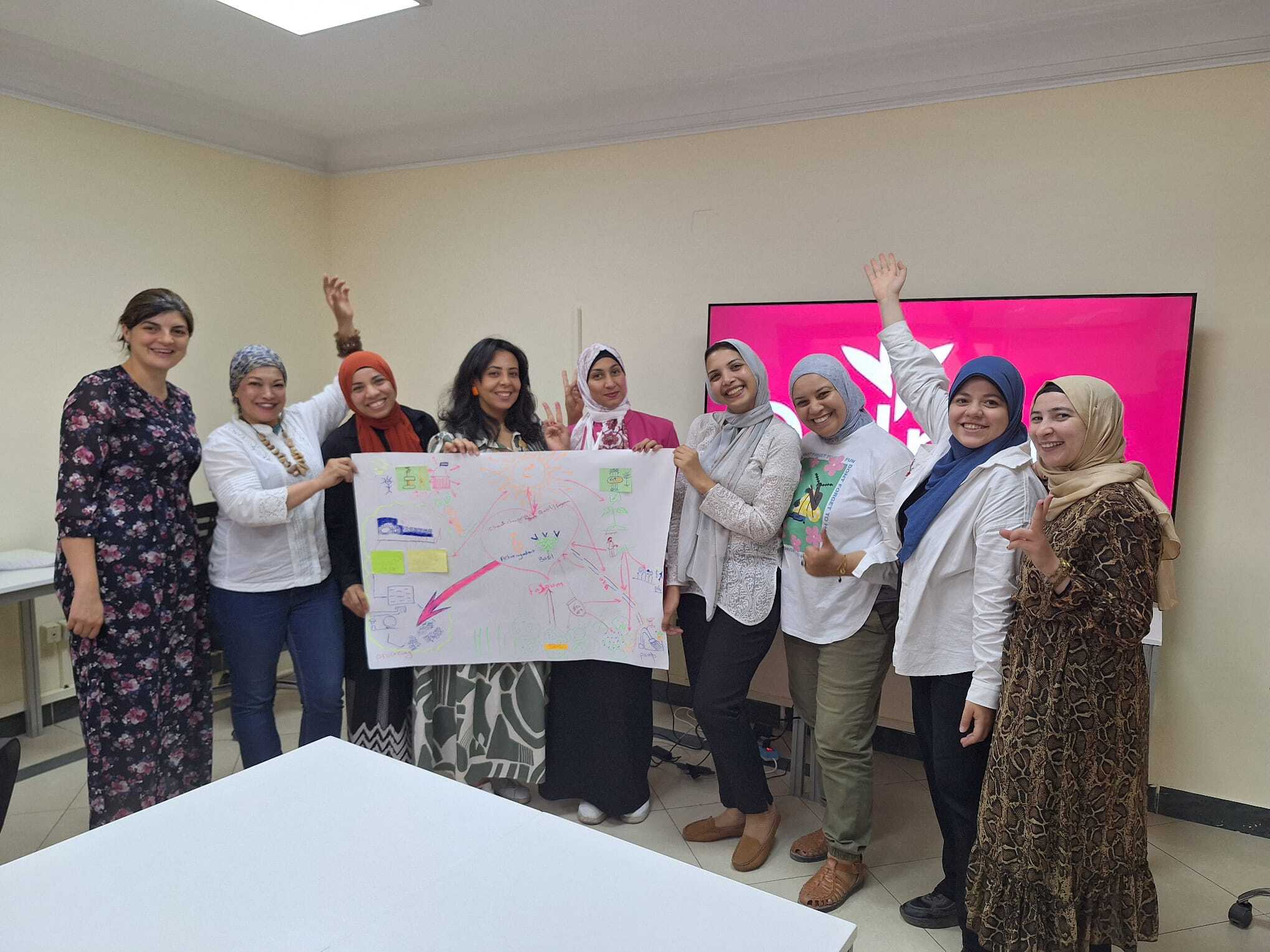
Food Systems in Practice (pilot) - Rich Picture exercise
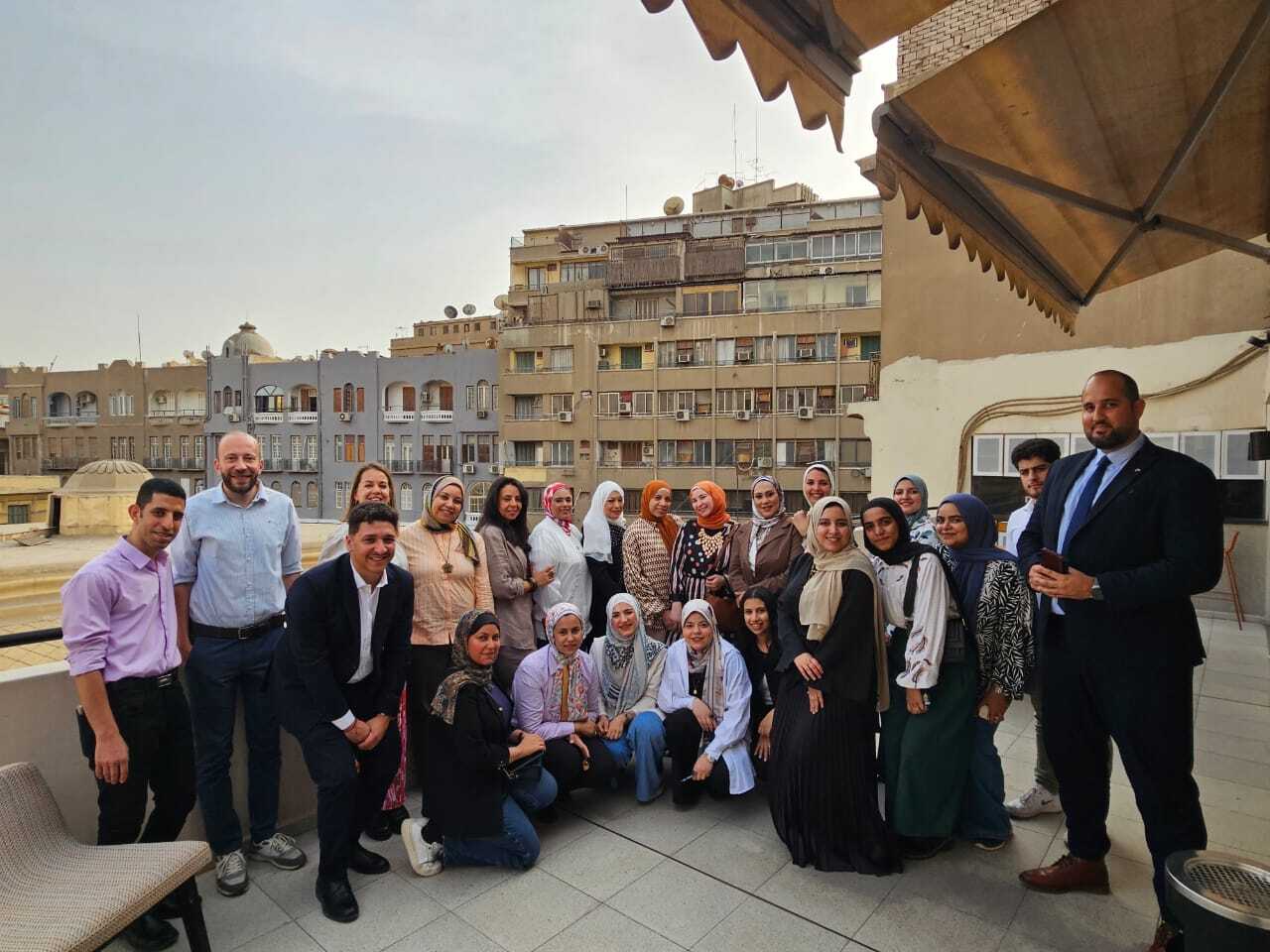
Food Systems in Practice (second cycle) - closing event
Following this, a panel discussion was held in which four alumni from the two cycles shared their training experience and how they applied it in their subsequent work.
• Fatma Elzahraa, Agricultural Specialist at the Ministry of Agriculture and a participant in the first cycle, spoke about how the course created a major mindset shift for her: “I now truly understand the importance of partnership between the government, the private sector, and research centres – which I later learned is called the Triple Helix.”
• Marwa Mokhtar, a researcher at ARC and lecturer at Heliopolis University, talked about her close work with university students. She shared how she applied skills gained from the training – such as problem-solving and mapping activities – in her work. She became interested in giving her students more awareness that to make an impact, they must look at the bigger picture.
• Ahmed Tarek Refaie (INTA), a specialist in knowledge-sharing methods for youth, creates programmes that teach school students how to start a business. Some students choose the agri-food sector as their track. He said: “The training helped me give them a better understanding of the sector, identify leverage points, and map out the sector’s actors and drivers to reflect them in their business.”
• Mohamed Hesham, Project Manager at the Elfarfra Project, explained: “As a project manager more involved in the production chain, I see, for instance, production losses that can reach 30%. By mapping the sector and identifying leverage points, we can address the right challenges to the right decision-maker. Also, bringing partners together to map the sector would help create a clearer vision of it.”
Throughout the panel discussion, it was clear that the alumni’s motivation is still going strong – they continue to learn, work, and grow, aiming for more impactful changes.
The session concluded with the distribution of certificates to this year’s participants, encouraging them to follow the path of the alumni in creating their own success stories.
The outcome of the session was increasing the awareness of the audience about the food system. Many members of the audience reached out after the session for further discussion, questions about joining the E-course for the next edition. Witnessing that filled me with pride for reaching our hoped impact in creating more awareness in order to create more impactful changes.
I would like to invite you all to join us in the next cycle of the training, which is promised to be an insightful experience.
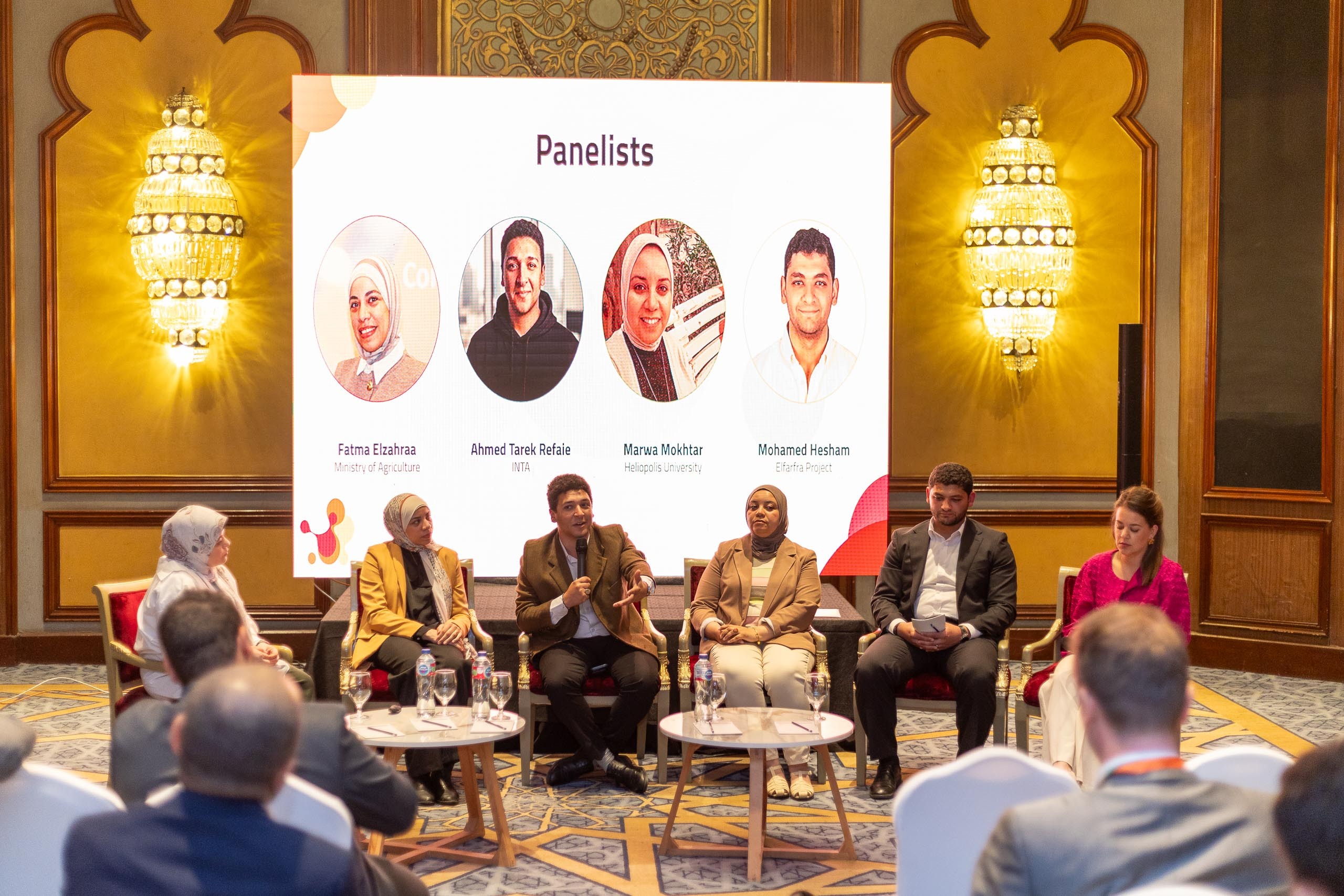
Closing ceremony at the Netherlands-Egypt Agricultural Partnership Summit - panel discussion
Throughout the panel discussion, it was clear that the alumni’s motivation is still going strong – they continue to learn, work, and grow, aiming for more impactful changes.
The session concluded with the distribution of certificates to this year’s participants, encouraging them to follow the path of the alumni in creating their own success stories.
The outcome of the session was increasing the awareness of the audience about the food system. Many members of the audience reached out after the session for further discussion, questions about joining the E-course for the next edition. Witnessing that filled me with pride for reaching our hoped impact in creating more awareness in order to create more impactful changes.
I would like to invite you all to join us in the next cycle of the training, which is promised to be an insightful experience.
Author

Mayada Seoudi
Project Manager, Delphy Egypt