Governing Change: Reflections from the Final Plenary of the 2026 Food Systems E-course (Video)
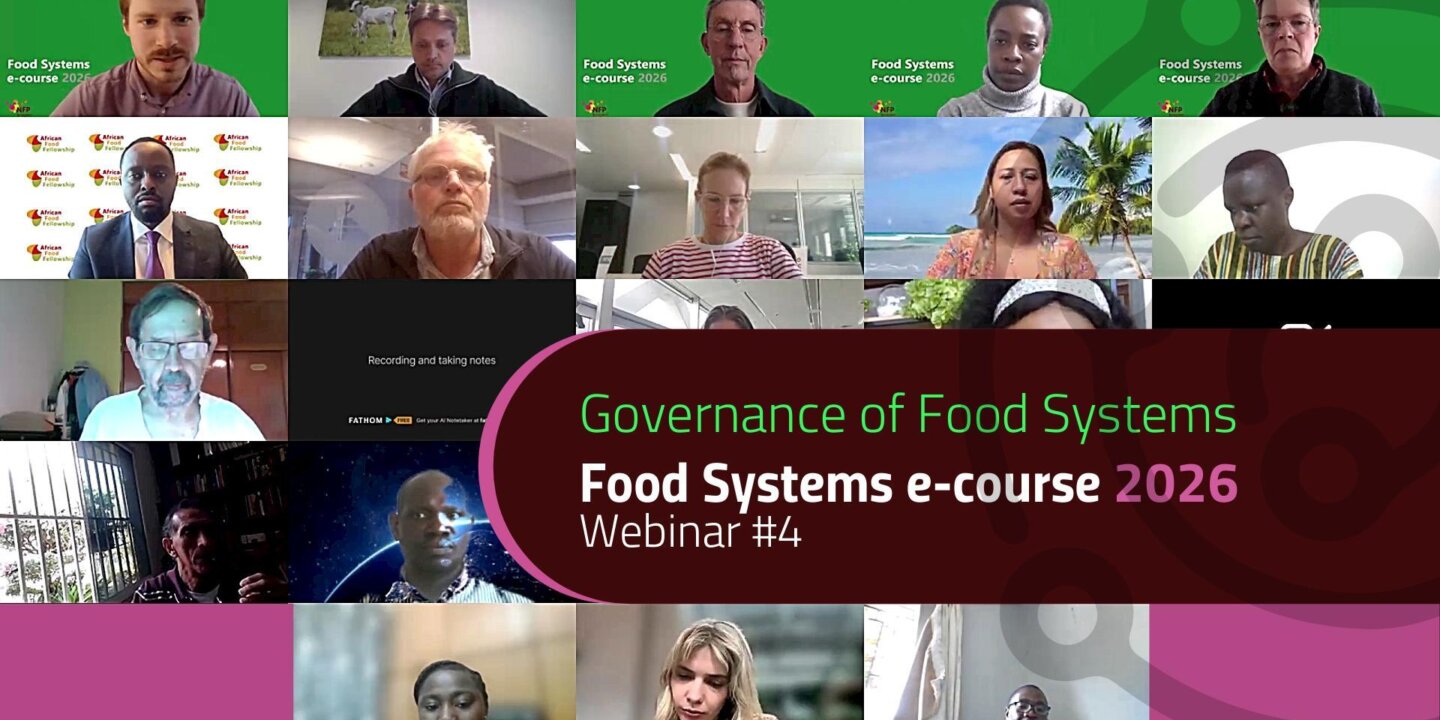
The final plenary of the 2026 Food Systems e-course explored how transforming food systems requires “re-governing,” shaped by power dynamics, competing interests, and incremental change pathways.
The fourth and final plenary session of the 2026 Food Systems e-course took place on 25 March, marking the conclusion of a rich learning journey. The session focused on the governance of food systems transformation and featured contributions from distinguished experts, with facilitation guiding the discussion and engagement throughout.
The session brought together Bart de Steenhuijsen Piters, Senior Researcher at Wageningen University & Research, and Pascal Murasire, Executive Director of the African Food Fellowship. The plenary was facilitated by Ezra Berkhout, Senior Researcher at Wageningen Social & Economic Research.
Opening the session, Bart de Steenhuijsen Piters invited participants to reflect on a fundamental question: who governs our food systems? He emphasized that transforming food systems is essentially a process of “re-governing,” shaped by competing interests, power dynamics, and structural lock-ins that often slow progress. Rather than a single solution, he highlighted that transformation unfolds through multiple pathways and incremental changes. Participants were encouraged to consider critical questions around inclusion, power, and agency—who benefits from current systems, who is excluded, and who drives or resists change.
Building on this, Pascal Murasire shared practical insights from his experience in ecosystem building. Drawing on a case from Rwanda’s potato chips sector, he illustrated how well-intentioned sustainability policies can unintentionally create unequal conditions between local and international actors. His reflections underscored the importance of collaboration, clear communication, and inclusive stakeholder engagement in overcoming systemic barriers and unlocking change.
The session concluded with an engaging Q&A, facilitated by Ezra Berkhout, where participants explored key issues raised during the discussion and connected them to their own contexts.
As the final plenary, the session not only synthesized the core themes of the course but also left participants with important questions to carry forward, reinforcing that meaningful food systems transformation requires continuous reflection, inclusive governance, and coordinated action across all levels.
Recorded video of the plenary session are prepared in four short parts, and are available at YouTube channel of NFP.
Author

Gizaw Legesse
Content Creator