Forgotten Fisheries: shells, women and the fisheries no one was counting
Jan van der Ploeg
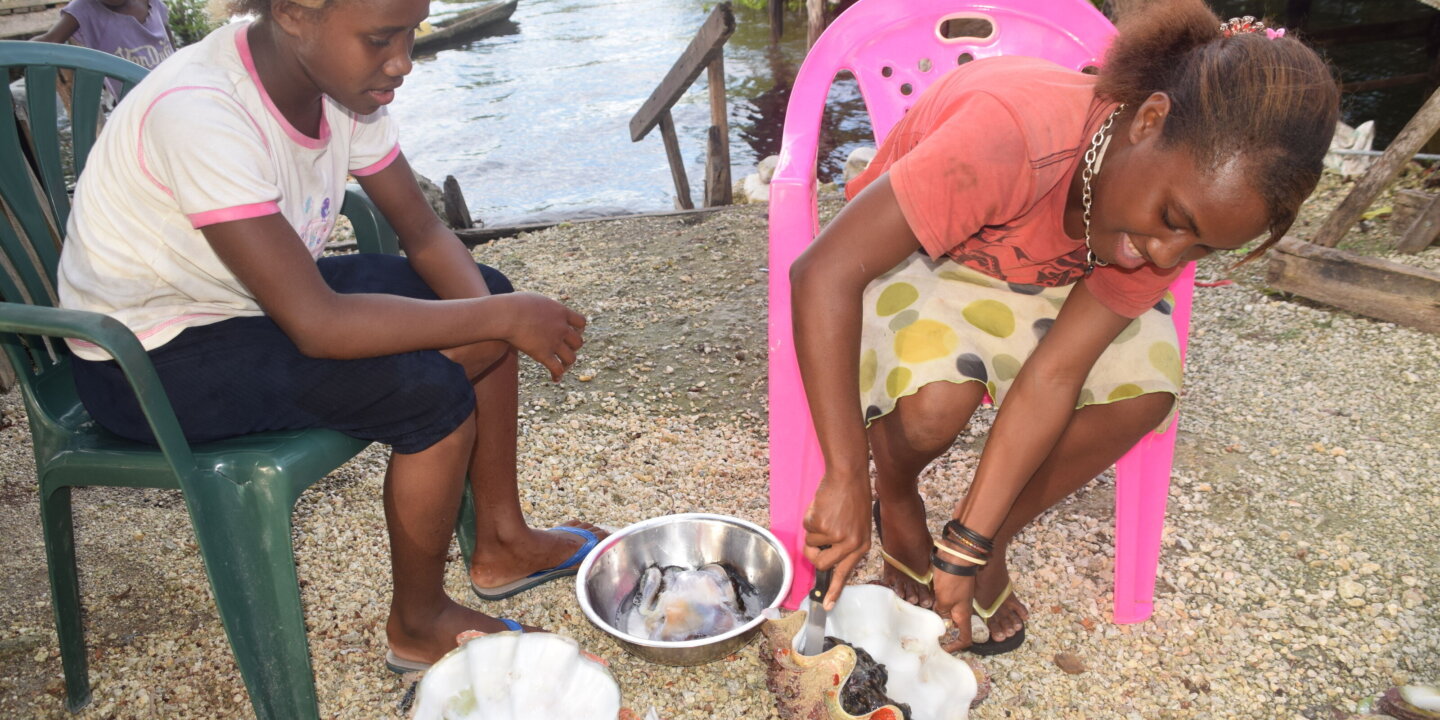
Food security, climate resilience and sustainable food systems are challenges no country or institution can solve alone. They require trusted partnerships, long-term scientific collaboration and the ability to connect deep expertise with urgent global needs. In the second story of this interview series, we travel to the Lau Lagoon in the Solomon Islands, where the project Forgotten Fisheries is helping bring an often-overlooked part of coastal life into view: shellfish, women’s work and the marine resources that sustain families, livelihoods and cultures across the Pacific coast.
The article follows the collaboration between Jan van der Ploeg, lecturer and researcher at Van Hall Larenstein University of Applied Sciences, and Janet Saeni-Oeta, Country Director for WorldFish in the Solomon Islands. Through the NWO-funded Senior Expert Programme in the NL-CGIAR research programme, Jan supports WorldFish colleagues in turning years of field-based knowledge into scientific publications that can inform policy and strengthen the visibility of small-scale coastal fisheries.
Their work shows why fisheries are not only about boats, nets and fish. In the Solomon Islands, shellfish are central to nutrition, income, environmental health and cultural identity. They are also closely linked to women’s livelihoods, yet remain largely invisible in conventional fisheries research and policy. By documenting these “forgotten fisheries”, the collaboration helps make visible the people, practices and resources that have sustained coastal communities for generations.
From strengthening local research capacity to supporting national policy on community-based resource management, this article illustrates what the Senior Expert Programme is designed to do: connect Dutch expertise with CGIAR’s long-term, locally embedded work, strengthen international research collaboration and help ensure that science leads to real-world impact.
We would like to thank journalist Jasmijn Snoijink for capturing this story with depth and care, and Jan van der Ploeg and Janet Saeni-Oeta for generously sharing their time, expertise and reflections in the interview. We also gratefully acknowledge the collaborative efforts of CGIAR and NWO, whose partnership and commitment have helped make this series possible. We are also thankful for the additional support of Nienke Beintema (WUR), Timmo Gaasbeek (BZ), and Vera Musch (LVVN) in the process.
Interested in learning more about the NWO Research Programme?
The Netherlands (NL) - CGIAR research programme contributes to transformational change in agriculture around the world by advancing food system knowledge and joint public and private innovation. The programme is part of the strategic partnership between the Government of the Netherlands and CGIAR. A first Phase ran from 2017-2023, Phase II runs from 2024-2030. The NWO-funded Senior Expert Programme is one of its instruments.
Authors

Marjan Riepma
Partnership Builder

Mariëlle Karssenberg
Partnership Builder - Netherlands Food Partnership