Championing biodiversity and food systems linkages: sparking conversations with your colleagues and partners

Food systems and biodiversity are deeply interconnected. The way food is produced, traded, and consumed is a major driver of biodiversity loss, while healthy ecosystems underpin food security, nutrition, and resilience. These connections are increasingly recognized across policy, business, research, and civil society.
"Once you see the foundational role of biodiversity in food systems, you can’t unsee it." — Marcel Beuckeboom, Naturalis, World Food Day 2025
Yet translating this recognition into action remains a challenge in many contexts.
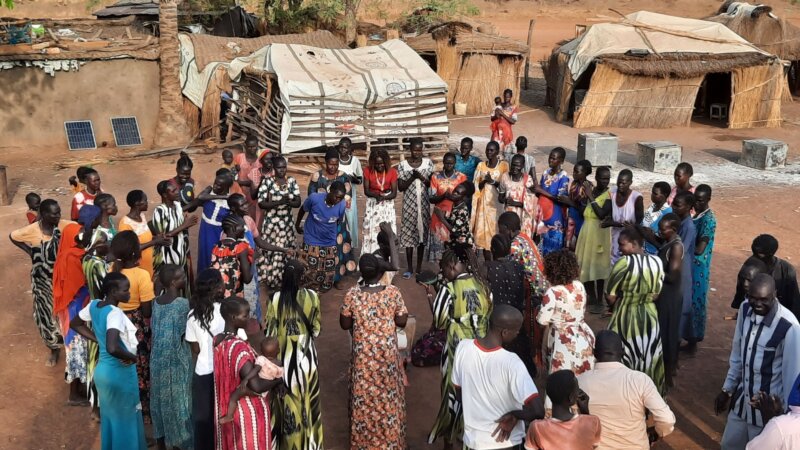
Over the past year, the Netherlands Food Partnership (NFP), together with partners from government, business, civil society, and research, explored what it takes in practice to strengthen synergies and manage trade-offs between food and biodiversity. Building upon research highlighting the complexity of food systems and the need to consider multiple entry points, actors, and interactions rather than linear solutions, we set out to create a unique bundle of learning journeys to give practical insights. We selected cases from diverse entry points and settings, spanning across communities, landscapes, policies, finance, business coalitions, international trade and value chains, and across settings in Africa, Asia, Europe, and Latin America. The resulting survey findings, stakeholder interviews and analysis are compiled into a flagship report that draws out key insights and provides an in-depth exploration of ten learning journeys: Food & Biodiversity in Action: learning from 10 journeys to sustainable futures.
This work started from a clear demand for concrete examples. While the link between biodiversity and food systems is widely acknowledged in global frameworks and policy commitments, partners repeatedly asked what this means in practice, and how it can actually be done. We kept hearing questions about how biodiversity–food system integration can be realized collaboratively, considering institutional, financial, and social constraints. As countries, companies and coalitions are increasingly expected to deliver on ambitious biodiversity and food system commitments, the gap between high-level goals and practical pathways for action has become more visible and more pressing.
Across the learning journeys, six cross cutting lessons emerged.

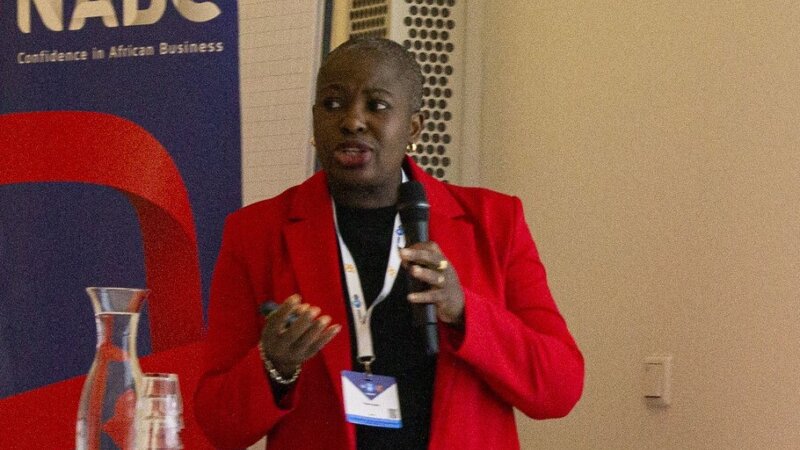
During our interviews for the learning journeys, it was clear progress often depended on champions (individuals, organizations, countries, or networks) who mobilize skills, energy, awareness, and resources to move efforts forward and persevere. Many people already hold the connections between biodiversity and food systems in their work but these connections are often implicit, fragmented, or siloed. They are not always named, shared, or explored together. This is where champions become so critical to facilitate and catalyze dialogue and joint learning, to spark ideas into action, and to help persevere.
“Integration rarely follows a linear path; it requires learning across perspectives, navigating trade-offs, and building trust over time which champions are critical to maintain”
To support these champions, NFP, as part of its’ Biodiversity and Food systems partnership, in collaboration with KANDS Collective and Glocolearning, has developed the Food and Biodiversity Conversation Starter Toolkit. This accompanies the ten learning journeys as a practical facilitation resource. This conversation starter toolkit aims to support champions to convene conversations that surface linkages, compare perspectives, and explore where action might begin.
The food and biodiversity in action conversation starter toolkit

The toolkit is designed to be flexible and adaptable, and will continue to be updated as we get feedback. The conversation starter can be used in short meetings, informal “lunch and learn” sessions, or more in-depth workshops, and across a wide range of organisational and cultural contexts. Its purpose is not to resolve all challenges in a single conversation, but to create clarity, shared understanding, and momentum—helping groups move from dialogue into ideas, and from ideas into practical next steps.
Together, the ten learning journeys and the Conversation Starter Toolkit form a complementary pair: real-world examples of what biodiversity–food systems integration looks like in action, and a facilitation resource to help champions spark—or deepen conversations. Through these resources, we hope to inspire new partnerships and encourage others to share their learnings on biodiversity - food integration in action. Ultimately supporting a broader transformation in which biodiversity and food are increasingly connected to achieve benefits for both people and the planet.
Learn more about the connected Biodiversity & Food Systems in Action Use Case Bundle
Food systems and biodiversity are deeply interwoven: the way we grow, trade, and consume food is the largest driver of biodiversity loss, yet thriving ecosystems are the foundation of food security and resilience. Bridging these two worlds together is no longer a choice but a necessity. To accelerate this shift, NFP has brought together with partners in the Biodiversity & Food Systems Partnership a bundle of 10 use cases that illustrate how biodiversity and food systems can reinforce each other in practice.
Authors

Sabrina Trautman
Co-Founder KANDS Collective

Mariëlle Karssenberg
Partnership Builder - Netherlands Food Partnership

Roseline Remans
Glocolearning & Alliance Bioversity International - CIAT