When Cities Grow, Farms Shrink: Why Malawi Must Align Housing and Agriculture Policies
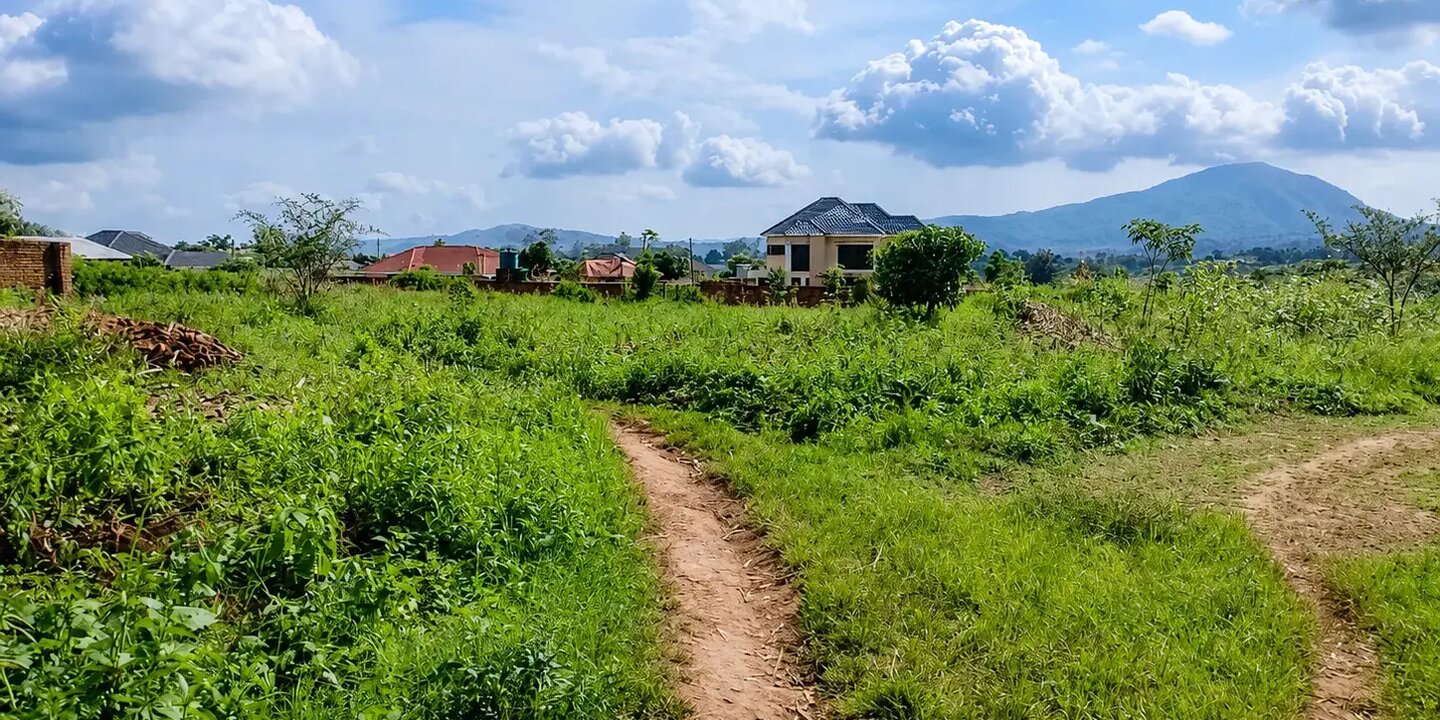
Once productive farmland on the outskirts of Blantyre, now transformed into a residential area. Picture by Elizabeth Mnenula Namaona. April 2026.
Elizabeth Mnenula Namaona is a Malawian food systems and agricultural policy professional working across agriculture, governance, and development. A participant in the 2026 Food Systems e-course, she explores why aligning housing and agricultural policies is critical to Malawi’s food systems transformation.
On the outskirts of many Malawian cities, a familiar scene is unfolding. Land that once produced food is increasingly being divided into residential plots. Foundations are dug, bricks are moulded, and new houses slowly replace what were once productive farms.
I have watched this change over time. Growing up in Blantyre, my family owned farmland in Mpemba, an area long known for agriculture. Nearly 26 years ago, we would travel about 16 kilometres from Chilomoni Township to the farm. During the farming season, the landscape was covered in green fields. Today, when I pass through the same area, I see rows of houses where crops once grew.
For many urban families, this represents progress. Malawi needs more housing, and expanding towns reflect economic and population growth. Yet beneath this development lies a deeper question that is rarely discussed: as Malawi builds homes, what happens to the land that feeds the nation?
Housing and agricultural policies often operate separately, leading to unintended conflicts despite shared goals. Around Blantyre, Lilongwe, and Mzuzu, urban expansion is steadily converting fertile farmland. In some peri-urban areas around Lilongwe, for example, studies show that average smallholder farm sizes have declined from about 1.21 hectares to roughly 0.47 hectares over the past two decades.
This shift has broader implications across the food system. When farmland near cities disappears, food must travel longer distances to reach urban markets. This increases both transportation costs, raises the risk of post-harvest losses, and makes food supply chains more vulnerable to disruptions. At the same time, peri-urban agriculture, which often supplies fresh vegetables and other perishables, becomes weaker.
One of the key lessons from the Food Systems e-course is that decisions in one part of the system often create unintended trade-offs in another. Expanding housing may solve an urban development challenge, but if it reduces nearby food production, it can place pressure on food access, prices and supply chains. This highlights the importance of policy coherence, ensuring that decisions on land, housing and agriculture are aligned so that progress in one sector does not undermine another.
As Malawi implements the Comprehensive Africa Agriculture Development Programme (CAADP) commitments, the focus is shifting toward broader agrifood systems transformation, including productivity, resilience, and sustainability. Achieving this requires cross-sector coordination. Rather than limiting development, better land-use planning and stronger collaboration between housing and agriculture can guide urban growth while protecting farmland and supporting food security.
At the centre of this issue lies a clear policy trade-off. Malawi must expand housing and infrastructure to accommodate a growing urban population, while also protecting farmland that supports food production and rural livelihoods. Systems thinking reminds us that these goals are interconnected. Managing these trade-offs early is essential for building a development path that is both sustainable and inclusive.
As Malawi advances its food systems agenda, today’s land-use choices will determine future food security. Places like Mpemba show what is at stake. With better coordination and forward-looking planning, Malawi can grow its cities while protecting the land that feeds its people.
Author

Elizabeth Mnenula Namaona
2026 Food Systems e-course Participant