What a Lobster Taught Me About Food Systems Finance
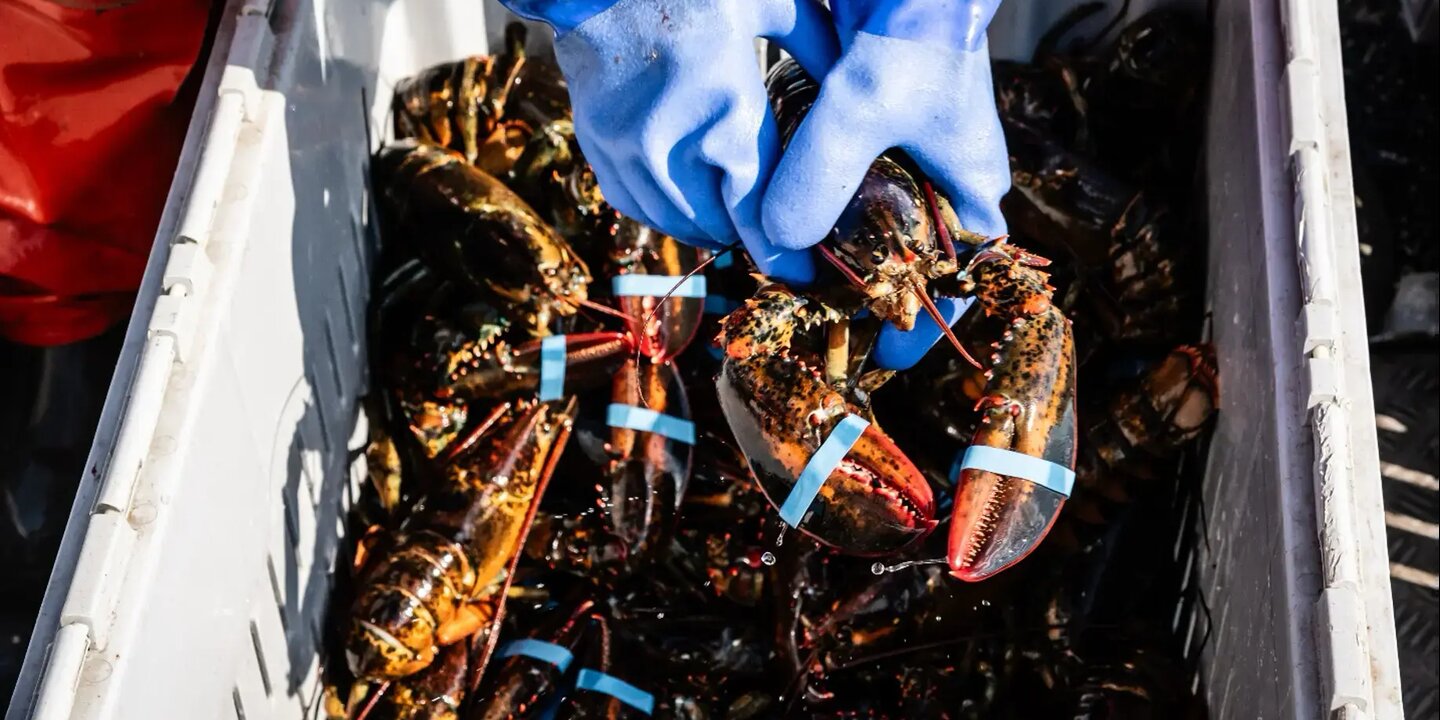
A fisherman holding a lobster off the New England coast, USA, taken by David Hills, July 22, 2016.
Rebecca Kern is the Director of Capital & Growth at Catch Together, a nonprofit located in the United States. Drawing on her experience working alongside commercial fishing communities, she shares insights from the 2026 Food Systems Finance e-course on building financial systems that support both people and natural resources.
Two years ago, I caught my first lobster on a commercial fishing boat. I was helping put the little bands around their claws when one pinched me right through my glove. I turned to the captain and said, "We should charge a lot more for lobster."
He laughed and replied, "Go spread the word."
Before joining Catch Together, I worked in finance and knew very little about commercial fishing. I instantly fell in love with fishermen*. They start work before most of us are awake, speak about their livelihood with incredible pride, and are dedicated to bringing one of the healthiest proteins to our tables. Yet they remain largely overlooked in conversations about our food system.
The Food Systems Finance e-course could not have come at a better time. I'm currently researching financial models that could better support the fishermen we work alongside. The e-course helped me connect my work with broader ideas about financing food systems that are both economically and environmentally resilient.
Managing a natural resource is complex. Building a financial system around that natural resource is even more complex. When both are tied to the livelihoods of individual fishermen, the challenge becomes even greater. That’s exactly what we're trying to solve at Catch Together.
What happens when a fisherman receives a 40% cut in the number of fish they're allowed to harvest? Does the loan on their boat go down 40%? Does the payment on the fishing rights they purchased go down? Of course not.
That's what makes financing commercial fishing so difficult. The asset is tied to a living natural resource, yet our financial systems expect predictable returns.
At Catch Together, we're exploring community ownership models that spread both financial and ecological risk across communities. Instead of carrying these challenges alone, stewardship-focused fishermen can own fishing rights together and build long-term resilience. This shared ownership also allows them to adapt more easily to changing harvest limits.
When I applied for this e-course, I was fairly confident I already knew most of the financing tools available. To my surprise, I discovered approaches I hadn't encountered before, along with organizations already putting creative finance into practice.
The e-course changed how I think about the price of food.
When I told that fisherman we should charge more for lobster, I thought I understood the problem. Today, I realize the question is much bigger. Across seafood and agriculture, the price we pay at the grocery store rarely reflects the true cost of producing our food. Farmers and fishermen alike are navigating climate uncertainty with financial systems that weren't designed to work with nature. Learning about true pricing challenged me to think differently about what food really costs and who carries those hidden costs.
My next step is exploring how these tools can strengthen the ownership models we're building alongside fishermen. What if we built financial tools that recognized the realities of working with nature instead of treating uncertainty as something to avoid?
Maybe that fisherman was right. Maybe I do need to spread the word. Not just that lobster should cost more, but that behind every meal is a producer, a community, and a financial system that should work as hard as the people feeding us.
---
* While 'fishers' is commonly used in scientific literature, I intentionally use the term 'fishermen' as it is the preferred term used by individuals of all genders within the communities I serve across North America.
Author

Rebecca Kern
Food System Finance e-course 2nd Cohort