Refugees to Resilience: Unlocking Mayukwayukwa’s Path to Sustainable Food Systems
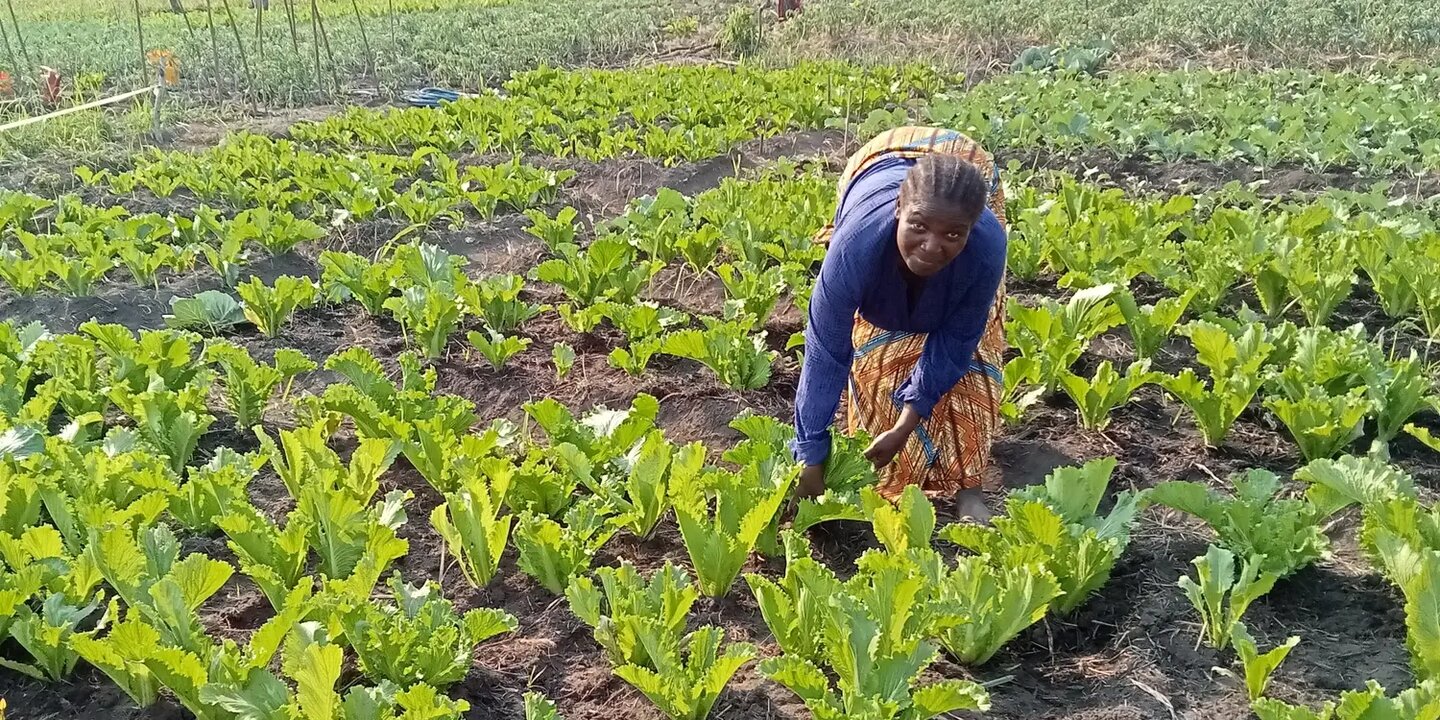
A refugee farmer tending her vegetable plot at Mayukwayukwa settlement, Kaoma district, Zambia. March 2025. Picture by Tiruneh Debena.
Tiruneh is an agribusiness and value chain development expert with over 14 years of experience across Africa and in the Middle East. He is a participant of the 2026 Food Systems e-course from Yemen. Based on his field experience in Zambia, Tiruneh explores how refugee communities can transition toward resilient, market-oriented food systems.
When I first arrived at Mayukwayukwa settlement in Kaoma District, Zambia, in June 2025, I was struck by both its history and its potential. I was there on a mission with UNHCR Zambia as an Agricultural Officer, with RedR Australia support.
Established in 1966, Mayukwayukwa is one of the world’s oldest refugee settlements, hosting communities from Angola, the Democratic Republic of Congo, and Rwanda. Spanning nearly 16,000 hectares, it is more than a place of refuge. It is a landscape filled with agricultural promise. Yet productivity remains far below potential, held back by systemic barriers.
Farmers face limited access to inputs, while geographic isolation and poor infrastructure restrict market access. Although they cultivate maize, cassava, cowpea, peanuts, sweet potatoes, and beans, most households farm only 0.25–0.5 hectares. Yields are far below national averages.
Rainfall variability further complicates production, with 98% of farmers dependent on rain-fed agriculture. Despite nearby rivers, irrigation is minimal. Extension services are overstretched, with one officer covering over 2,000 farmers. Cooperatives exist but remain weak and largely inactive, functioning mainly as channels for government input distribution. Low cohesion, limited financial literacy, and poor gender inclusion hinder their potential as business-driven entities. This is compounded by a lack of formal financial services, preventing investment and income diversification.
These challenges are deeply interconnected. As emphasised in the Food Systems e-course, addressing them requires a systems thinking approach that promotes holistic and coordinated solutions.
A value chain assessment identified key entry points for systemic change, including contract farming, enterprise development, solar-powered irrigation, cooperative reform, and climate-smart agriculture practices. Empowering youth and women emerged as a critical pathway.
To address the major bottlenecks, we designed a partnership model that manages the trade-off between risk and investment by internalising the risk. Private aggregators providing financing, inputs, and extension services are incentivised to ensure quality production that meets market standards, including export requirements. While farmers receive credit, high-quality seeds, and technical support upfront, in exchange for a committed harvest.
This entry-point strategy does more than solving the resource gaps; it creates a more structured and inclusive relation within the food system. This integrated approach ensures that the trade-off is not a gamble, but a calculated step toward sustainability.
We then put this approach into practice through a contract farming arrangement between private sector entities and refugee farmers. The model offered farmers a 10–20% down payment for input packages, extension services, and guaranteed marketing of 80–100% of produce at daily market prices. In the first year, 40 volunteer farmers participated, producing both cash and staple crops. The results were encouraging: higher yields, better input access, and stronger market linkages. Many more farmers expressed interest in joining in the second year—a clear sign of impact.
Transformation will not happen overnight. Yet the enthusiasm I witnessed among farmers, particularly among youth and women, indicates strong potential for change. By aligning local potential with private sector investment and coordinated support, Mayukwayukwa can move from survival to prosperity, becoming a model for inclusive and climate-resilient food systems.
Author

Tiruneh Debena
2026 Food Systems e-course Participant