From Subsidies to Systemic Value: What Food Systems Finance Looks Like from the Field
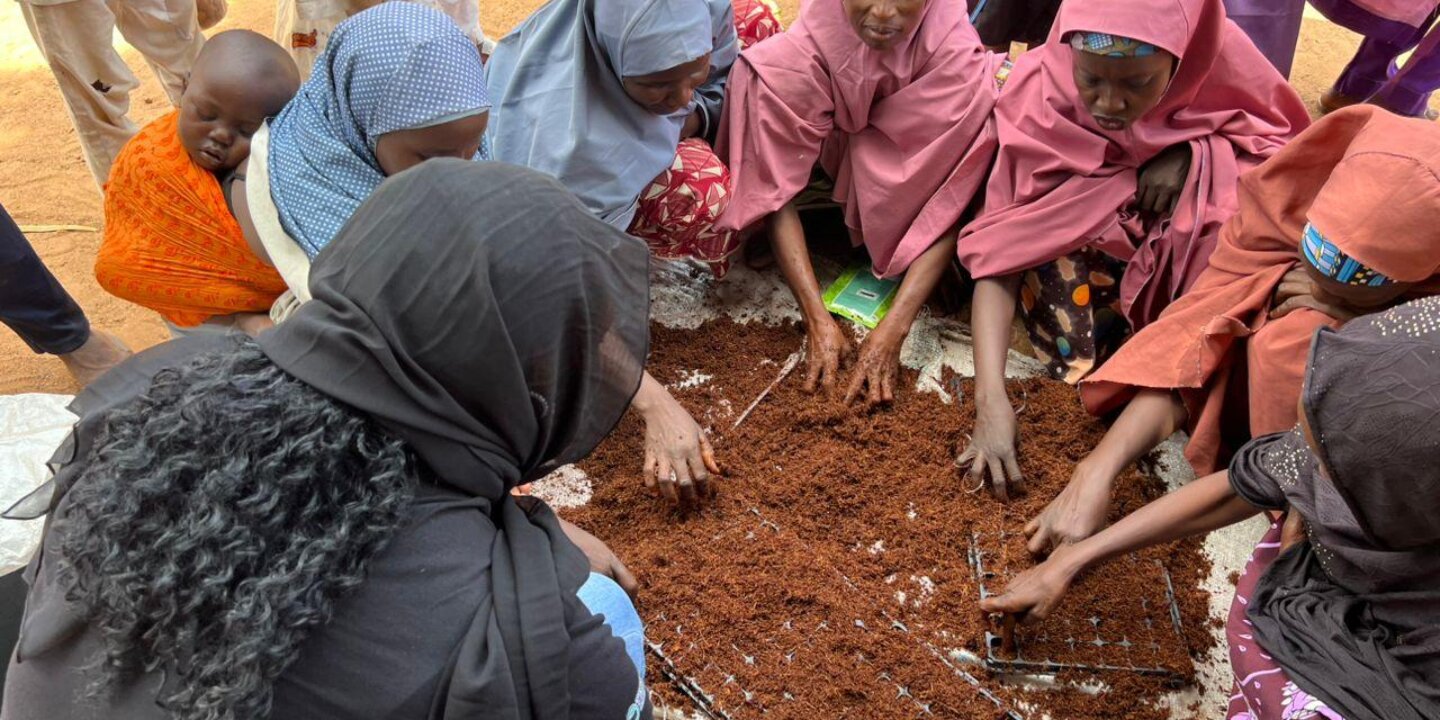
Women farmers receiving training on seedlings preparation during nursery establishment in July 2025, Horticurity project, Northern Nigeria. Picture by Usman Aruwa, TechnoServe Nigeria.
Usman Aruwa Testimony is an agribusiness and financial inclusion practitioner working with smallholder farmers in Nigeria. He works as Business Advisor on the Horticurity project, implemented by TechnoServe Nigeria. In this blog, he reflects on why moving beyond subsidies towards more sustainable models is essential for lasting change.
For years, I have worked at the intersection of agriculture and finance in Northern Nigeria, supporting smallholder farmers—especially women—to access inputs, markets, and training. Much of this work, including my current role on the Horticurity project, has been supported by subsidies, grants, or time-bound donor funding. These interventions deliver results, yet I repeatedly find myself asking a difficult question: why do many farmers struggle again once projects end?
The Food Systems Finance e-course helped me put language to what I had been observing in the field. The problem is not that money is absent from agriculture. The problem lies in how finance flows through the food system, which risks it recognises, and which actors it chooses to see. Too often, finance focuses on short-term outputs instead of building lasting value across production, markets, and livelihoods.
On the Horticurity project, I work closely with women farmers organised in savings groups and producer collectives. These women save consistently, borrow carefully, and invest in productivity and quality. I have sat in group meetings where they confidently track savings contributions and debate how best to reinvest their profits. Yet, despite this discipline, formal financial institutions continue to perceive them as high risk. At the same time, public finance often intervenes through subsidies that temporarily fill gaps but rarely change the underlying incentives within the system.
One insight from the e-course that resonated deeply with me was the need to repurpose public finance from gap-filling to risk-sharing. This requires prioritising systemic value. That means using public resources to strengthen the foundations of the food system—reducing uncertainty, improving transparency, and enabling relationships that last beyond a single project cycle. Instead of endlessly subsidising inputs, public and donor capital can be used to de-risk value chains, strengthen market linkages, and crowd in private lenders.
Another powerful idea is digitising risk. In my work, I have seen how simple digital records—farm profiling, group savings data, and off-take agreements—can transform invisible farmers into financeable clients. When risk becomes visible and measurable, it becomes something lenders can work with rather than avoid.
I am beginning to apply this thinking by piloting input loans delivered through savings groups, linked to guaranteed market access and supported by basic digital tracking of production and sales. In this model, subsidies do not replace private capital. They absorb early risk, build confidence, and demonstrate viability—making it easier for private actors to engage.
What excites me about the food systems approach is that it forces us to look beyond isolated interventions. A loan is not just a loan. It shapes production practices, affects nutrition outcomes, influences environmental sustainability, and determines who benefits economically.
This e-course has changed how I think as a finance professional. I now ask different questions: what kind of capital is needed, where should it be deployed, and how can it strengthen the entire system rather than one project or season? For me, the real test of food systems finance is whether farmers remain resilient, invest with confidence, and continue progressing long after projects, pilots, and subsidies have disappeared.
—
Disclaimer: The views and opinions expressed in this blog are solely those of the author and do not necessarily reflect the views, policies, or positions of any organisation with which the author is currently or has previously been affiliated.
Author

Usman Testimony Aruwa
Food System Finance e-course Cohort