Egypt: towards a salinity-resilient agriculture Opportunities for partnerships
In this article, you can find the Salinity Roadmap for Egypt, implemented by Delphy B.V. in collaboration with The Salt Doctors B.V, commissioned by the Embassy of the Kingdom of the Netherlands in Cairo and the Netherlands Food Partnership The study was presented during a hybrid high-level stakeholder workshop.
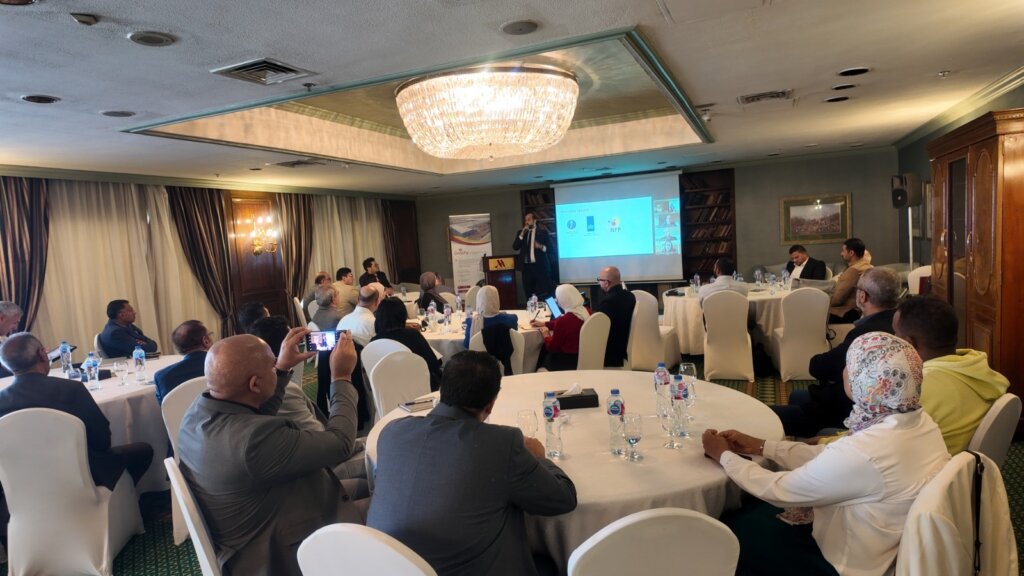
High-level stakeholder workshop in Cairo
Salinity has rapidly become one of the most critical threats to agricultural productivity, water security, and rural livelihoods in Egypt. As this report demonstrates, salinity is not a uniform phenomenon, but a multidimensional challenge shaped by four distinct mechanisms: irrigation‑driven salinity, drainage‑ and groundwater‑driven salinity, coastal and climate‑induced salinity, and primary (geogenic) salinity. Each mechanism interacts differently with Egypt’s diverse agro‑ecological zones, influencing soil conditions, crop performance, and water management requirements. Despite decades of investments in land reclamation, drainage infrastructure, and irrigation modernization, salinity smart agriculture has not been widely scaled. Fragmented interventions limited institutional coordination, insufficient monitoring systems, and the absence of integrated approaches have hindered national progress.
This report synthesizes extensive literature, and stakeholder interviews and consultations to assess the scale of the salinity challenge and identify actionable priorities for intervention. It proposes a comprehensive framework organized around five pillars: (1) drainage infrastructure and governance, (2) irrigation modernization and planned leaching, (3) soil health and integrated agronomy, (4) cropping system diversification and protected agriculture, and (5) monitoring, data harmonization, and policy integration. These pillars are complemented by cross‑cutting recommendations that emphasize public–private partnerships, targeted financial incentives, and enhanced coordination at governorate and national levels. The 2035 Salinity Roadmap presented in the report outlines a realistic pathway toward a climate‑resilient agricultural system in which salinity risks are routinely diagnosed, farmers adopt integrated mitigation packages, drainage systems are adequately maintained, and coastal salinity is addressed through long‑term adaptation strategies.
Dutch expertise adds significant value to this national effort. With globally recognized strengths in saline agriculture, delta management, drainage engineering, and climate‑smart solutions, Dutch institutions and companies are well positioned to support Egypt in designing scalable, data‑driven, and commercially viable interventions.
The Salinity Roadmap Egypt project,commissioned by the Netherlands Food Partnership and the Embassy of the Kingdom of the Netherlands in Cairo, aims to consolidate these insights into a national, evidence‑based roadmap that aligns technical, institutional, and market dimensions. By integrating science, policy, and practice, the roadmap provides a strategic foundation for building a productive, resilient, and economically competitive agricultural sector for the future.
You can find more information here: https://www.agroberichtenbuite...
Author

Babette Bodlaender
Partnership Builder