Behind Every Nutritious Meal: Why Food Systems Finance Matters
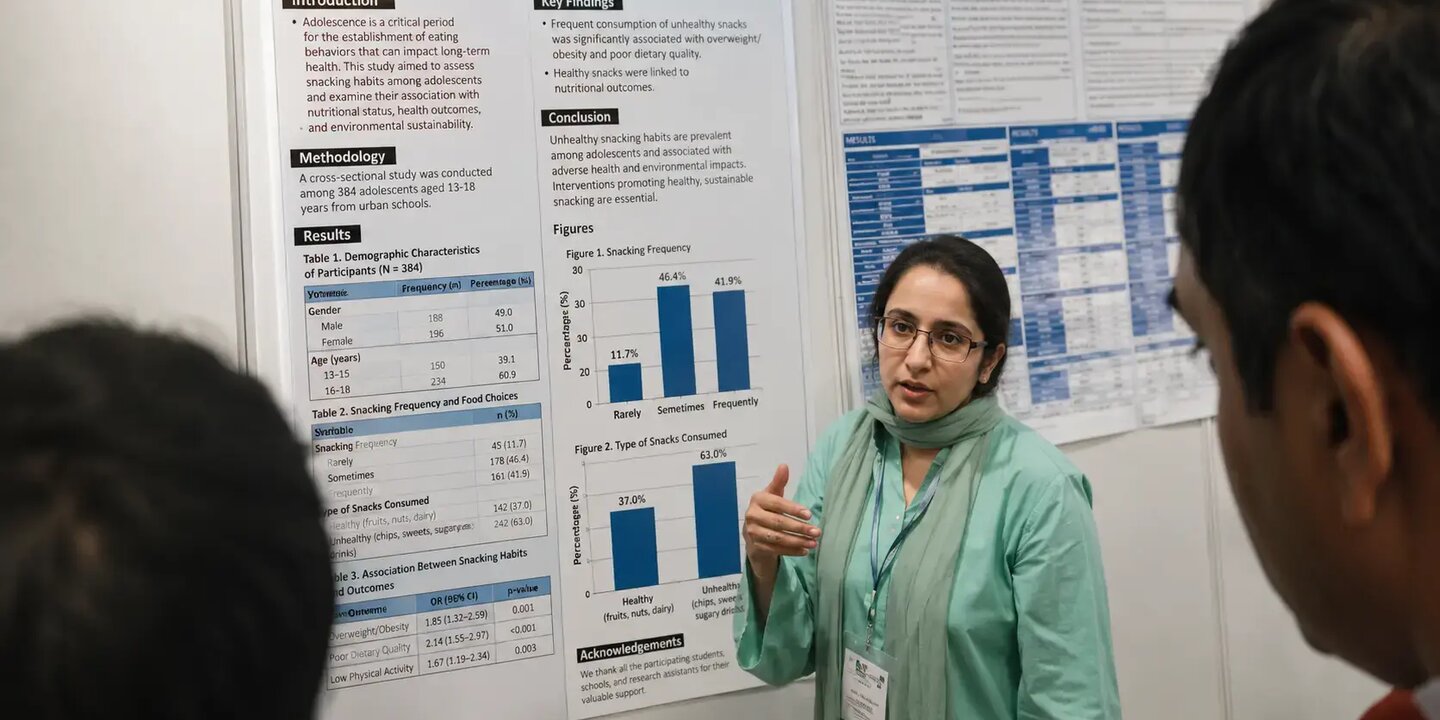
Presenting at 8th Symposium of National Institute of Child Health, Karachi, on 28 April 2024.
Mehreen Amer is a Public Health Nutrition Researcher at Dow University of Health Sciences, Pakistan. As a participant in the 2026 Food Systems e-course, she reflects on how financing food systems can improve nutrition, strengthen food security, and support more resilient and sustainable food systems.
Imagine a world where no one ever goes to bed hungry, where nutritious food is within everyone’s reach, and farming supports both people and the planet. Sounds ideal, right? But achieving this vision takes more than goodwill; it requires smart, targeted financing across the food system. This is where food systems finance becomes a game-changer.
Take Pakistan, for example. Here, smallholder farmers form the backbone of agriculture, yet many struggle to access finance. Traditional banks often see them as too risky, demanding collateral that many don’t have. As a result, farmers turn to informal lenders charging high interest rates, leaving little room to invest in improved seeds, fertilizers, or irrigation. This financing gap hurts productivity and deepens food insecurity.
As a public health nutrition researcher, I have always been interested in understanding why people make the food choices they do and how those choices affect health. My doctoral research focuses on adolescents' snacking habits and their impact on nutrition, health, and sustainability. Participating in the Food Systems Finance e-course broadened my perspective on how achieving better nutrition also depends on the way food systems are financed.
So, what exactly is food systems finance? Think of it as the lifeblood of the entire journey from farm to fork. It includes investments, loans, and funds that help farmers grow crops, businesses process and deliver food, and consumers make healthier choices. Without this financial backbone, even the brightest ideas risk falling flat.
When I joined the e-course, I expected to learn about investments in agriculture. Instead, I discovered a much bigger picture. The e-course challenged me to ask a simple question: What makes healthy diets possible in the first place? I realised that behind every nutritious meal is a chain of financial decisions that determines what food is grown, how it reaches consumers, and whether it is affordable.
The challenge is that many food producers, especially small-scale farmers and entrepreneurs, are often sidelined by investors unwilling to take risks. But why should we care? Because food security affects everyone. A well-financed food system means farmers can adopt climate-smart practices while nutritious foods become more affordable and accessible. Financing also empowers communities, reduces inequality, and encourages innovation through better technologies and stronger supply chains. That is the important link between finance, nutrition, and sustainable food systems transformation.
Despite its importance, food systems finance remains significantly underfunded. Governments cannot do it alone, while private investors seek clear financial returns. As the e-course highlighted, innovative financing approaches such as blended finance can help address this challenge by combining public and private investments to spread risk. Likewise, impact investing attracts those who want financial returns while also creating positive social and environmental outcomes.
Understanding how money flows through food systems is the first step towards smarter policies, stronger partnerships, and unlocking the funds needed to transform global food security.
In Pakistan and many other countries, closing the financing gap could mean the difference between hunger and hope. By supporting small farmers with affordable finance, we can increase productivity, improve nutrition, and build resilience against climate threats.
Improving nutrition begins long before food reaches our plates. Food security is about far more than filling plates; it’s about creating a future where everyone has a chance to thrive. With the right financing, partnerships, and a shared commitment to transformation, I believe that future is closer than we think.
Author

Mehreen Amer
Food System Finance e-course 2nd Cohort