Systems Thinking and Foresight in Action: Module 2 Plenary Session (Video)
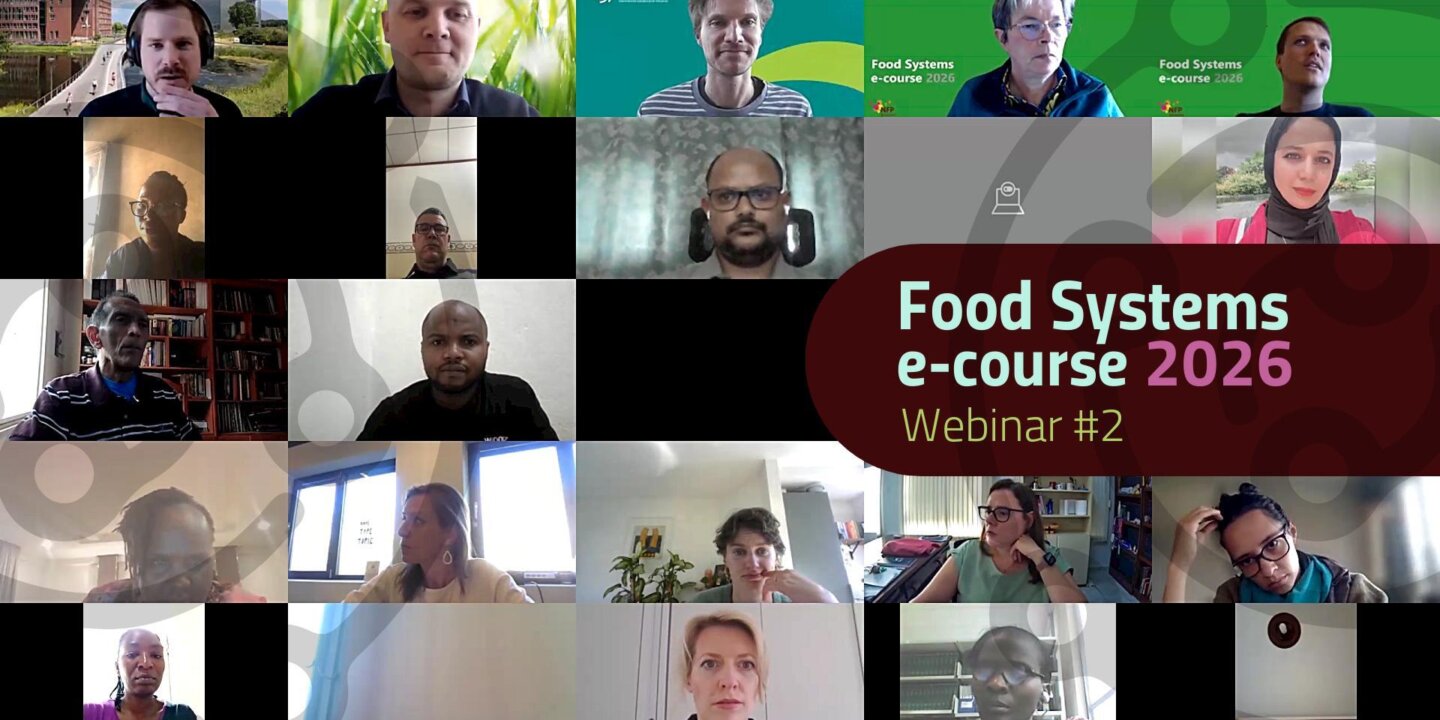
The second plenary session of the 2026 Food Systems e-course highlighted the value of systems thinking and foresight as practical tools for understanding complexity and supporting collaborative action torard more resilient and sustainable food systems.
On 4 March, participants of the Food Systems e-course gathered for the Module 2 plenary live session, featuring guest speakers Just Dengerink and Bram Peters. The session explored how systems thinking and foresight approaches can help practitioners better understand food systems and translate analysis into meaningful action.
Just Dengerink, a specialist in Food Systems Analysis, Foresight, and Governance at Wageningen Social & Economic Research (WSER), opened the session by introducing the concept of systems thinking and its relevance for analysing complex food systems. He unpacked key analytical tools and quality principles used in food systems analysis and shared practical insights on how such approaches can help identify leverage points for transformation. Just also reflected on how practitioners can move from theory to action, highlighting what makes food systems interventions effective in practice.
Building on this foundation, Bram Peters, Food Systems Programme Facilitator at the University of Oxford, presented experiences from applying food systems approaches in the Lake Turkana region of Kenya. He discussed the role of foresight processes in navigating uncertainty and shaping long-term transformation. Bram illustrated how participatory, multi-stakeholder processes can help analyse complex issues, develop future scenarios, and co-create shared visions that translate into concrete actions and follow-up plans.
The session concluded with an engaging Q&A discussion, where participants raised practical questions about implementing food systems approaches. Topics included how to bring stakeholders together for participatory processes, how to translate analytical reports into real policy or investment shifts, how to define appropriate boundaries for analysis, and how to address power dynamics within food systems. The discussion also reflected on the limitations of food systems analysis and ways practitioners can work around these challenges.
The plenary highlighted the value of systems thinking and foresight as practical tools for understanding complexity and supporting collaborative action torard more resilient and sustainable food systems.
Please find the recorded video at this 2026 Food Systems e-course Playlist of the NFP YouTube Channel, prepared in three short parts, along with previous and upcoming plenary sessions.
Author

Gizaw Legesse
Content Creator