International workshop strengthens global cooperation on salinity and freshwater challenges
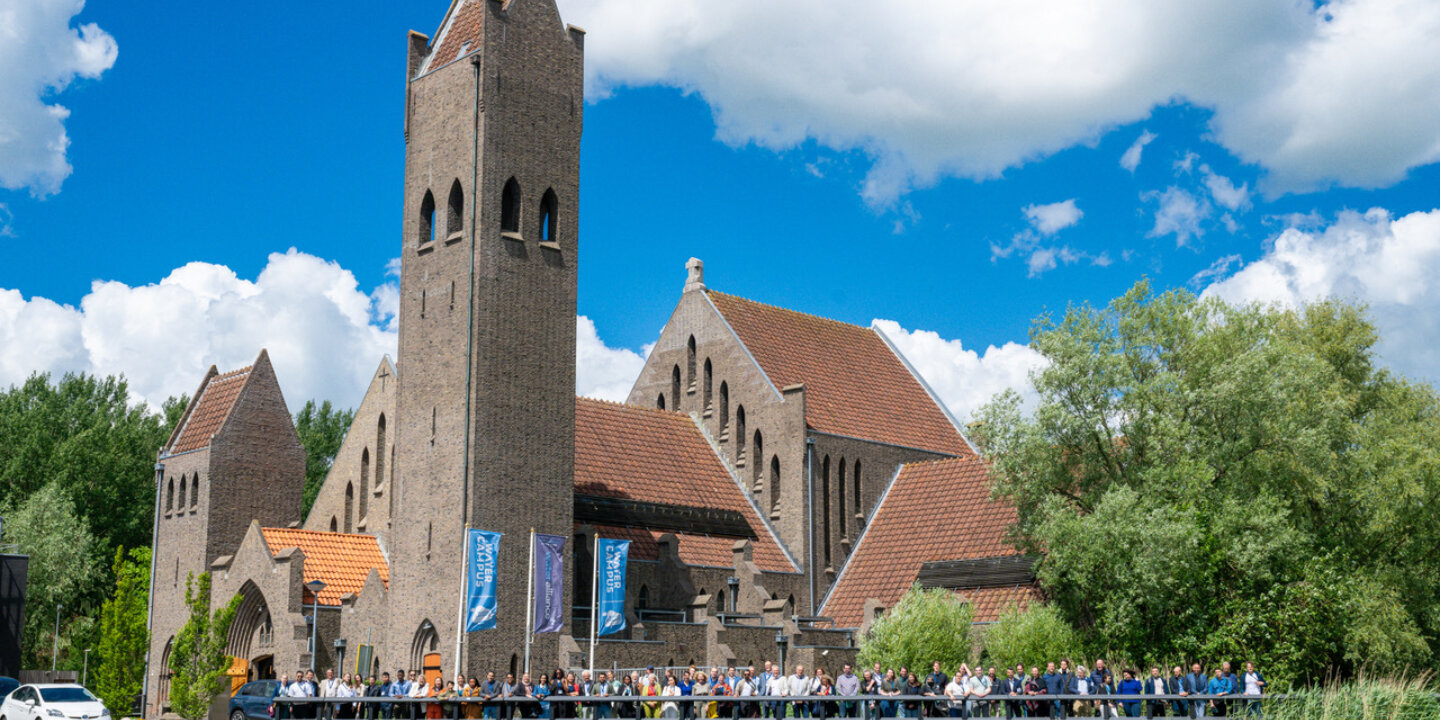
credits: Bart Lindenhovius
In June 2026, the international workshop and training school Practical Solutions for Agriculture in Salinising Deltas brought together researchers, policymakers, farmers' organisations, businesses and development practitioners in Friesland, the Netherlands. Organised by SALTA in collaboration with the SUSTAIN COST Action, the workshop served as a major step into the international arena and provided a platform for exchanging knowledge and practical solutions for agriculture in salinising delta regions worldwide. The two-day workshop coincided with the Dutch SALTA Zoet-Zout 2-daagse, creating valuable opportunities for interaction between Dutch and international experts working on freshwater scarcity, drought and salinisation. Participants travelled from across Europe, North Africa and Asia, including representatives from, among others Egypt, Bangladesh, Vietnam, and Morocco, reflecting the growing global urgency of salinity-related challenges. Together with the Netherlands Water Partnership (NWP), NFP participated on behalf of the international salinity partnership and engaged in fruitful discussions with country teams and partners from Egypt, Bangladesh, Vietnam and Senegal on opportunities for joint action and programme development.
From knowledge exchange to collective action
A central objective of the workshop was to bridge the gap between science, policy and practice and to identify practical pathways towards implementation. While salinisation and freshwater scarcity are increasingly recognised as major threats to food production and livelihoods in delta regions, participants agreed that greater efforts are needed to translate knowledge into scalable solutions.
During the opening session, Rick Elmendorp, Director and Chair of the Netherlands Water Partnership, highlighted the importance of collaboration across sectors and between governments, research institutions, farmers and the private sector. Building on this message, Martijn van Staveren (NWP) and Babette Bodlaender (NFP) represented the international salinity partnership during the workshop discussions and explored with country teams how international cooperation can support locally owned salinity programmes and investment opportunities.
These conversations resulted in concrete next steps. NWP and NFP will coordinate SALTA's international collaboration working group, while dedicated country working groups will support the development of salinity programmes in Senegal, Egypt, Bangladesh and Vietnam.
International perspectives from science, policy and farmers
The workshop featured a diverse group of international speakers who brought perspectives from research, policy and farmer organisations.
Dr Dionysia Angeliki Lyra (FAO/WASAG) challenged participants to think beyond pilot projects and consider what is needed to mobilise large-scale action programmes. Her keynote explored how salinisation and freshwater scarcity can be better positioned within climate adaptation agendas to unlock financing and political support, while emphasising the need for global programmes that deliver tangible results for farmers and communities.
Another important contribution came from Amirul Islam, Operations Manager for South and Central Asia at the Asian Farmers Association (AFA). Drawing on extensive experience working with smallholder farmer organisations across Asia, he discussed how general guidelines and technical solutions must be translated into locally tailored approaches that reflect different climatic conditions, farmer capacities and market realities. His contribution reinforced the importance of farmer-led approaches and regional learning networks in addressing salinity challenges.
Additional international expertise was provided by Prof. Ed Barrett-Lennard (Australia), who shared lessons from decades of research and implementation on saline agriculture, and by experts from Morocco, Egypt and other countries facing similar challenges. Together, these perspectives highlighted the value of combining scientific knowledge with practical experience and local ownership.
Towards an international action agenda
The second day of the workshop focused on developing a shared international action agenda. Through facilitated group discussions, participants identified available knowledge, priority actions, remaining knowledge gaps, opportunities for regional adaptation and pathways for international financing. The discussions culminated in reflections on how global knowledge networks, development partners and financial institutions can work together to accelerate implementation at scale.
A field visit to SALTA's new salt-tolerance testing facility in Sexbierum and the Frisian salt marshes provided participants with practical examples of how research, innovation and field application can come together to support climate-resilient agriculture.
For the international salinity partnership, the workshop demonstrated the growing momentum for international collaboration on salinity. The productive exchanges with country teams and international partners confirmed a shared commitment to move beyond knowledge sharing towards coordinated action, strengthening the foundations for resilient food systems in vulnerable delta regions worldwide.
Authors

Martijn van Staveren

Babette Bodlaender
Partnership Builder