How Rising Fish Demand is Driving Aquaculture Growth in Ghana’s Urban Centres
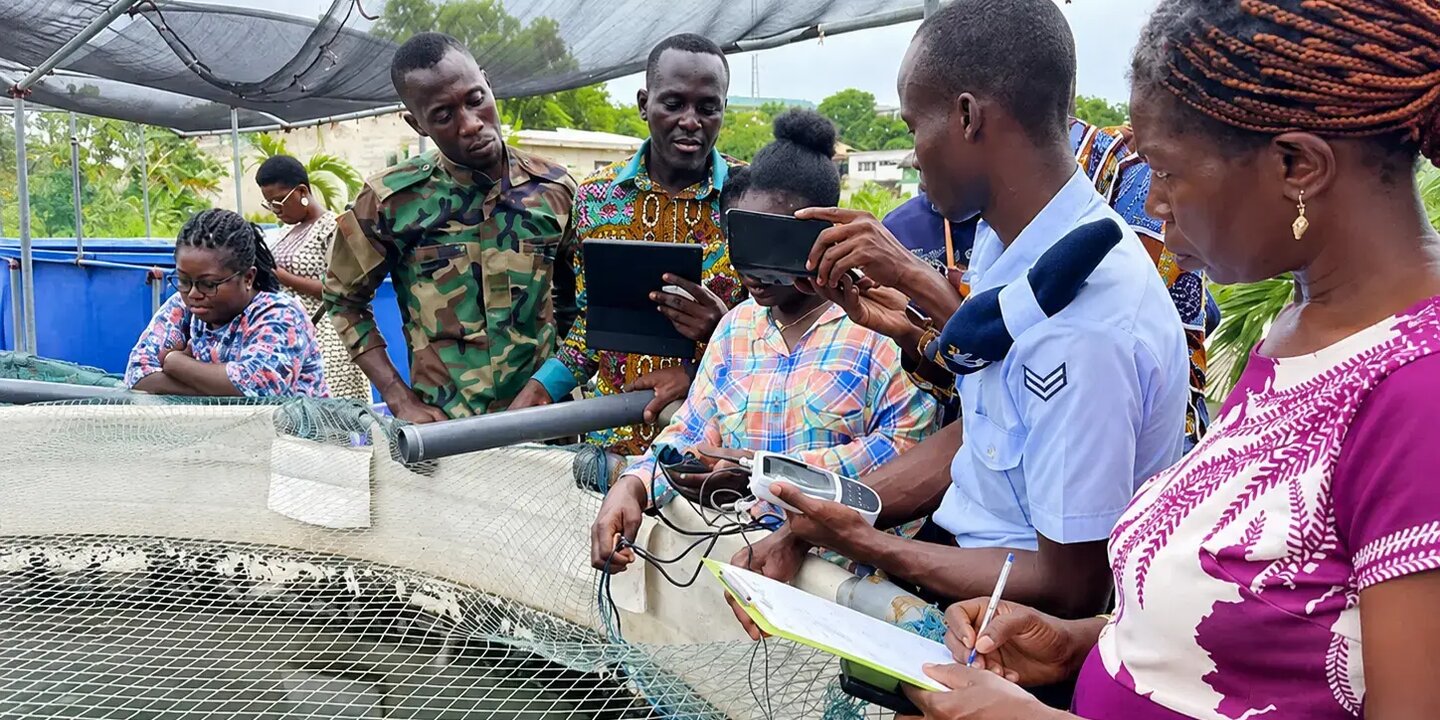
Individuals from different professional backgrounds participate in a fish farming training at the CSIR-Water Research Institute, Accra. Picture by Dinah Kwadade. April 2025.
Acheampong Addo is an Assistant Research Scientist at the CSIR–Water Research Institute. As a participant in the 2026 Food Systems e-course, he draws on his experience in aquaculture expertise and research to explore how rising fish demand is driving urban aquaculture growth in Accra, Ghana.
Fish is a big part of everyday meals in Ghana, loved not just for its taste but also for its nutritional benefits. As cities like Accra continue to grow, demand for fresh and affordable fish is steadily increasing. However, supply from capture fisheries is no longer consistent. Fluctuating catches often lead to unstable prices, making fish less accessible for many households.
This gap is where aquaculture is stepping in, offering a more reliable and practical solution, particularly in urban and peri-urban communities.
One notable trend is the growing number of small-scale fish farmers in the Greater Accra Region. More people are turning to aquaculture—especially catfish farming—not only as a primary occupation but as a supplementary income source. What is particularly interesting is the diversity of people involved. Many are professionals and salaried workers who are engaging in fish farming alongside their main jobs.
Backyard aquaculture, using tanks and simple water systems, is becoming more common. During a recent training session at the CSIR-Water Research Institute in Accra, where I participated as a facilitator, individuals from different professional backgrounds gathered to learn fish farming techniques. This reflects a broader shift: aquaculture is no longer limited to traditional farmers. It is becoming part of the urban livelihoods, with households producing fish for both consumption and sale.
One powerful example is Adwoa Tenkorang, a police officer who feeds her fish early every morning before heading to work. Over the past two years, she has successfully completed three production cycles. Beyond generating additional income, her efforts contribute—even in a small way—to increasing fish availability in her community.
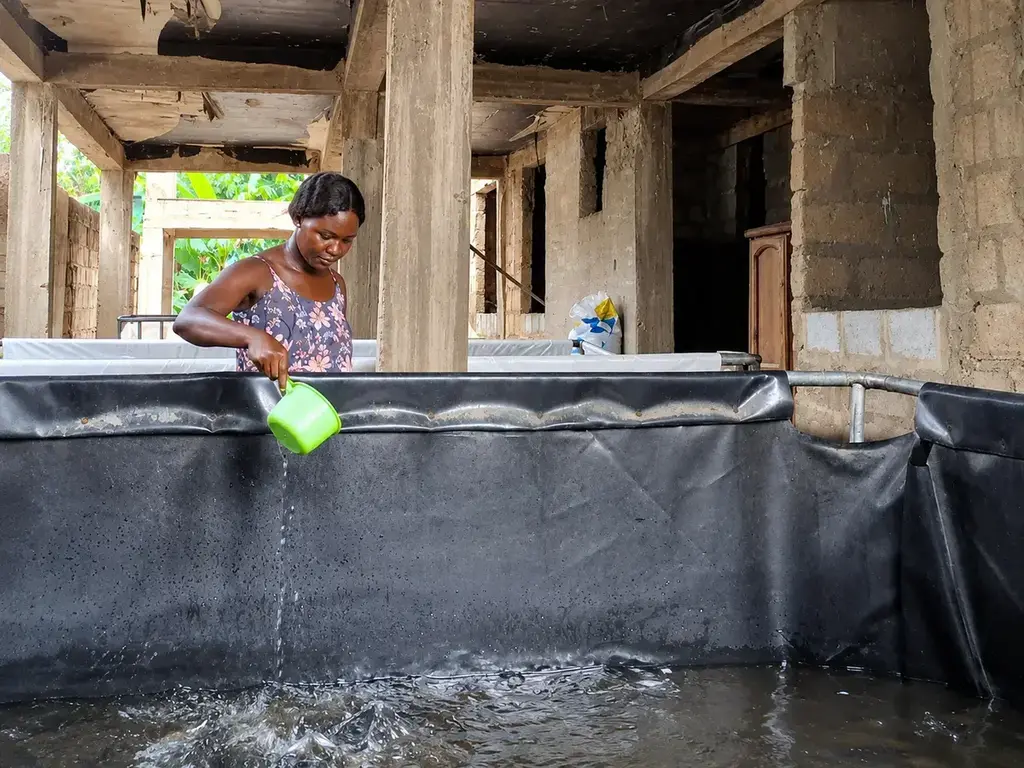
Adwoa Tenkorang, a police officer, practices backyard aquaculture using a tank installed at her home. Picture by Dinah Kwadade. January 2026
The Food Systems e-course deepened my perspective on this shift, highlighting how changes even at the household level are connected to the wider food systems. Production, processing, and markets are closely linked, and changes in one part of the system influence the others.
In Accra, parallel to the household-level production, the market side of the sector is also expanding. Fish sourced from local production is increasingly being processed and resold, creating new opportunities for small-scale entrepreneurs. Smoked catfish, in particular, is becoming a favourite among many consumers, adding value and extending shelf life. This growing demand is encouraging more people to invest in aquaculture and related businesses.
However, important challenges remain. The high cost of quality fish seed and feed, as well as limited access to reliable water sources, continue to constrain small-scale farmers. Groundwater is often the most dependable option, as pipe-borne water and rainwater are limited due to infrastructure gaps and climate variability. Improved management practices and technologies such as Recirculating Aquaculture Systems (RAS) could help optimise water use and enhance production.
As local aquaculture expands, it increases fish supply and strengthens urban food systems by reducing dependence on unpredictable capture fisheries.
Adwoa’s story reflects a larger movement. More people are getting involved, and each small effort adds up. As the saying goes, little drops of water make a mighty ocean. With continued support, monitoring, and knowledge sharing, aquaculture can play an even greater role in improving access to nutritious food, creating livelihoods, and strengthening food security in Ghana’s growing cities.
Author

Acheampong Addo
2026 Food Systems e-course Participant