The Saline Water & Food Systems Partnership selected Senegal in late 2025 as one of its four priority countries. AfricaRice was mandated to lead a rapid, evidence-based scoping study to inform a multi-annual action plan and roadmap to address salinization challenges.

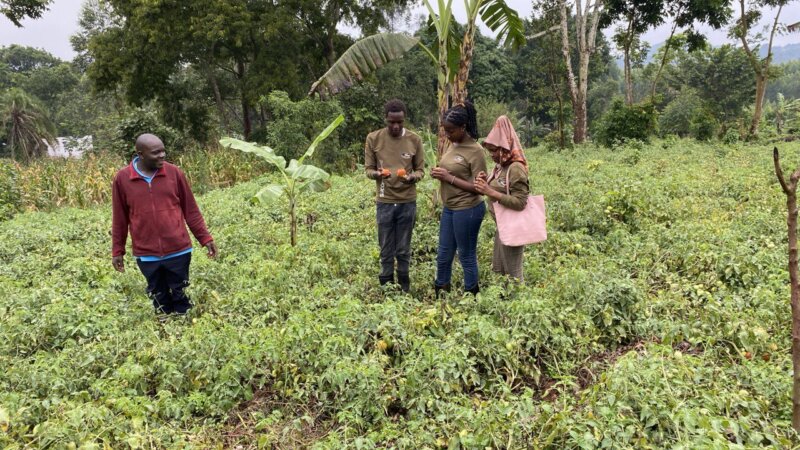
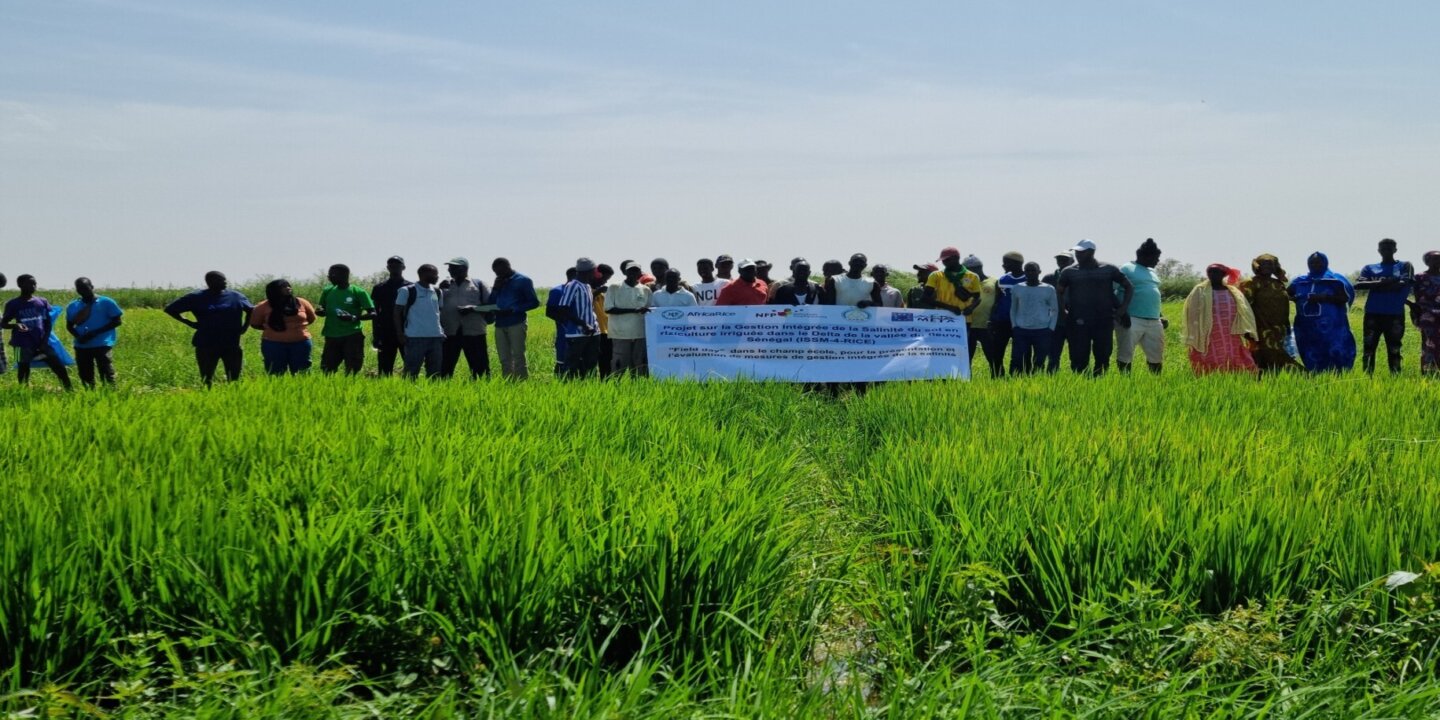
Fieldwork and farmer engagement regarding salinization. Image credits: AfricaRice.
Soil salinization is one of Senegal’s most serious land-degradation challenges, with major consequences for agricultural productivity, water resources, and rural livelihoods across multiple agroecological zones. More than 34% of agricultural land are affected, and salinity continues to expand in several regions, increasingly constraining national food security and the sustainability of high-value production systems.
Recognizing the urgency, the Saline Water & Food Systems Partnership selected Senegal in late 2025 as one of its four priority countries. AfricaRice was mandated to lead a rapid, evidence-based scoping study to inform a multi-annual action plan and roadmap to address salinization challenges.
The scoping study’s report is structured along four core objectives: (i) characterize the spatial distribution, drivers, and typologies of salinity; (ii) assess impacts on production systems and water quality; (iii) review existing interventions, institutional arrangements, and gaps; and (iv) identify priority geographies and practical entry points for coordinated action.
A draft of the study was presented by AfricaRice and discussed with 25 participants, including representative of the Embassy of the Kingdom of the Netherlands in Senegal, during a validation workshop held on 28 January 2026.
Following finalization, the study, recommends priority actions that focus on implementation and long-term sustainability: restoring salt removal capacity through functional drainage and improved Operation & Maintenance; converting monitoring and diagnostics into operational decisions; deploying integrated agroecological salinity management packages tailored to Senegal’s salinity systems; and strengthening multi-actor coordination mechanisms that persist beyond projects. The study also highlights a policy opportunity integrate salinity within more strongly into broader environmental and resilience agendas, including biodiversity frameworks that recognize salinization as a driver of ecosystem loss, creating pathways for cross-sector alignment and co-financing.
These findings provide the foundation for a multi-annual salinity implementation programme. As part of the next phase of the Saline Water & Food Systems Partnership, this programme will be developed in close collaboration with stakeholders in Senegal and the Netherlands.
Author