Bridging Finance for Sustainable Food Systems: The 2026 Food Systems Finance e-course Kicks Off (Video)
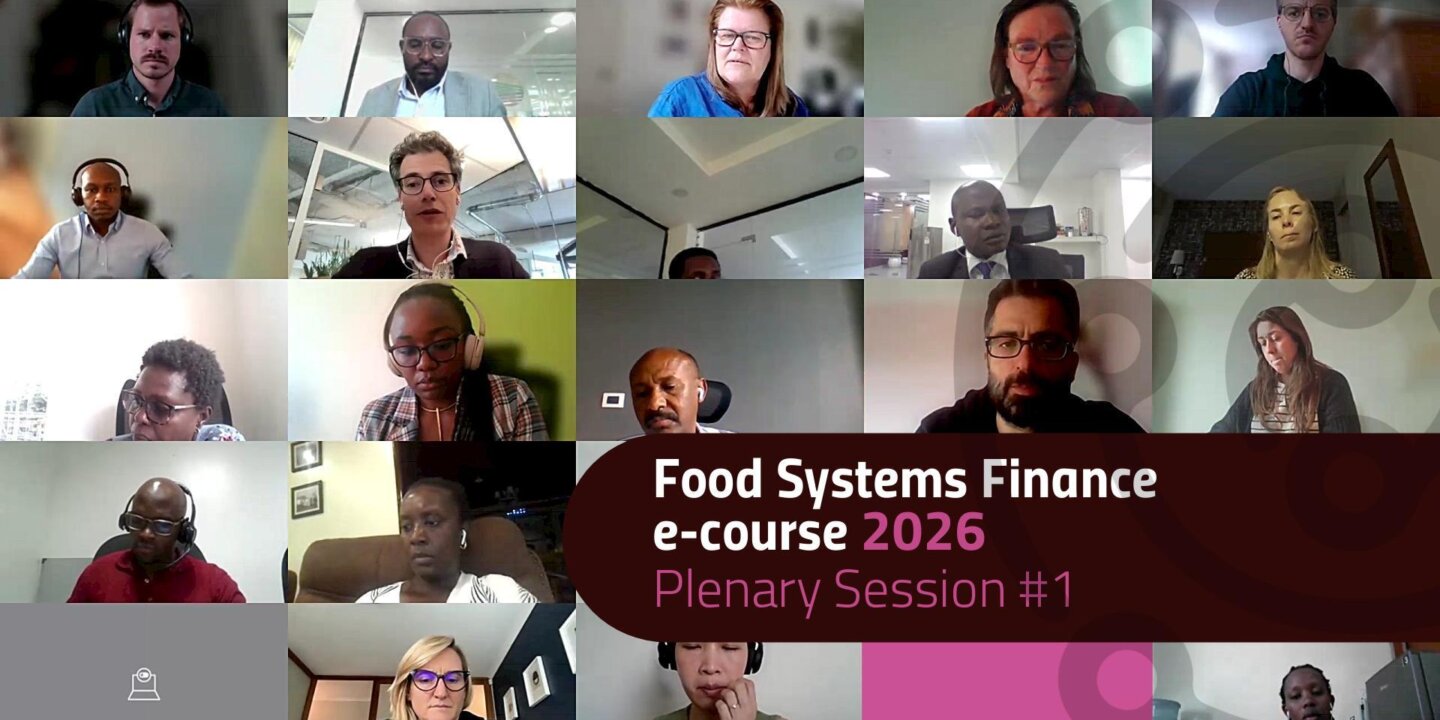
The 2026 Food Systems Finance e-course kicks off with an inspiring plenary session that brought together over 230 participants alongside experts from public, development, and private finance institutions. The discussion explored practical pathways for bridging finance gaps, scaling inclusive agri-finance solutions, and strengthening sustainable and resilient food systems.
The second edition of the Food Systems Finance e-course officially started on 11 May 2026, bringing together a new cohort of participants from different countries and professional backgrounds to explore one of the most pressing questions in food systems transformation: how can finance better support sustainable and inclusive food systems?
As part of the opening week, the first plenary live session took place on 13 May, focusing on bridging public, development, and private finance for sustainable and inclusive food systems. The session brought together over 230 live participants alongside distinguished guest speakers and experts working at the intersection of finance, agriculture, and development.
The plenary opened with remarks from Ivo Demmers, Executive Director of the Netherlands Food Partnership, and Agnes Janszen from the Dutch Ministry of Foreign Affairs.
During the session, Sander van Kooten explained how the European Investment Bank operates as one of the world’s major multilateral lenders. He highlighted the bank’s priorities, including local private sector development, climate action, social and economic infrastructure, and regional integration. Through practical examples from Ethiopia, he also unpacked different funding mechanisms and project cycles used to support development initiatives.
Getachew Mekonnin explored Ethiopia’s rural and agricultural finance strategy and discussed the structural challenges contributing to the agri-finance gap, including fragmented policy environments, limited scaling strategies, and the absence of specialised credit and insurance schemes. He linked these challenges to the Game Changing Solutions under Ethiopia’s Food Systems Action Plan, including initiatives such as a national agri-finance accelerator, improved farmer access to financial services, and the establishment of an agri-finance centre of excellence.
The discussion was further enriched by insights from Eric Macharia of the Rabo Foundation, who shared experiences on catalysing inclusive food systems finance through blended finance models. He reflected on how public and development finance can work together with local financial institutions to de-risk investments and expand access to finance for smallholder farmers and rural enterprises. He also emphasised the importance of patient capital, better data and transparency, and stronger policy alignment in driving long-term transformation.
Beyond the presentations themselves, the session was marked by active engagement and interaction from participants, with lively discussions and thoughtful questions throughout the webinar. The strong participation reflected both the growing interest in food systems finance and the importance of collaborative learning spaces that connect policy, finance, and practice.
If you missed the session, the webinar recording will be available below and on NFP YouTube Channel.
Authors

Lisette van Benthum
Partnership Builder

Gizaw Legesse
Content Creator