Why School Feeding Programs Must Be Co-Created With Local Communities
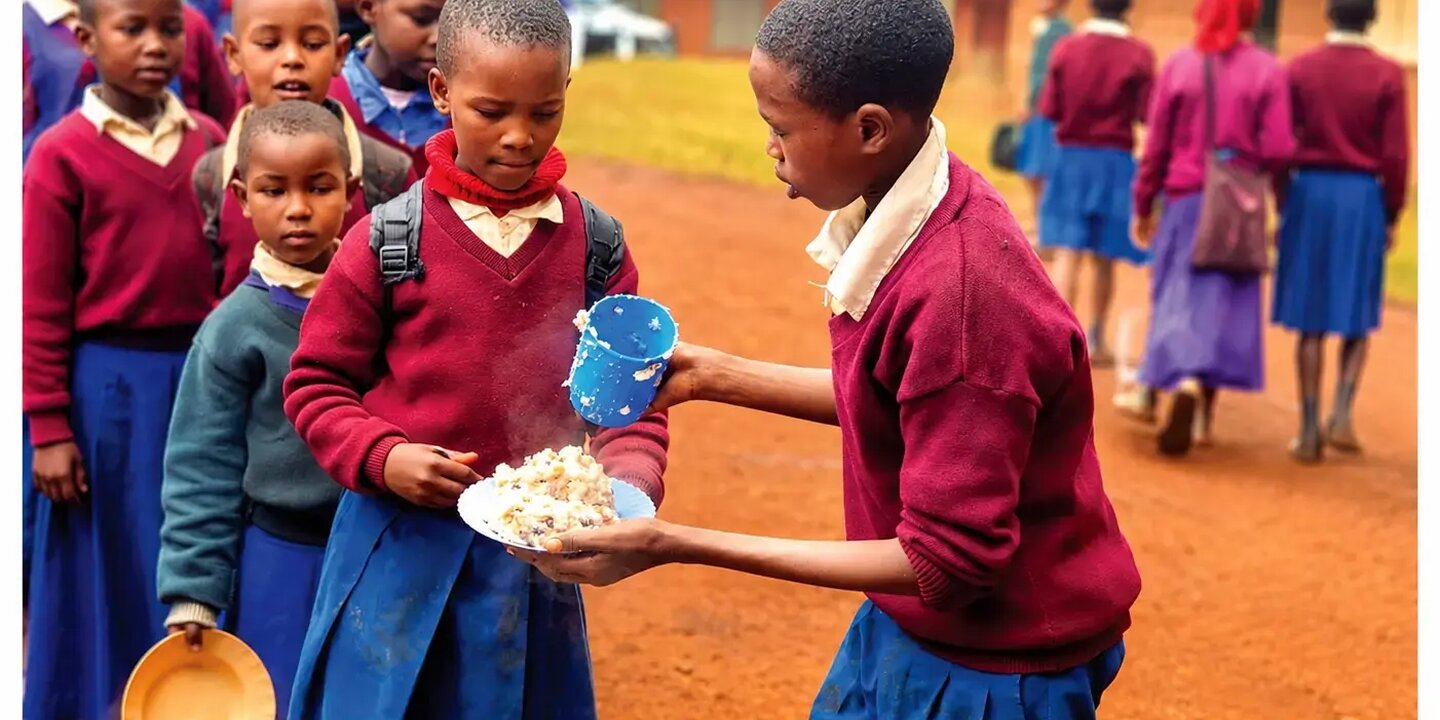
Primary Students in Muleba District Council, Kagera Region, Tanzania line up for a school meal. Picture by Prisca Kokutona. July, 2024
Prisca Rwezahura is the Country Director for GAIN Tanzania. With a background in the private sector and social behaviour change, she is passionate about ensuring equitable access to safe and nutritious food. As a 2026 Food Systems e-course participant, she reflects on the broader transformative potential of school feeding programmes in Tanzania.
Across Tanzania, a powerful example of community resilience is found in public schools. Despite limited resources, parents and local communities mobilise cash, grain, firewood, and labour to ensure children receive at least one meal during the school day.
This collective action reflects something profound: communities do not wait to be rescued when it comes to feeding their children.
Yet, ironically, these same communities are excluded from the decision-making spaces where school feeding policies and programme models are designed. As a result, many school meals are sufficient in calories, but not in nutrition.
Participating in the Food Systems e-course challenged me to rethink school feeding—not simply as a social protection or education intervention, but as a strategic food systems lever. When designed inclusively, it can generate benefits across nutrition, livelihoods, local agriculture, and resilience.
Tanzania’s 2030 Food Systems Transformation Pathway recognises school feeding as a key strategy for achieving “nutritious, healthy and safe food diets for all.” However, in practice, many programmes still focus primarily on satiety rather than nutrition.
In most rural schools, meals consist mainly of porridge, maize and beans—starch-heavy staples that address hunger but often lack dietary diversity and micronutrients. This contributes to Tanzania’s persistent triple burden of malnutrition, where undernutrition, micronutrient deficiencies, and overweight persist at the same time.
The challenge, however, is not only about food availability. In Iringa, a region known for agricultural productivity yet affected by high stunting rates, I met caregivers who believed their children were well nourished simply because they ate regularly. In many cases, the issue was limited understanding of what constitutes a nutritious diet and how it supports healthy growth, cognitive development, and school performance.
From a food systems perspective, this highlights the importance of looking beyond production to consider nutrition, knowledge, and behaviour. It also raises important questions about power dynamics: who defines the problem, and who shapes the solution?
Communities already demonstrate ownership by sustaining school feeding programmes. Yet they are rarely meaningfully involved in decisions about menus, sourcing, and the integration of indigenous and nutrient-rich foods. Parents, farmers, and local leaders have valuable knowledge, but this is not always reflected in programme design.
Across many communities, parents also support school gardens, and equipping them with knowledge about nutrient-dense crops can increase availability of more nutritious school meals.
True transformation requires participatory governance approaches that value local knowledge and lived experience. This means strengthening dialogue between communities, policymakers, and other stakeholders, while ensuring decisions are informed by realities on the ground.
For me, the future of school feeding goes beyond providing meals. It lies in reimagining schools as entry points for broader food systems change—linking local farmers to schools, promoting nutritious indigenous foods, strengthening nutrition awareness, and shaping healthier generations.
If communities can mobilise to put food on the plate, they should also have a voice in deciding what is on it.
Author

Prisca Rwezahura
2026 Food Systems e-course Participant