Mouneh Works When Everything Else Fails
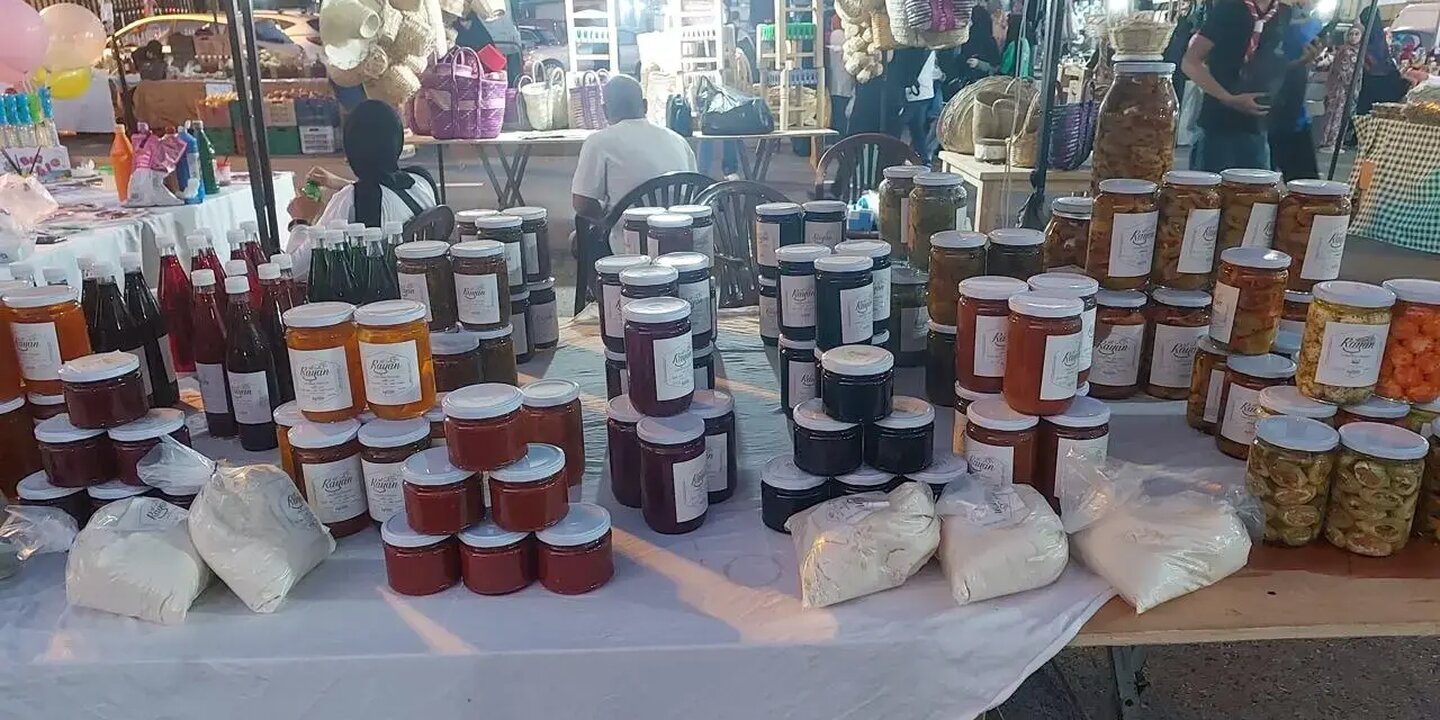
Mouneh products displayed at a farmers’ market organized by a local NGO in the suburbs of Beirut (October 2023). Photo by the author.
Sherin Assaf is an architect and PhD candidate at the Université de Poitiers, France, researching alternative food models and urbanism of crisis in Lebanon. She has a decade of experience in action research and advocacy on socio-economic rights. Participant of the 2026 food systems e-course, Sherin reflects on how mouneh re-emerged as a powerful form of resilience during Lebanon’s overlapping crises.
In times of food crisis, we often look for new solutions and innovations. But what if the answer lies in returning to our traditional food practices and building on them as a form of local resilience?
In Lebanon, we never thought we would face a food crisis. It was always there. Supermarkets were full. Imported products were everywhere. Food was not something to worry about; it was taken for granted.
At the end of 2019, everything changed within months. A series of overlapping crises: economic collapse, COVID-19, the Beirut port explosion. Prices increased sharply. Salaries lost value. Without electricity, storing food became difficult. Accessing food was no longer simple.
It was a shock. State institutions were weak and largely absent. People had to adapt quickly, change consumption patterns and look for cheaper, more practical options. Local products began to reappear, including mouneh.
Mouneh is a traditional Lebanese practice of preserving seasonal food for later use.
Growing up in a rural area, this was part of everyday life. Every summer, my mother would prepare mouneh by washing, cutting, drying, and cooking fruits and vegetables. It is a long process, and neighbours would come to help. By the end, shelves were lined with jars—enough to last for months, sometimes more.
My grandparents told me they used to prepare mouneh during times of war to ensure survival. Over time, it became less visible, especially in urban areas. When I moved to Beirut, I noticed that many people no longer practiced it. It was hard to find, and when available, it was expensive, sold as something “authentic.”
During the crisis, this changed. Mouneh became relevant again. It was affordable, made from local products, and could last for a long period. People began asking for it, and eventually reappeared—not only in homes, but also in supermarkets.
Civil society organisations played an important role in this shift. They supported producers and organized markets. They made mouneh more accessible, especially in urban areas. What was once considered a rural practice became part of a broader response to the crisis.
Mouneh works because it does not depend on the systems that fail.
Food is not only about what is available. It is about what continues to function when everything else breaks, and who makes that possible. In Lebanon, this role is no longer held by the state alone. It is shaped by people who stepped in when the system collapsed.
This reflects the importance of resilience within local food systems. When formal supply chains fail, alternative networks—rooted in local knowledge, social cooperation, and seasonal production—can sustain access to food.
The food systems e-course helped me better understand this concept of resilience—the capacity of local food systems to respond, adapt, and transform in times of crisis. Mouneh is both an act of resilience and a form of innovation.
Transformation does not always come from new systems. Sometimes, it comes from recognizing and strengthening what already exists. Mouneh is one example. As we have come to rely more on imported products and complex systems, what was once part of our everyday life has become invisible.
So here is a question: what else have we overlooked that could sustain us when the systems we depend on fail?
Author

Sherin Assaf
2026 Food Systems e-course Participant