A Simple Meal, A Deeper Reality: From Farm to Fork through Agroecology in Rural Kenya
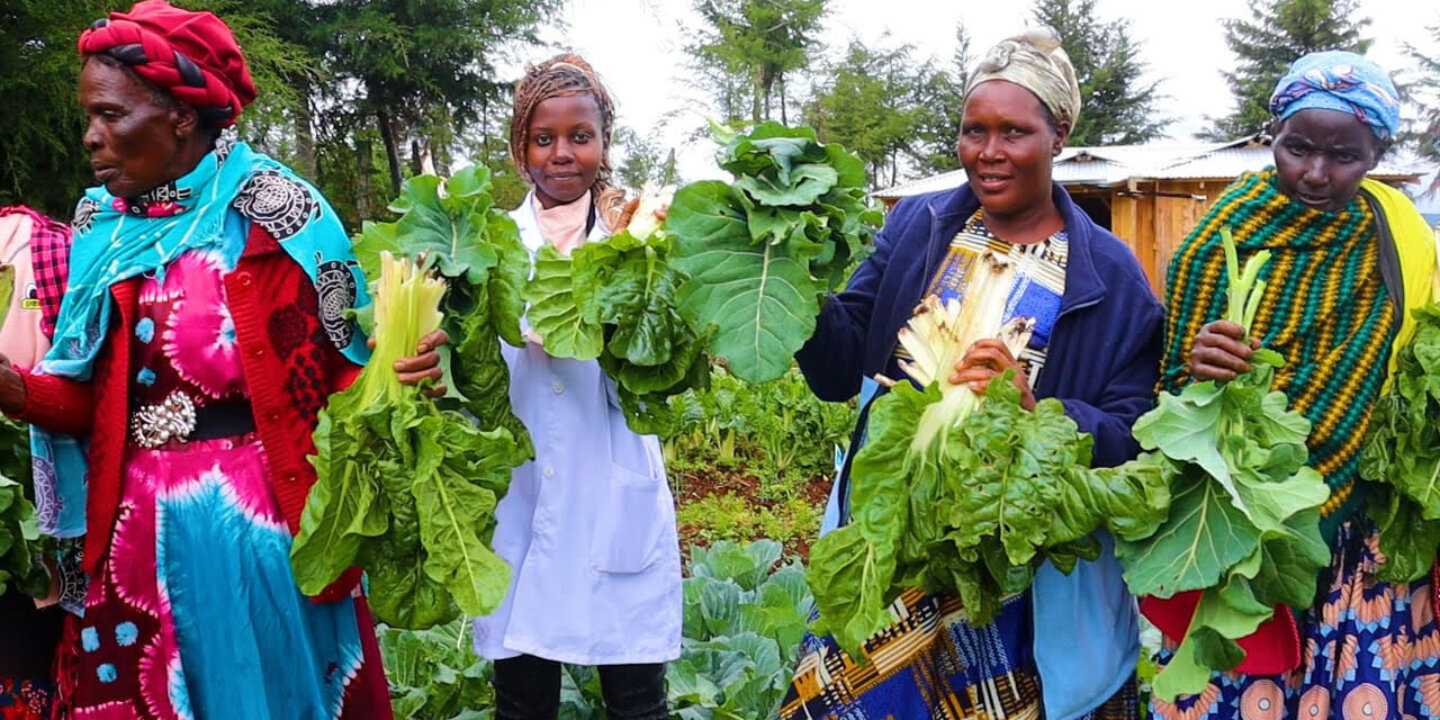
Irene Muriithi with farmers displaying harvested vegetables from their kitchen gardens in Keringet, Nakuru County, Kenya. January 2026
Irene is a community change agent working with farmers in Nakuru County, Kenya to promote agroecology, nutrition, and sustainable livelihoods. As a participant of the 2026 Food Systems e-course, she reflects on how community driven approaches, such as kitchen gardens, farmer engagement, and local leadership, can transform diets, strengthen resilience, and improve long term food security.
I began my journey as a field officer with Hiveonline in 2024, working closely with rural communities and engaging with families in their daily lives. One moment stood out repeatedly: sharing a simple meal of fried potatoes, often served without any accompaniment.
This was more than just a meal; it reflected deeper challenges within the food system. Like many rural areas in Kenya, the community faces a contradiction: farmers grow food, but not always the kind that nourishes their families. This realization led me to advocate for healthier and more sustainable diets through agroecology.
Shifting the Conversation
When I first engaged with farmers in Keringet, a small rural town in Nakuru County in Kenya’s Rift Valley—known for its fertile soils and cool climate that support potato farming and dairy production—our conversations centred on yields, markets, and income. Nutrition was rarely part of the discussion.
Kitchen gardens had gradually disappeared, replaced by monocropping and market-driven production. Meals became less diverse, and traditional, nutrient-rich foods were increasingly forgotten.
It became clear that improving food systems was not just about producing more. It was about producing better and consuming differently.
Agroecology in Practice
I began introducing agroecology not only as a farming approach, but as a pathway to healthier lives. We started by reviving indigenous vegetables, promoting mixed cropping, and encouraging households to grow what they eat. These practices resonated because they were not new—they reconnected communities with knowledge they already held.
Advocacy became essential. I worked with farmer groups and local leaders to rethink food choices: why sell all nutritious produce and buy less healthy alternatives? Why not prioritise household nutrition alongside income? These discussions, though challenging, created space for gradual change.
A Path Forward
The Food Systems e-course helped me connect these local experiences to a bigger picture. I began to see Keringet as part of a broader food system shaped by policies, markets, culture, and power dynamics. One key takeaway was food systems thinking—recognising that production, nutrition, markets, and the environment are interconnected.
For example, when farmers establish kitchen gardens, they not only improve household nutrition but also generate income from surplus vegetables, strengthening both livelihoods and food security.
The journey is ongoing. Challenges remain—limited awareness, market pressures, and resource constraints—but there is progress. More households are diversifying their diets, and farmers are experimenting with agroecological practices. Families now have greater access to fresh leafy vegetables such as collard greens and spinach, reducing reliance on purchased food while improving dietary diversity. From a single demonstration garden, the initiative has grown from 20 to 100 farmers actively engaged in nutrition-focused farming.
What gives me hope is that transformation does not require starting from scratch. It begins with listening, reconnecting with local knowledge, and creating space for communities to lead change. In Keringet, advocacy is not just about speaking—it is about walking alongside farmers as they rediscover the value of healthy, sustainable diets.
This is how food systems transformation takes root: one village, one household, one plate at a time.
Author

Irene Muriithi
2026 Food Systems e-course Participant