Partnering with Nature: insights from biodiversity & food systems at NFP’s World Food Day 2025 Event Report
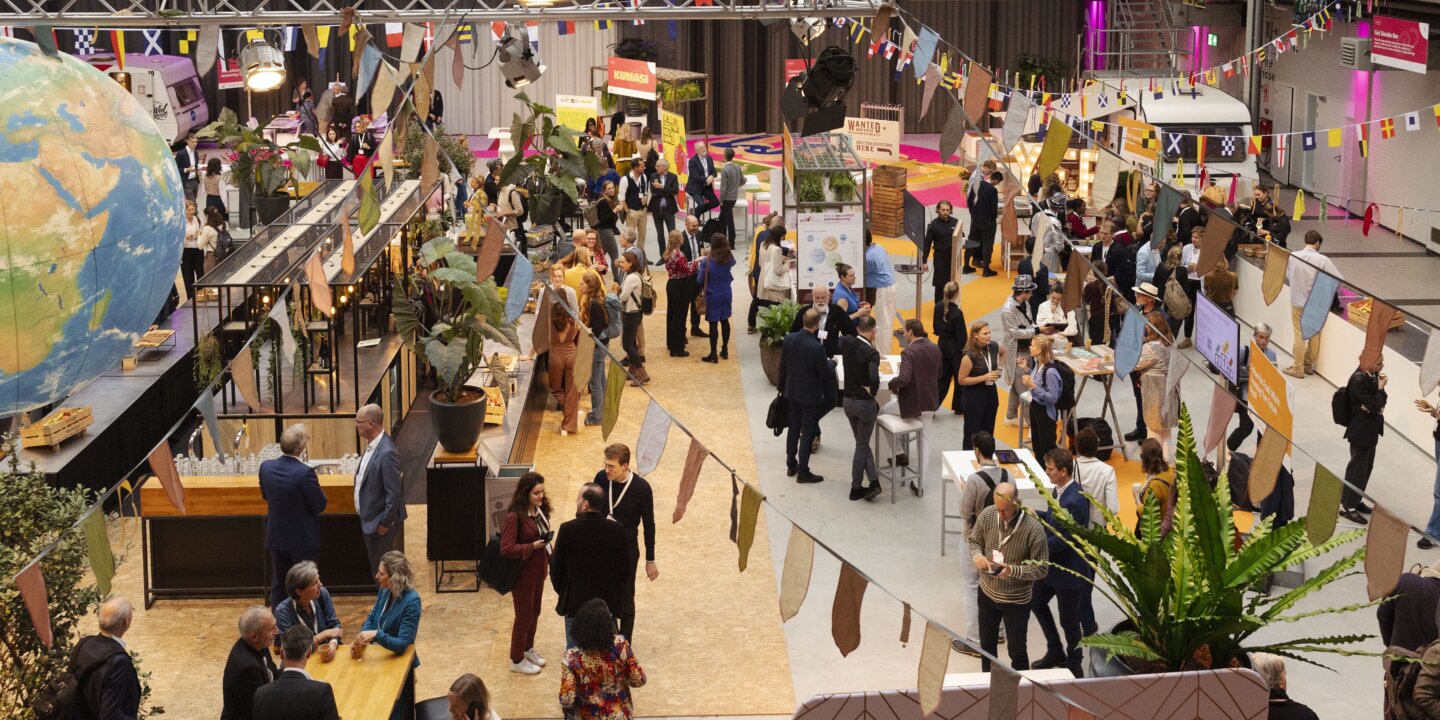
The 7th Edition of World Food Day took place on October 16th in The Hague, the Netherlands, hosted by the Netherlands Food Partnership in collaboration with the Ministry of Foreign Affairs and the Ministry of Agriculture, Fisheries, Food Security & Nature. Under this year’s theme, “Partnerships that Feed the Future,” more than 500 participants from NGOs, businesses, government, and civil society engaged in insightful conversations exploring how collaboration can drive sustainable change and ensure long-term food security, healthy ecosystems, and resilient economies.
It couldn’t go unnoticed that, in this year’s edition, biodiversity featured across multiple activities throughout the day. For the first time, participants could even shape their entire World Food Day programme around biodiversity-related sessions, including those hosted by SeedNL, the Saline Water and Food Systems Partnership, and a conversation with Marcel Beukeboom.
In addition, NFP’s Biodiversity and Food Systems partnership hosted a booth and a session on Food and Biodiversity in Action. Launched in 2025, the Biodiversity and Food Systems partnership already counts 160 members from 150 organizations worldwide (numbers of October 2025). Co-created by members, it currently focuses on four main activities to help strengthen synergies between biodiversity and food security: partnership model facilitation; bringing together and learning from real-world use cases; capacity and network building activities; and developing an incubator that accelerates action on biodiversity and food systems linkages.
This blog reports on insights from the Food & Biodiversity in Action booth and session at NFP’s 2025 World Food Day.
Food and Biodiversity in Action: Insights from the session
This session served as the soft launch of the bundle of 10 very diverse use cases that illustrate how biodiversity and food can work together in practice.
First, Mariëlle Karssenberg and Roseline Remans, co-facilitators of the Biodiversity and Food systems partnership, kicked off the session with why and how this bundle came about:
- Why: The foundational interconnection between biodiversity and food is increasingly recognized, but many organizations and initiatives continue to struggle with what this means in practice and how to act upon it. This bundle brings together 10 very concrete use cases as learning journeys from members of the partnership, that illustrate different entry points and ways of what this can mean in practice, what we can learn from it, and what are opportunities for the future.
- How: The bundle was developed by the KandsCollective team in collaboration with NFP and the respective partners, based on available resources, a survey, interviews, and joint reflections.
Second, Ivo Walsmit, the Thematic expert on Biodiversity at the Ministry of Foreign Affairs, emphasized how biodiversity is foundational to food systems and how food systems are pivotal for managing biodiversity. He reflected on how the bundle is really important to help bridge knowledge and action. It can be used as a practical tool to engage very concretely with colleagues and help mainstream biodiversity into policy, development cooperation, and partnerships.
Third, a dynamic panel discussion, with five representatives of the use cases, delved deeper into their learnings, surprises, and challenges along the way, as well as the role of partnerships for benefiting both people and planet. The five panelists included Harko Koster (SNV), Natalia Pasishnyk (Sail Investments), Bram Peeters (Foresight4Food), Petra Hans (WWF), and Robert Graveland (HZPC). Here we provide some insights from each of them, also in response to questions and contributions from the audience:
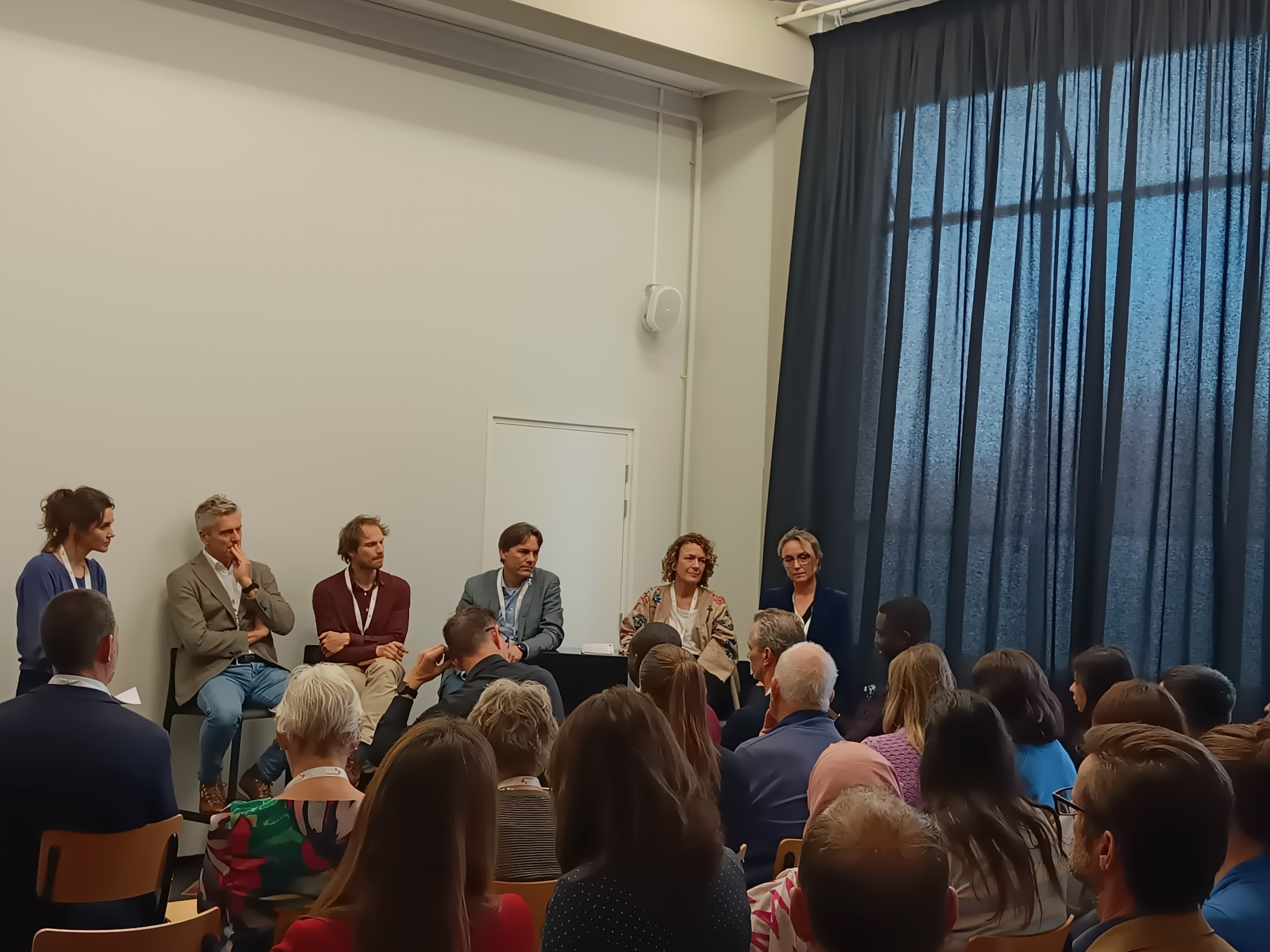
Harko from SNV explained how water can serve as a unifying entry point connecting biodiversity, food systems, and community livelihoods. Working through grazing committees and water user associations to foster collective management has been key to addressing the underrecognition of rangelands and pastoralists, as well as the challenge of treating soil and agrobiodiversity as private goods rather than public ones. Integrated policy engagement at the county level has helped include biodiversity and water management practices in local planning and strategies.
Natalia from Sail Investments emphasized viewing nature as the hidden infrastructure of food production, highlighting the need to treat biodiversity as part of financial risk assessments and asset value, not merely as an ethical concern. She noted that the lack of measurable or monetized biodiversity indicators in current risk and reporting frameworks remains a major challenge. She encouraged integrating biodiversity into financial risk frameworks and demonstrating its business value to companies.
Bram from Forsesight4Food shared that envisioning the future of food systems in Kenya strongly brought biodiversity to the table, even when it was not the starting point of the initiative. Through participatory foresight they helped communities visualize positive futures tied to nature, the team helped communities in Nakuru County visualize positive, nature-based futures, which fostered trust and collaboration in what had previously been a fragmented scenario. Bram also encouraged shifting the mindset from managing ecosystems to coexisting with them: an inviting reflection to partnering with nature.
Petra from WWF highlighted that agroecology can serve as a bridge between food production and biodiversity policy, emphasizing the importance of involving farmers as key agents of change. In Colombia, the National Biodiversity Strategy and Action Plan now integrates agroecology. The next steps involve translating it into practice, which requires resources and sustained political will. The transition from policy to implementation and scaling remains a challenge, but cross-ministerial and cross-sectoral collaboration, (including different ministries, private sector, local communities, and civil society), is promising and key to advancing this agenda.
Robert from HZPC emphasized that trust and respect for local communities are essential in biodiversity partnerships. He shared the experience of AguaPan in conserving native potato landraces in the Andes without seeking financial profit, explaining that building trust with Andean farmers took nearly eight years. Through sustained, non-extractive engagement and collaboration with the International Potato Center, the partnership led to the development of new, climate-resilient potato varieties using shared germplasm.
💡 A collective insight in the panel was that biodiversity integration succeeds when trust, partnerships, and systems thinking are part of the process.
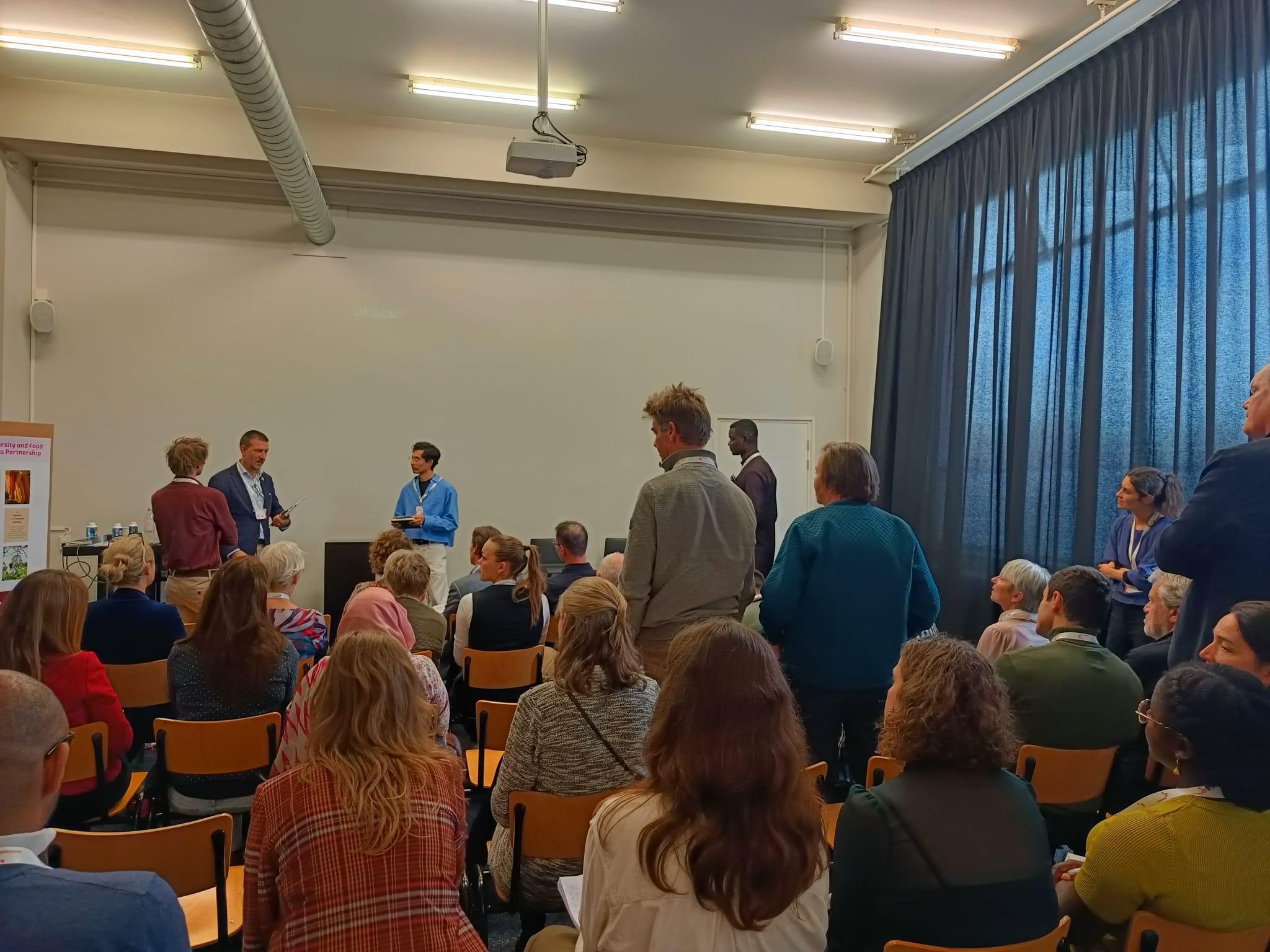
Interactive and reflective moment with everybody joining us in the session
To close the session, an interactive exercise, facilitated by Hector Lopez from glocolearning, invited attendees to reflect on their own work through three statements: “My work explicitly articulates and accounts for the linkages between biodiversity and food systems”, “In my work I see more trade-offs than synergies between biodiversity and food systems”, and “In my work we actively look for partners to strengthen the link between biodiversity and food systems”. This activity linked with three of the cross-cutting insights identified in the Use Cases Bundle and triggered very interesting and honest reflections from participants. This created a space to rethink how these aspects (linkages, trade-offs, and partnerships) can be further understood and integrated into each one’s own work, and joint learning processes towards sustainable futures.
Triggering new connections on Biodiversity and Food Systems: Insights from the booth
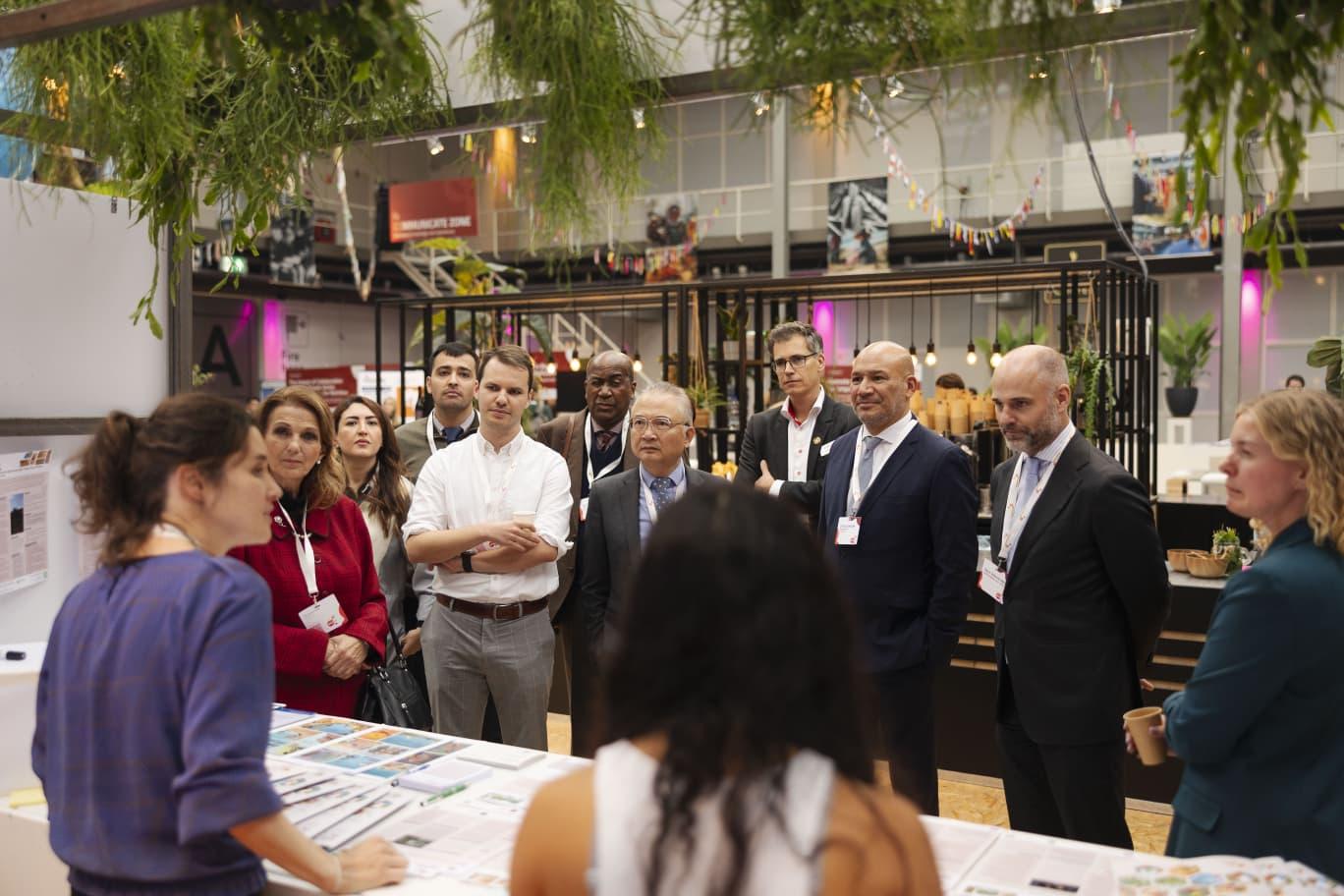
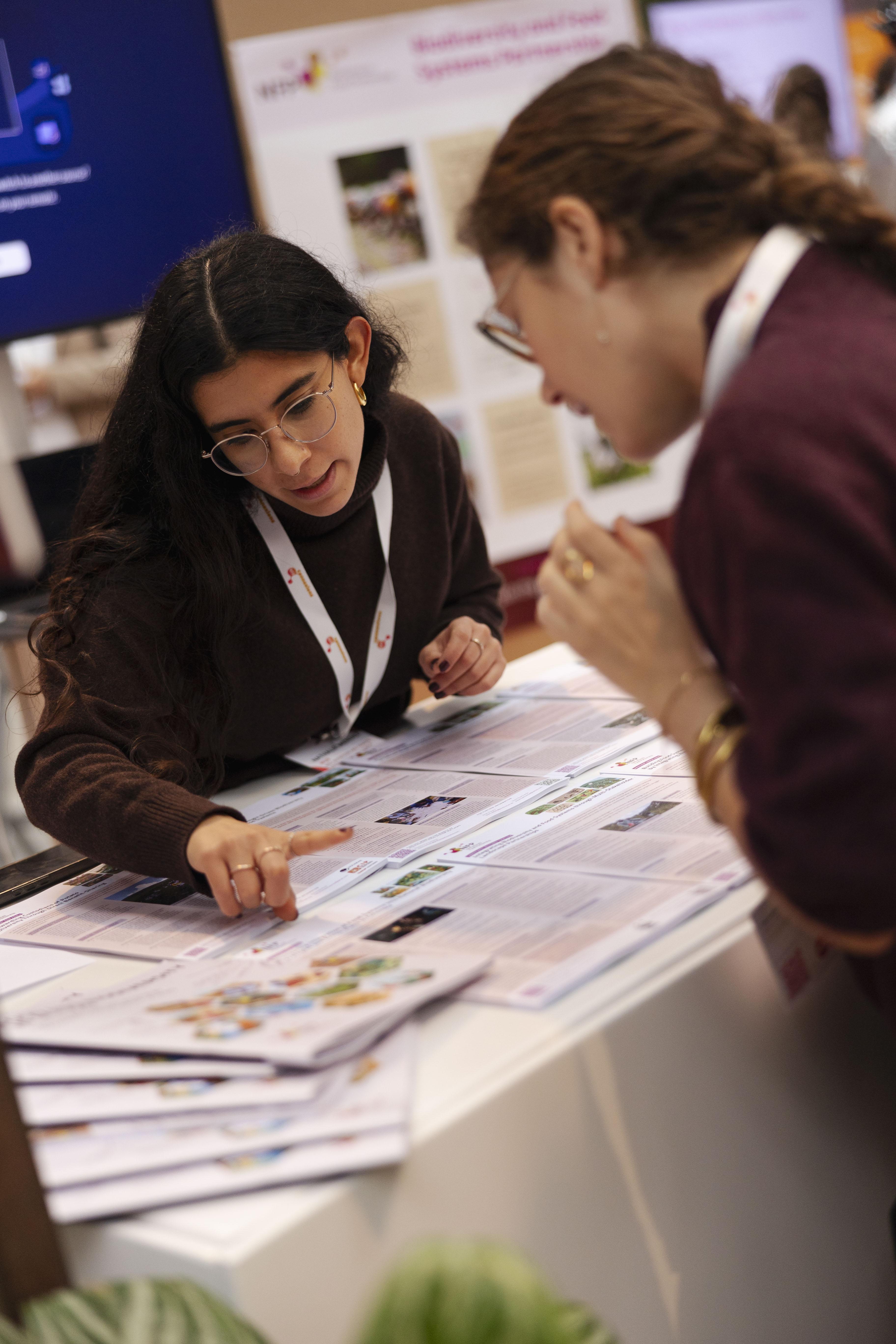
The booth provided an interactive space throughout the day to showcase the full scope of activities that are taking place in the Biodiversity and Food Systems Partnership, with a spotlight on the Use Cases Bundle. It attracted strong interest and sparked conversations on the multiple connections between biodiversity and food systems: from the importance of soil biodiversity for nutrient-rich food to its links with gastronomy and cultural heritage.
The booth’s interactive setup encouraged open dialogue and curiosity, while concrete examples inspired visitors to explore new ideas. Several attendees expressed interest in joining the partnership, offering suggestions for future priorities for 2026 and proposing new use cases for further exploration.
While World Food Day highlighted the Use Cases Bundle as a key outcome of collaborative efforts, the Biodiversity and Food Systems Partnership also shared other ongoing initiatives that extend beyond it: the incubator process to strengthen biodiversity-food system synergies, along with continued capacity- and network-building activities. These initiatives reflect the Partnership’s broader commitment to fostering collaboration and learning for sustainable food systems transformation. You can learn more about it here.
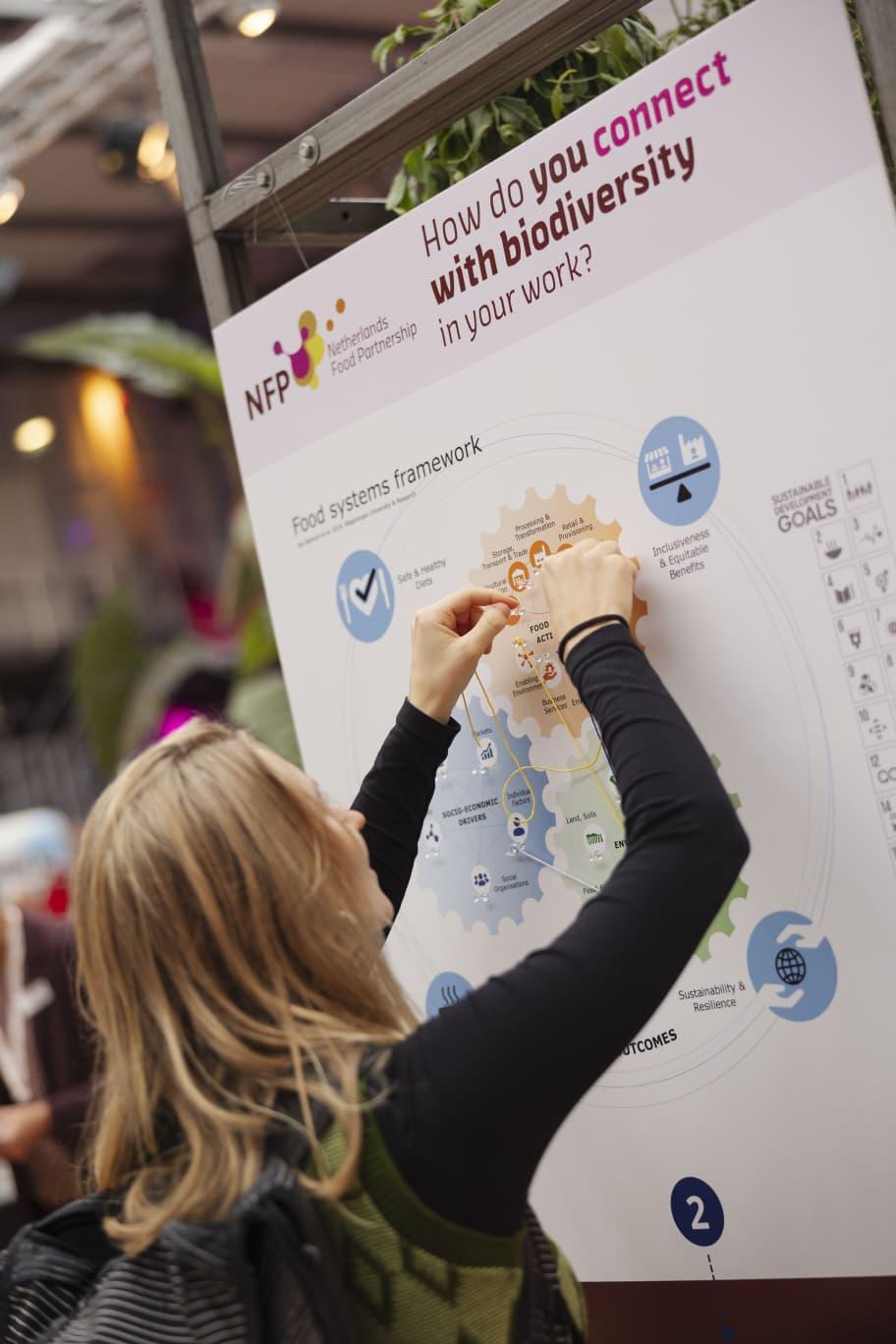
World Food Day participants reflected on where they saw connections between biodiversity and food systems in their work
Some of our key takeaways from the day
The scientific evidence and multiple knowledge systems are strong and convincing on the high interdependencies between food and biodiversity. Studies on biodiversity and food systems have increasingly come together across sectors and partners, and multiple participants mentioned mutually reinforcing studies and practical experiences on the biodiversity-food interdependence. Taking a food systems approach helps with bringing this evidence further together. Displayed copies of summaries of the IPBES Nexus and Transformative change assessments, and a recent study led by Wageningen and PBL on narratives on biodiversity in food systems transformation, stimulated further discussions and ideas.
The Biodiversity & Food connection also speaks to people’s emotions. This was mentioned explicitly in some conversations and we also notice this in how people engage with the materials and bring up their own work, personal experiences, passions and interests. It speaks to people’s underlying connection - or desire for connection - with nature. It is a connection that triggers positive thinking and hope. In combination with the scientific evidence, biodiversity and food connections can further bring mind and body together.
Concrete examples inspire others. The bundle of diverse use cases that illustrate examples of how acting upon the linkages between biodiversity & food can work in practice, triggers deeper curiosity, concrete conversations, connections, and follow-ups. People were drawn to the examples and we received at least 15 concrete suggestions for additional use cases.
Partnership with nature and partnerships across scales make us stronger to move towards sustainable futures. Partnerships were cross-cutting and discussed at different scales: in programs, landscapes, business, finance, networks and in a global interconnected world. In addition to partnerships between different actors, our Partnership with Nature was emphasized as critical and as an opportunity for food systems.
Seeing biodiversity as our infrastructure invites us to rethink it as the foundation for transformation, not merely as something external to protect.
Even when biodiversity isn’t always seen as a starting point, it consistently reappears at the core of sustainable futures we envision, encouraging us to build stronger partnerships with nature.
Our interdependence reminds us that the impact of collaboration goes beyond partnerships. It becomes a global public good, where the benefits of transformation are shared by all.
Did we trigger your interest to explore the insights shared in the biodiversity and Food systems Use Case Bundle yourself?
📚Click here to explore the bundle
Interested to learn more about the NFP Biodiversity and Food Systems Partnership?
This bundle that was soft launched on World Food Day is the results of only one of the activities taking place within the NFP Biodiversity & Food Systems Partnership. Everybody with an interest to contribute to further integrating biodiversity and food systems is welcome to join, contribute and shape our collective agenda.
Authors

Hector Lopez Mariaca
Partnership Builder, Netherlands Food Partnership

Roseline Remans
Glocolearning & Alliance Bioversity International - CIAT

Mariëlle Karssenberg
Partnership Builder - Netherlands Food Partnership